Fri05242013

Last update06:52:40 AM

Font Size

Profile

Direction

Menu Style

Cpanel
Back You are here: Home Archives 2013 January

Alabama Republicans embrace Davis as speaker at GOP convention

WASHINGTON -- So far, the most high-profile Alabamian at this year's Republican National Convention is someone who didn't declare himself a Republican until late May, and hasn't lived in Alabama for the last two years. Former Democratic U.S. Rep. Artur Davis was named Thursday as one of the headliners at the GOP convention, making him this cycle's political turncoat -- someone who changed teams since the last election and will make the case for other Democratic voters to do the same.

While Republicans in Alabama are publicly cheering the switch and Davis' message of disillusionment with President Barack Obama, there is some hesitation about embracing someone who so recently was working to defeat Republicans across the country. Davis represented the 7th Congressional District of west Alabama and parts of Birmingham for eight years and lost a bid for the Democratic nomination for governor in 2010. But there was even more to his Democratic credentials: He worked with the Democratic Congressional Campaign Committee to recruit and mentor candidates for Congress; he was a leading critic of the Republican administration of former President George W. Bush, especially the justice department that he believed was too politically motivated; and he was a Kennedy-quoting Democrat who was among the first to endorse then-Sen. Barack Obama's primary campaign in early 2007. In what is likely a preview of his remarks at the convention, Davis issued the following statement through the RNC Thursday: "The talk and inspiration moved so many of us four years ago, but unfortunately we haven't seen the action to back it up. We were promised jobs and we got job-killing mandates and regulations. We were promised a fiscally responsible government, and we got trillion dollar deficits, debt that has never been seen, and small business burdened with new taxes and threatened with more taxes. The time for talk is over.

At the Republican National Convention in Tampa, Republicans take a step to undo the mismanagement and nominate Mitt Romney as the next president of the United States." Alabama Republican Party Chairman Bill Armistead said he and most Republicans he's spoken with, especially those in the business community, are wholeheartedly welcoming Davis' appearance at the podium, but that a handful in the state GOP have expressed suspicion. "Maybe 1 percent aren't so sure he isn't just doing this as a political ploy, but it's been a very, very small number," Armistead said Thursday. RNC Chairman Reince Priebus said Thursday that Davis will be among the headliners at the convention Aug. 27-30. "Former Congressman Davis especially will give voice to the frustration and disappointment felt among those who supported President Obama in 2008 and are now hungry for a new direction," Priebus said. Alabama has a complicated history with party-switchers. For example, former U.S. Rep. Parker Griffith of Huntsville was elected to Congress as a Democrat, switched to the Republican Party, and then lost in the next primary, a clear rejection by Republicans in that north Alabama district.

Armistead said Davis' case is different because he's not running for office. "I see him as rolling up his sleeves and wanting to work for Mitt Romney and the ticket and that's pretty impressive," Armistead said. "I would have different thoughts if he switched and immediately ran for office." State Sen. Cam Ward, R-Alabaster, remembers four years ago when he and Davis squared off at Alabama political events as advocates for then-GOP nominee John McCain and Obama, respectively. He said he is happy to have Davis aboard alongside him on the Romney team this time and that he doesn't think Davis' party-switch was either sudden or suspect. Ward pinpoints Davis' vote against the Affordable Care Act in 2010 as the beginning of his shift out of the Democratic Party, which became official in late May of this year. Davis lost the 2010 Democratic primary for governor by a landslide, including most counties in his congressional district, and his vote on the health care bill was a major issue. "Any time any of us .¤.¤. takes a stand contrary to where we once stood before, there's going to be a suspicion," Ward said. "People are naturally suspicious of politicians and they always will be." A Virginia-based Democratic consultant said Thursday that Davis as recently as December talked about running for office in Northern Virginia as a Democrat, where Davis has lived since late 2010.

Mo Elleithee, a partner at Hilltop Public Solutions, said he told Davis it would be difficult because he was a newcomer to the area and had not yet spent time getting to know the people and the politics of the region. "Without having been involved in local politics, to expect he could just parachute in and win an election, would be difficult," Elleithee said Thursday. Davis, in an email, disputed the time of his phone conversation with Elleithee, saying it was summer or fall of last year. "I asked him about the ideological direction of the Virginia Democratic Party and he confirmed my sense that it was as left-leaning and interest group driven as I suspected. We never followed up and never met," Davis said. The chairman of the Alabama Democratic Party called Davis a "sore loser." "The only part of the electorate Artur Davis is giving a voice to are former candidates who lost their races and then go on to blame it on everyone but themselves," said Mark Kennedy. "With that said, between his penchant for changing his party and positions regularly, and for not taking responsibility for his own actions, Artur Davis seems a great addition to the Romney campaign."

Read More...

Pardons sought for the remaining defendants in Scottsboro Boys case

BIRMINGHAM, Alabama -- The founder of a museum devoted to the Scottsboro Boys wants to give the defendants in the landmark case something that eluded most of them during their lifetimes: a pardon from the state of Alabama.

Sheila Washington, founder of the Scottsboro Boys Museum and Cultural Center, this week asked Gov. Robert Bentley to clear the names of eight of the nine defendants wrongly convicted of raping two white women in 1931. "They were done wrong, and justice should be corrected," Washington said.

One of the Scottsboro Boys was pardoned in 1976. Clarence Norris was believed at the time to be the only defendant still living. He, too, has since died.

Washington said she believes the state needs to set the record straight for the other defendants, even though charges were ultimately dropped against some of them while they were alive. "I feel like this is the closure," she said.

Her quest has won support from professors, lawyers and legislators. Her letter to Bentley, dated Aug. 15, is co-signed by more than a dozen people, most of them affiliated with universities.

"A resolution of pardon will provide a chance to affirm our mutual interests in supporting justice and equality in twenty-first century Alabama," the letter says. "The resolution does not change the past, but it can help shape the future."

Bentley absolutely agrees the pardons are merited, said his spokesman, Jeremy King. "It's time to right this wrong," King said. "It's time to officially clear their names."

But King said the governor believes he lacks the authority to act on Washington's request.

"The Alabama Constitution only gives the governor the power to grant reprieves and commutations for death sentences," King said. "In the final trials of the Scottsboro Boys, only one was sentenced to death. That man was pardoned in 1976 while he was still alive. From a legal standpoint, the governor has no authority to grant pardons to the other men."

Bentley's office is "exploring some methods that would allow a process for posthumous pardons" and will support efforts to make it happen, King said.

In 2006, the state passed legislation that provided a way for people arrested during the Jim Crow era to get pardons for violating segregation laws. The Rosa Parks Act allowed those arrested in civil rights protests to clear their records. Families were allowed to petition for pardons of loved ones who had died.

If a similar proposal were drafted for the Scottsboro Boys case, Bentley would be supportive, King said.

State Rep. Alvin Holmes said he believes Bentley has the authority and should issue the pardons. "It's important to history. It's important to the grandchildren and great-grandchildren of those defendants," Holmes said. "It was an injustice what the state of Alabama did to them."

Read More...

How Paul Ryan’s Medicare Plan Is Coming Back to Haunt Obama

Last year, Democrats gleefully attacked Paul Ryan as a granny killer for daring to take on Medicare reform. They thought their point was won; Ryan was buried in an avalanche of ridicule. Americans typically don’t like their entitlements threatened; seniors and near-seniors—the groups most likely to turn out on Election Day—are particularly wary, as they should be.

But Mitt Romney pulled a surprise, nominating Ryan as his running mate. R-squared then launched a direct attack on the president’s cuts  in Medicare spending. And “Boom!” The big stick just came back and hit the Dems: A recent poll in all-important Florida shows folks there are a bit more terrified right now—and even more so among seniors—of the president’s health-care law and its affect on Medicare than of Ryan’s proposal.

But there are still weeks and onslaughts to go. Charges are already furiously flying back and forth. “Their plan ends Medicare as we know it” is met with “the president is raiding Medicare.”

Well, in politics, not all lies are all lies. And not all truths are complete.

Both the Romney/Ryan and Obama plans end Medicare “as we know it.” The program is running out of money as fewer people pay in than receive benefits. In just 12 years, Medicare’s hospital trust fund is predicted to become insolvent. And for the next 17½ years, 10,000 baby boomers will reach age 65 every day. So, it’s really just a question of when the end comes—for Medicare, Medicaid, and Social Security—and what happens next.

It’s also true that the president has cut more than $700 billion from Medicare and credits it toward the cost of Obamacare. While some of those cuts are admirable—everyone wants to see fraud reduced—other cuts are in payments to providers. And it’s a bit disingenuous of Team Obama to claim these cuts won’t affect benefits. In Texas, one of the few states to track doctor drop-outs, the number of physicians accepting Medicare patients fell from 78 percent in 2000 to 58 percent in 2012—because of cuts in payments, with more cuts to come. Punishing doctors with lower, sometimes below-cost fees for treating Medicare patients means fewer doctors, decreased care, and even—yes—the potential for rationing of care.

Ryan’s original plan also cut Medicare spending at a similar level, but through consumer choice, competition, and market forces, not punitive cost controls. And he planned to return those dollars to the Medicare trust fund.

Read More...

Legislature almost out of funds for budget year

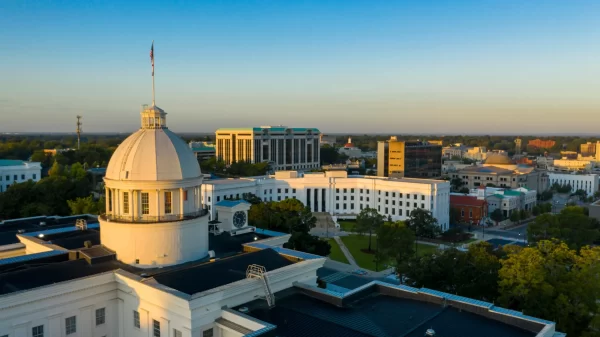
MONTGOMERY — The Alabama Legislature is rapidly running out of operating money for the year.

It has reached a level that without a clause in the state code allowing that branch of government to receive $500,000 infusions, senators, representatives and staffers likely wouldn’t be paid through the end of the budget year.

The budget year ends Sept. 30.

The two men who run the Senate and House administration blame two years of proration — mid-year budget cuts — for the shortfall.

But Republican leadership said the Legislature, like just about every other state agency, needs to learn to make more spending cuts.

Arthur Orr, R-Decatur, has pre-filed a bill that, if approved in 2013, will take away the Legislature’s optional additional funding, referred to as “evergreen appropriations.”

“To have a special way to allow the Legislature to get additional funding during years of proration is unacceptable to me,” Orr said. “We need to live within our means, just like the rest of state government.”

The section of the state code that allows for the additional money was added in the 1980s to ensure that the Legislature always has money to function. It’s only been used once, in the early 1990s, officials said. It allows the Legislature to receive the $500,000 in additional money up to four times per fiscal quarter, which could mean $2 million per quarter or $8 million per year.

“We will probably have to ask (for it) three or four times (before Sept. 30),” Clerk of the House Greg Pappas said.

Pappas said the Legislature’s budget, which largely funds salaries, got “clobbered” by proration in recent years.

Money for the evergreen appropriation would come from General Fund, said Bill Newton, assistant director of the state Department of Finance.

The money had not been requested as of early this week, but will likely be necessary to meet the Legislature’s Aug. 31 payroll, which totals $577,763 for senators and representatives and $363,645 for employees, Secretary of the Senate Pat Harris said. Legislators are paid monthly, while staff members get paid every two weeks.

“The bottom line is that we’re going to be out of money,” Harris said. “Under the (state) code, I can’t ask for (the additional money) until I reach $100,000 in my budget. I will be there at the end of August.”

This year, the Legislature was allocated about $19.6 million for the year, after the 10.6 percent proration, according to budget information. The Legislature also pays rent on the Alabama State House and has to pay various vendors that service the building, Harris said.

The budget for the Legislature is separate from that of the other offices, including the Legislative Fiscal Office and offices of the elected speaker of the House and Senate president pro tem.

The House speaker received $1.89 million this year, while the Senate president pro tem received $2.179 million, based on state records.

Derek Trotter, a spokesman for Senate President Pro Tem Del Marsh, R-Anniston, who is a co-sponsor on Orr’s bill, said Marsh has cut his own budget by about 65 percent, or $1.2 million, in the past two years, mostly by reducing staff.

Read More...

Subcategories


 © Copyright 2012 Alabama Political Reporter LLC