






















A campaign asks whether a person can win an office. Governing reveals what that person does with the power that comes with it.
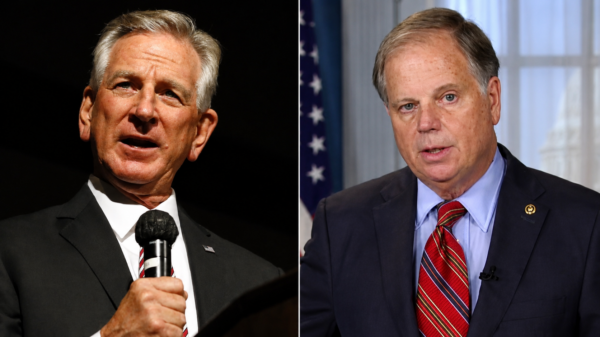
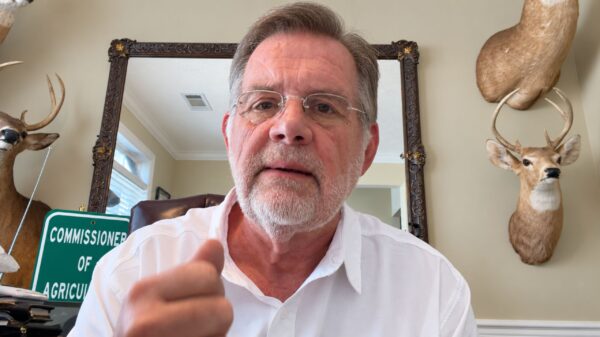
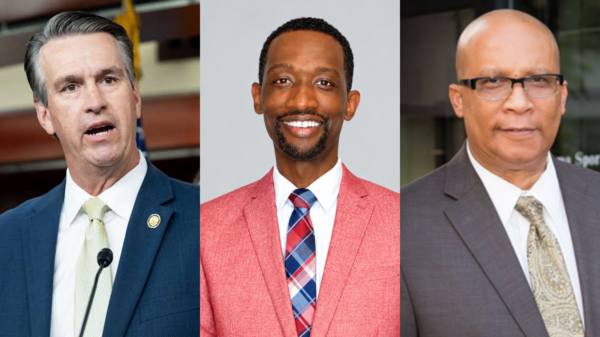
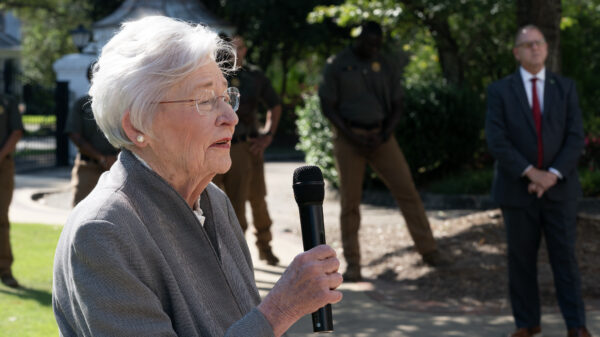
Alabama will choose its next governor in November. Until then, the candidates will make promises, draw contrasts and explain why one should win and the other should not. By election day, one man will have persuaded enough Alabamians to place the state’s highest office in his hands.
That victory will settle who becomes governor. It will settle very little about what kind of governor he will become.
An election grants authority. It does not confer wisdom, goodness or moral superiority. It does not erase weakness or transform political instinct into an understanding of government. It entrusts one person with an extraordinary amount of power and leaves the rest to character.
The next governor will influence schools, hospitals, prisons, roads, economic development, public money and institutions that touch nearly every life in Alabama. Decisions made in that office can open opportunities or close them, strengthen communities or neglect them, and protect public institutions or bend them toward the interests of those temporarily in charge.
That power is not a prize. It is a trust.
Alabama will not elect a perfect person. No perfect person is running, and none has ever held the office. Whoever wins will carry his strengths into the governor’s office, and his weaknesses will follow close behind. Power has a way of enlarging both.
A person who understands where pride can mislead him, where anger can hurry him and where certainty can close his mind has some chance of keeping those weaknesses from becoming everyone else’s burden. A person who mistakes victory for proof that every instinct is sound may discover that power does not correct human frailty. It gives it more room to operate.
Self-knowledge is not among the qualities most celebrated in politics, but it may be one of the most necessary. The people will entrust the next governor with power despite his imperfections. They have a right to expect him to understand those imperfections well enough to keep them from becoming Alabama’s burden.
Alabama is too large, complicated and varied for any one person to understand alone. It is a state of remarkable achievement and stubborn failure—of booming cities and forgotten towns, world-class research and children still born too far from opportunity.
No governor will arrive knowing everything necessary to lead a state with growing industries, struggling rural communities, overburdened schools, limited access to health care and a prison system that has disgraced Alabama for far too long.
The next governor will need people who know more than he does about education, health care, agriculture, infrastructure, technology, workforce development and the daily operation of government. Most of all, he will need people willing to tell him something he does not want to hear.
Power attracts agreement. It fills rooms with people who know when to applaud, when to remain silent and when to assure the person in charge that every instinct is sound. Over time, a leader can begin to mistake agreement for loyalty and praise for truth. A room in which everyone agrees should trouble any governor.
There is no weakness in asking questions before announcing answers or changing course after learning more. Wisdom does not begin with the belief that everything is already known. It begins with an understanding of how much remains to be learned.
The office will also require a vision for Alabama that reaches beyond the next legislative session, the next political controversy and the next election. A governor should be able to tell the people not only what he opposes but also what he believes this state can become.
Can Alabama become a place where a child’s future is not largely determined by the ZIP code into which that child is born? Can rural families live within reasonable reach of health care? Can young Alabamians find enough opportunity here to build careers, raise families and invest their lives in their home state? Can government become more competent, ethical and worthy of public trust?
Those questions will not be answered by a single bill, speech or ribbon-cutting ceremony. They may not produce the loudest applause, but they are the questions by which a governor’s service should be measured.
Vision alone will not move Alabama forward. Progress requires a willingness to put a shoulder to the wheel, especially when the work is difficult, unglamorous and unlikely to bring an immediate political reward.
No governor can carry the burden alone, and no serious governor should pretend otherwise. The work will require legislators, teachers, physicians, farmers, business owners, workers, local officials, journalists and ordinary citizens. It will require people who supported the governor and people who worked hard to defeat him.
Asking for their help is not a confession of weakness. It is an acknowledgment that Alabama belongs to all of us and that its future will require more wisdom, effort and goodwill than any one person or political party can provide.
The office will offer the next governor something rare: the opportunity to call Alabamians toward a future they could not build separately.
Bringing people into that work requires more than political skill. It requires moral imagination—the ability to look across a profound disagreement and still recognize another human being.
The people who disagree with a governor do not lose their claim on government when the votes are counted. They remain Alabamians, with the same stake in the state’s future as those who helped elect him. The duty of the office does not change according to how a citizen voted.
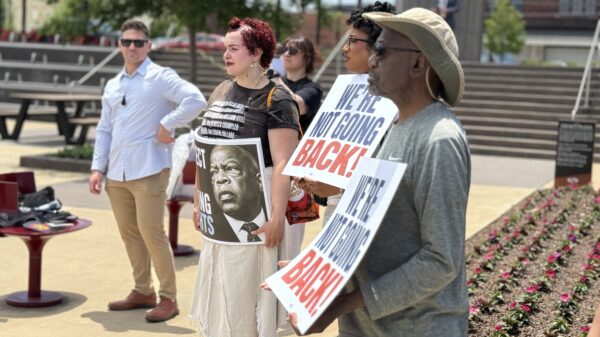
A teacher who questions an education policy may understand something the governor has overlooked. A citizen protesting outside the Capitol may be indignant or mistaken and still possess a concern worthy of being heard.
Disagreement does not erase a person’s humanity. It does not make criticism disloyal or turn an opponent into an enemy. Anyone can listen respectfully to those who offer praise. Character is more often revealed in the treatment of those who do not.
The next governor should also be careful in deciding who is a friend and who is an enemy. Those who praise every decision may be seeking access or favor, while those who examine decisions honestly may be serving Alabama. Flattery may comfort power, but fair criticism can protect it from its own mistakes.
The people closest to a governor should not ask first what will please him. Their first concern should be what will serve Alabama.
There will be opportunities to be praised, photographed, honored and applauded. There is nothing wrong with recognition honestly earned, but applause is a poor measure of public service. Praise has always had a habit of following power, and much of it moves on when the power does.
Awards gather dust. Headlines fade. Political arguments that once seemed to consume the state become forgotten footnotes. The title passes to someone else, and new people gather outside the governor’s office.
What endures is the record shaped by character: the people a governor chooses, the advice he hears, the criticism he tolerates and the decisions he makes when principle and political convenience point in different directions.
Character determines whether authority is used to serve the public or reward friends, punish critics and protect the person holding it. Over time, those choices become policy, and policy becomes consequence.
They can be seen in the schools that improved or were neglected, the hospitals that survived or disappeared, the corruption that was confronted or excused and the communities that were strengthened or forgotten. They can also be seen in whether a governor encouraged Alabamians to regard one another as neighbors or enemies.
High office can diminish the person who holds it. Power can make a leader smaller, more suspicious, more isolated and more certain of his own infallibility.
Responsibility can also enlarge a person. It can call forth patience, courage, restraint and generosity that may not have been visible during a campaign. It can teach a leader to listen more carefully, judge less quickly and think beyond personal ambition. It can turn an officeholder into the steward of something larger than himself.
Alabama does not need a savior and has no right to expect perfection. It does have a right to expect seriousness, honesty, humility and a willingness to share the burden of building a better future.
The people of Alabama can give the next governor power, but they cannot give him wisdom. They can place the office in his hands, but they cannot decide what kind of person he will become while holding it.
That will be decided gradually—in the advice he seeks, the criticism he hears, the people he notices and the choices he makes when there is no applause to guide him.
In the end, the office will belong to someone else. What remains will be what he did with the power entrusted to him, the person he became while holding it and the Alabama he left behind.