





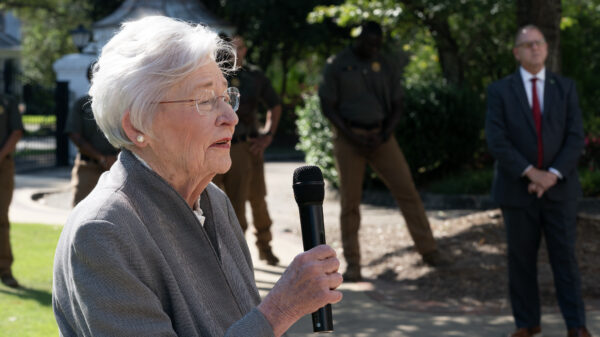











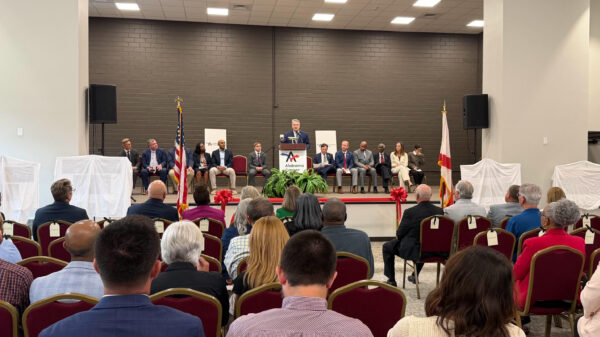









Governor Kay Ivey on Monday announced $144 million in grants, marking the first round of funding for the Alabama Rural Health Transformation Program.
The funding will support 138 grants across Alabama aimed at strengthening the state’s rural health care providers.
“Alabama is serious about creating systematic changes through the ARHTP to ensure every citizen has access to quality care. This program is enabling institutions covering every part of the state to improve healthcare for Alabamians through projects that are both innovative and sustainable,” Ivey said. “From the federal policymakers and state administrators to our professional healthcare leaders, I commend all the thoughtful work dedicated to ensuring the success of this program.”
The ARHTP plan was developed by a team that included the Governor’s Office, the Alabama Department of Economic and Community Affairs, the Alabama Department of Finance, the Alabama Medicaid Agency and the Alabama State Health Planning and Development Agency.
ADECA administers the ARHTP, which includes 11 initiatives aimed at improving health care access and quality across rural Alabama.
“To say that there is great interest in improving rural healthcare in Alabama is an understatement. This announcement comes at the end of a process that included six packed-house informational meetings in different locations throughout the state, five grant application workshops and hundreds of grant applications,” ADECA Director Kenneth Boswell said. “I appreciate the confidence that Gov. Ivey and the Legislature have in ADECA’s ability to administer this important program, and we are excited to now see so many projects moving forward.”
The ARHTP is Alabama’s Rural Health Transformation Program, a funding initiative established by the One Big Beautiful Bill Act. The $50 billion program is funded through 2031 and was added to last year’s reconciliation package following concerns from federal lawmakers that Medicaid spending cuts enacted by the law would negatively affect rural health care providers.
The ARHTP’s first-year projects are funded through roughly $203.4 million from the U.S. Department of Health and Human Services’ Centers for Medicare and Medicaid Services.
Five ARHTP initiatives received grants in the initial funding round: Rural Health, Rural Workforce, Mental Health, Rural Health Practice and Collaborative Electronic Health Record, IT and Cybersecurity.
The Collaborative Electronic Health Record, IT and Cybersecurity Initiative received more than $32 million for 29 projects that will affect 55 Alabama counties.
Funding under the initiative includes roughly $6.4 million for Auburn University to establish a shared digital and cybersecurity network supporting rural health care providers in 12 counties. The Alabama Primary Health Care Association will receive $867,102 to establish a shared rural health technology and care coordination framework designed to improve collaboration among health care providers in 47 counties.
The Rural Health Initiative received more than $59 million for 57 projects across 57 counties.
The grants include roughly $6.8 million for the East Alabama Health Care Authority to establish a “Regional Shared Services Hub” and $4 million for Auburn University to create a network of local health care sites “connected to a central virtual clinic to expand preventive and primary care in rural communities.”
“The project will use virtual visits and remote health monitoring to connect residents with routine care, specialty services, chronic condition management, mental health support and coordinated care while reducing travel and strengthening rural providers,” Ivey’s office wrote of the Auburn project.
The Rural Workforce Initiative received more than $35 million for 25 projects spanning 65 counties.
Among the grants is $3.8 million to establish a family medicine residency training program with a focused obstetrics track at Cullman Regional Medical Center. The DCH Healthcare Authority will receive $3 million to recruit and retain two interventional cardiologists, one heart rhythm specialist and two advanced practice providers.
The Rural Health Practice Initiative received more than $7.7 million for 14 projects across 29 counties.
Funding includes $2.2 million for AltaPointe Health Systems to establish two integrated primary and behavioral health care access points in Ashland and Sylacauga. Selma Family Medicine will receive $974,084 for technology and care coordination system upgrades.
The Mental Health Initiative received more than $7.8 million for 13 projects across 50 counties.
Grants include more than $1 million to expand behavioral health services and strengthen operational infrastructure to support Certified Community Behavioral Health Clinic certification. AltaPointe Health will also receive $935,895 to establish the Alabama School Mental Health Network, which seeks to expand school-based mental health crisis services through a coordinated telehealth model and help students in rural communities receive timely support during behavioral health crises.
Ivey’s announcement of the first round of ARHTP funding was met with statements of support from members of Alabama’s Republican congressional delegation.
“Investing in rural healthcare is critical to making sure every Alabamian, regardless of their zip code, has access to high-quality healthcare,” U.S. Senator Katie Britt, R-Alabama, said. “I’m thankful to the Trump Administration for continuing to recognize this and invest in our communities. I was proud to vote for this funding, and I look forward to seeing how this investment improves the lives of people across our state.”
“Having proposed the inclusion of the Rural Health Transformation Fund into the Working Family Tax Cuts Act, I am proud to see this investment now making a real difference for communities across Alabama,” U.S. Representative Gary Palmer, R-Alabama, said. “Rural communities have faced challenges accessing quality healthcare and attracting and retaining healthcare professionals for too long. This funding will help Alabama strengthen its rural healthcare workforce, expand access to critical services, and give providers the tools they need to better serve their patients. I am grateful to President Trump and his Administration for working with Congress to turn this idea into action and invest in the long-term health of rural America.”
According to Ivey’s office, grant awards for the remaining six ARHTP initiatives are in progress. The full list of grants and the organizations and counties they serve is available on the governor’s website.