







Following the launch of clinical trials testing psychedelic therapy for veterans, a leading Alabama-based veteran mental health advocate spoke with APR about the trials’ relevance to the future of veteran mental health care and his work exploring new pathways for treatment.
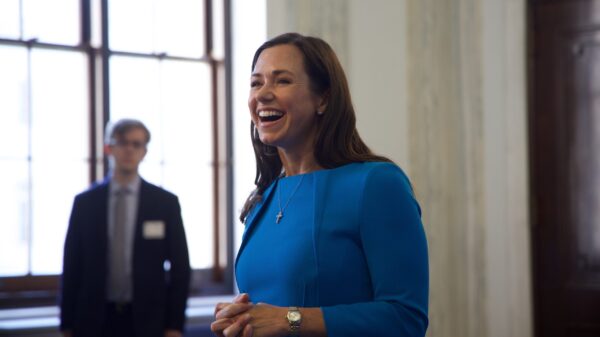
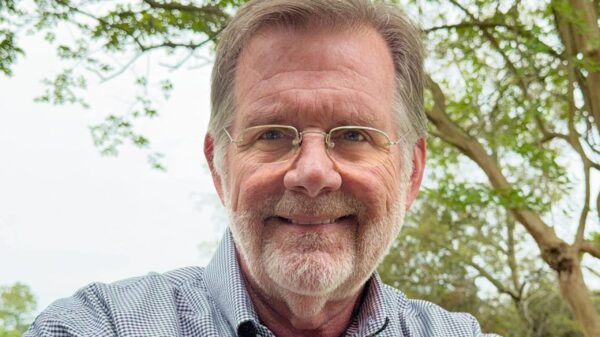
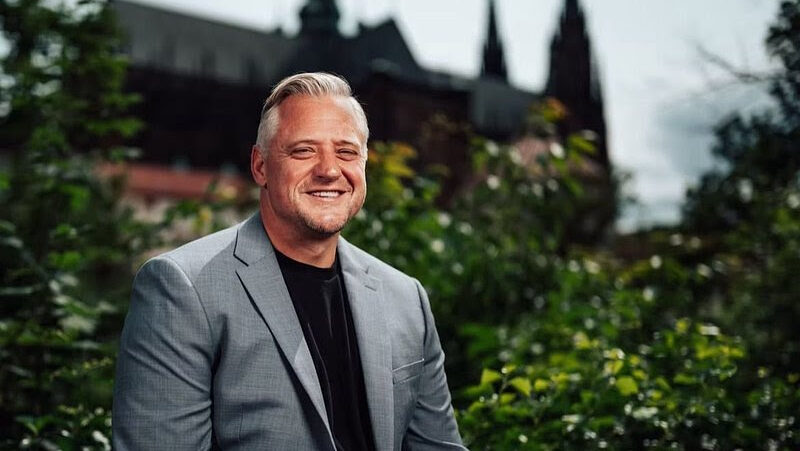
Alabama resident Adam Marr serves as director of operations for the Veteran Mental Health Leadership Coalition, a veteran-led coalition dedicated to preventing suicide and deaths of despair.
Marr, who settled in Slocomb following his service in the U.S. Army, is an AH-64 Apache pilot with more than 1,500 flight hours, including more than 400 combat hours during deployments to Iraq. He completed helicopter training at Fort Rucker and currently lives with his wife of 17 years, an Alabama native, and their three children.
Marr testified before the U.S. Senate Committee on Veterans’ Affairs last August during a Montevallo hearing on psychedelic and alternative therapies for veterans. During the hearing, Marr discussed benefits he and his brother Andrew, a Special Forces Green Beret, experienced from treatments for post-traumatic stress disorder and traumatic brain injuries, including neurorestorative protocols provided by Millennium Health Centers and psychedelic therapies provided by Dr. Martin Polanco of Mission Within, a clinical psychedelic retreat organization based in Mexico.
Alongside his work with VMHLC, Marr co-hosts the American Legion’s Tango Alpha Lima podcast, which focuses on veterans’ experiences during and after service, VA benefits and mental health issues.
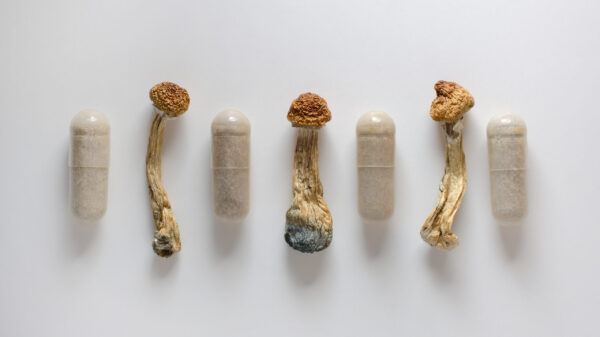
Almost a year after the hearing, the U.S. Department of Veterans Affairs announced its Psilocybin Intervention for Veterans Overcoming Treatment-Resistant Depression, or PIVOT, clinical trial, which will be conducted at five sites, including VA locations in Birmingham and Tuscaloosa. The trial, scheduled to run until 2031, will evaluate the effectiveness and safety of the psychedelic drug psilocybin in treating depression and concurrent post-traumatic stress disorder.
During an APR interview last week, Marr described the PIVOT trial as a watershed moment following years of work by veterans’ mental health advocates seeking new treatment options for PTSD, TBI and depression.
During the conversation, which has been edited for length and clarity, Marr discussed the evolving regulatory landscape surrounding emerging and psychedelic treatments for veterans, his hopes for Alabama’s involvement in the PIVOT trial and accounts he has received from veterans who underwent psychedelic therapy.
Can you describe conversations you’ve taken part in with policymakers over the last year regarding emerging and psychedelic therapies through your work with the VMHLC?
“Like anything, it starts with just being able to go and have that one-on-one conversation. So, we do fly-ins at state initiatives as well as federal. We’ve had committee hearings. I testified last August for Senator Tuberville’s field hearing in Montevallo on separating fact from fiction, alternative therapies for veteran mental health.
“It takes being able to share our lived experience and help to understand and translate. But also, for the coalition, we package that with the rigor of the scientific research and the data. So, we try, anytime we have a conversation, to be able to add those credentials and that rigor behind what’s happening, also partnering with somebody who understands the regulatory, kind of legal system that governs our state and federal landscape. And so, when we bring all those things together, it’s a very powerful conversation that we have, oftentimes first with the staffers, and then ultimately with the members, and then the committees.”
What are some of the common misconceptions about psychedelic therapies that you’ve encountered regarding psychedelics’ use in a clinical setting?
“Conventional wisdom says that healing happens in a doctor’s office with a prescription that comes with it. And while we certainly believe that to be true for many things, I think what we found in our community is that it was actually exacerbating the problem in many instances—this poly-pharma approach, also not disclosing some of the side effects that come with it. And the incredible thing about psychedelic therapies and some of these alternative therapies is the ability to be able to process some of that stored-up, unresolved trauma. And so, obviously, they’re controlled substances, federally illegal in the United States. So, the way that this existed is we had to go outside of the country to seek these things where it was legal, and only through our own experiences and partnership with the scientists and the providers could we begin to start applying the rigor that the medical community applies to medicine to these practices and protocols.
“With that being said, there are still the regulatory hurdles in land and landscape, you know, that we’re up against. And so right now what somebody can do is they can continue that pathway, you know, and there’s many veteran organizations out there that are the in-between to help really look at the safety, look at the preparation, look at the setting and the environment, helping to make sure somebody’s ready for one of these, as well as the community and integration, which is one of the most important parts on the other side.
“There’s been so much work done over the last 10 years since I’ve been involved in this, and many people long before, that we’re bringing the best practices, and we’re asking the question of how does this exist inside institutional medicine? I think that’s what you’re seeing with the PIVOT program and the trials happening right here in our backyard, which I’m so happy and excited about. This trial is a first big step in being able to produce the rigor of the scientific research and outcomes that are necessary to be able to ensure that we have the connection between those programs.”
What is the significance of the PIVOT clinical trial taking place in the state, and what do you believe veterans in Alabama stand to gain from the trial or its future impacts?
“For a long time, a veteran in Alabama who had run out of options had exactly one route to this treatment, and that was to leave the country that they fought to defend and pay for it out of pocket. As of this month, there’s a door open in Birmingham and one in Tuscaloosa, and that’s not a small thing. That’s massive. So, what matters here isn’t that psychedelics are in the news; it’s that the VA is running this inside its own system, with its own doctors, under FDA safety protocols. If a veteran wants to get access, they can call the Birmingham or Tuscaloosa VA and ask about the PIVOT trial to see if they would be in consideration for it. So being able to work through the VA mental health—we see that as a bonus, where it was so challenging in the past.
“Obviously, if somebody’s in crisis right now, we still have the conventional pathways of, you know, 988; we have the Vets4Warriors, which is so great at being able to address those in need. I think that this is a strong indicator of what’s to come. But it’s only 240 veterans over the next five years, right? So, I would just also offer a message of hope to the Alabama veteran. Because the VA is growing forward; the institutions are growing forward. But we’re also growing more support services from the backs of our own community. And so that’s really exciting as well.”
What steps do you believe are necessary for lawmakers to improve veterans’ access to emerging therapies?
“I’m going to focus in on Alabama, because I think there’s a real opportunity here, and I think Senator Tuberville kind of led the way by doing what? By hosting a federal hearing right here in our home state. So, I would like to see more of that happening in Alabama, in Montgomery. And I think that once you look at these other states and see what they’re doing, there’s significant innovation.
“At the end of the day, federal is going to set the policy, but the states are going to be responsible for the execution and the oversight. And that’s going to happen right here within our own legal boundaries. And so that would really be my call is—let’s have more conversations. Let’s bring the experts in, and let’s be able to put a spotlight on that right here in Alabama. And let’s start working towards creating access to more of this research and programs.”
Are there any reforms you believe are necessary to improve care for or lessen symptoms of PTSD and traumatic brain injuries within the VA or the military?
“We’re doing a much better job of it than when I started in this, you know, 15 years ago; these conversations are happening at the highest levels of DOD, HHS, within the VA. It’s a challenging problem—institutional change. So, I think awareness is the first step, and we’re much more keenly aware of the effects of combat and the environmental hazards and exposure.
“As technology advances, the hard thing is being able to bring those innovations inside the standard of care, but that’s happening in real time. And then inversely, what we have to do a better job of is helping the veteran in the service, men and women, once they take the uniform off, because we do a great job of being able to help folks be ready for our wartime mission and our service. What we’re finding is that there’s physical, mental, emotional and spiritual healing that has to happen for one to find their new purpose outside of service.
“The VA has many great conventional programs. But the thing that I want to really reiterate is that those programs fail if the internal landscape is on fire. There are many programs, and there’s so much great work being done, and I don’t want to take away from that. I just want to say that what we’ve been working on is something that has its place at the table. And it’s this connected ecosystem of well care that holistically everybody is bringing online together; that’s tilting the tide for everybody.”
What experiences stand out to you as demonstrating the potential efficacy of psychedelic therapies and why they should be part of the veterans’ mental health conversation?
“I got a great recent experience. One of our coalition members and a dear friend, Neil Markey, of Beckley Retreats, reached out and said that they had secured funding, in partnership with veterans exploring treatment solutions, to take a cohort of Vietnam veterans—the first cohort of Vietnam veterans—down to Jamaica to experience two doses of psilocybin in a group therapy setting.
“[Retired U.S. Marine Corps Lieutenant General Martin R. Steele] and I went down there to go and support, and I have not had so many encounters with the Vietnam veterans in working so closely with them. We had one individual who had tremors that he had started to develop in his hand. Now, these aren’t clinical findings, of course; these are just my own observations, but at the end of the week, his hand was very steady, and he came up to us and said, ‘I haven’t been able to tell anybody that I served in Vietnam for 60 years. This is the best that I’ve ever felt. And before I came here, I want you to know, General Steele, I didn’t have a voice, but I feel like I’m getting my voice back, and with the remainder of my life, I want to go back home, and I want to be of service in the way that was so meaningful to me early on.’
“When I was at my lowest, I had to go out of the country, and this is what I told General Steele: I said, ‘Sir, if you’d have been there and you’d have told me, like, this is OK, in any form or fashion, it would have meant the world to me and helped me.’ Whereas I thought I was doing something wrong and illegal by accessing this. So, just to see what’s showing up for others and the ripple effects of what they’re going to take home, just from one week, and this is happening time after time. It’s really profound, especially for a generation that I hadn’t had so much access to, but to see that they’re getting the physiological benefits, and now they’re thinking, how do I make the impact, to pay it forward—that’s powerful.”