



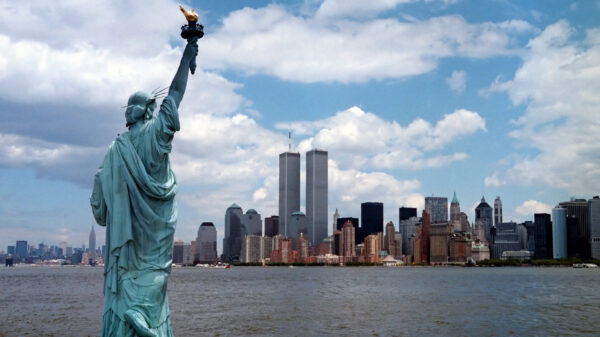







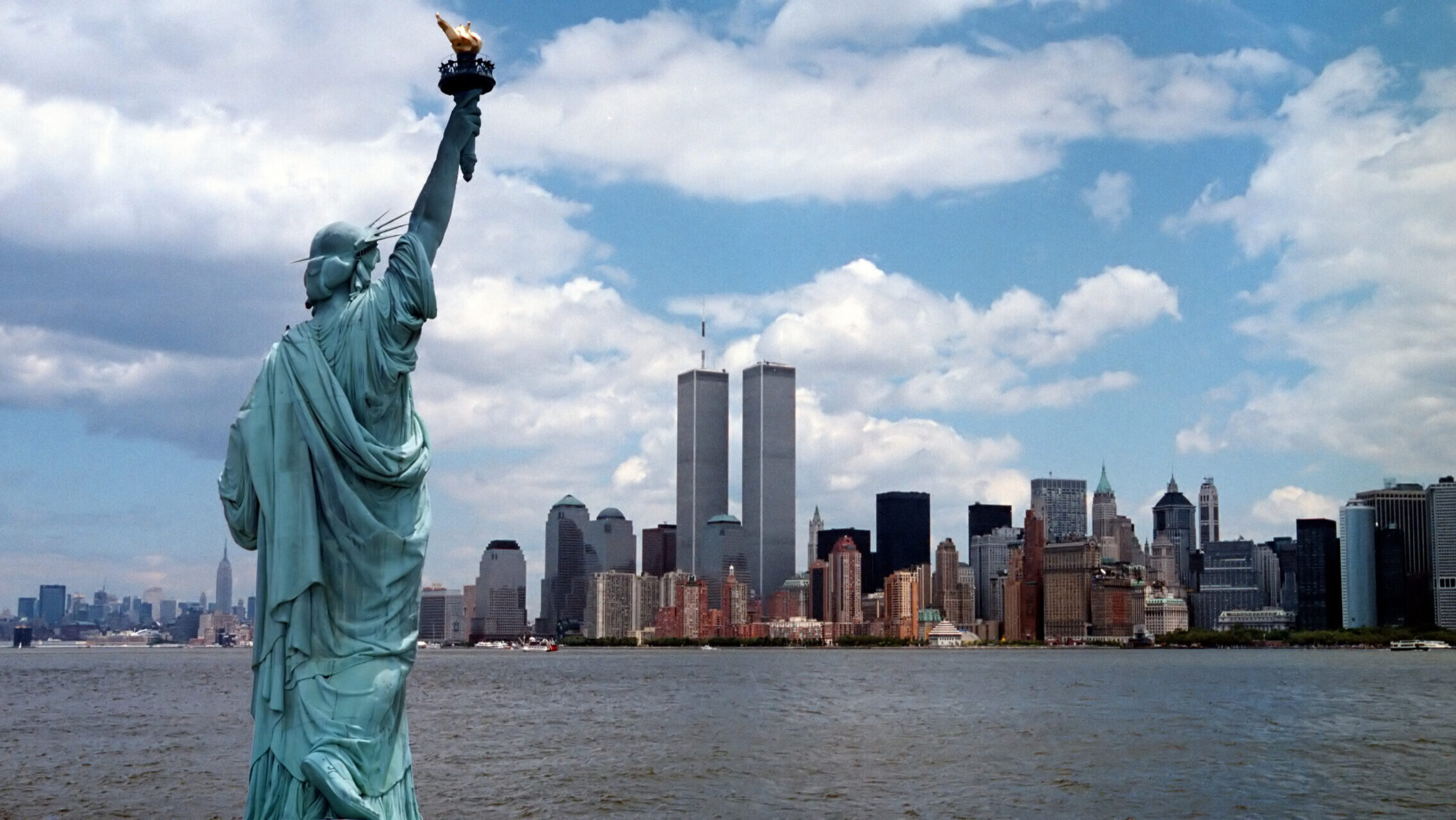
I have seen terror rain out of a crisp September morning.
I wrote those words 24 years ago, on the first anniversary of the September 11 attacks against our nation.
Susan and I lived in Manhattan on 9/11. New York City had become home. We had built successful businesses there and, together, created what was in almost every way an ideal life.
An entire generation of Americans has now grown into adulthood without witnessing that day firsthand. For them, September 11 is history. For those of us who were there, it remains something more. It has sounds and faces. It has names. It has empty chairs.
Our offices were about 11 blocks from the World Trade Center. Susan and I lived in Midtown, in the Murray Hill neighborhood. Many of our employees could not get home that evening, so they came to stay at our apartment.
Television service was gone, and internet access was intermittent. Reliable information was scarce. We sat together and talked about what had happened, what might come next and what it could mean for our country and the world.
Several days later, when limited internet service returned, I received an email from one of our attorneys. She worked on the 85th floor of the South Tower and had sent the message only moments before the second airplane struck the building.
It was a mundane business email—the kind we received every day and seldom thought about once we had answered it.
She was never seen again.
Her parents and those who loved her never had a body to bury.
That email has remained with me because it captures what photographs of collapsing towers cannot. The people who died that morning were not yet symbols, statistics or names carved into stone. They were living ordinary lives. They were answering messages, preparing for meetings, drinking coffee and expecting to return home that evening.
History remembers the towers falling. Those who loved the people inside them remember unfinished conversations.
What I remember most clearly from that day and the days immediately afterward was not fear. It was courage.
I saw firefighters and police officers running toward buildings everyone else was fleeing. I saw medical workers, construction crews and ordinary people go wherever they believed they might be useful. Strangers offered food, shelter, transportation and comfort to one another.
New Yorkers did not stop to ask about politics, religion, race or place of birth before extending a hand. They saw another human being in need and acted.
As we sat in our apartment that night, I was certain that nothing about the fundamental character of the country would change. Americans were strong and resilient people. I quoted Franklin D. Roosevelt: “The only thing we have to fear is fear itself.”
I believed those words.
What I could not imagine was how completely fear would take hold of the country—or how profoundly it would shape the next 25 years.
Terrorism seeks to do more than kill. Its greater ambition is to make the living afraid. Terror wants fear to survive the people who created it. It wants that fear to enter our institutions, influence our laws and change how we see one another.
By that measure, the attacks did not end on September 11.
The American people answered terror with extraordinary personal courage. Our government too often answered it with institutional fear.
We entered wars whose purposes became less clear as the years passed. Missions expanded, rationales shifted, and one war continued for nearly two decades. American service members displayed remarkable bravery, endured repeated deployments and returned home bearing wounds both visible and unseen. Their families sacrificed alongside them.
Their courage should never be confused with the wisdom—or lack of wisdom—of the political leaders who sent them into war.
The United States had both the right and the obligation to defend itself, pursue those responsible and prevent another attack. But the necessity of action gradually became permission for excess.
The Patriot Act made extraordinary surveillance powers part of ordinary government. Torture was given legal euphemisms and debated as policy. Fundamental liberties became negotiable in the name of security. Millions of Muslims, including American citizens, found themselves regarded with suspicion because of crimes they neither committed nor condoned.
Fear has a way of turning temporary powers into permanent ones.
A few days after the attacks, the saber-rattling had already begun. Susan and I were riding in the back of a taxi through the Bowery when we saw a large bedsheet hanging from a high window.
Someone had written across it: “An eye for an eye leaves the whole world blind.”
I am not a pacifist. A nation must defend its people, and justice sometimes requires force. But force without wisdom is anger armed with power.
The test of America was never whether we would strike back. It was whether we could defend ourselves without surrendering the character of the country we were defending.
On that question, our record is mixed.
For 25 years, I have seen signs, banners and bumper stickers declaring, “Never Forget.”
I understand the sentiment, but I have always preferred another phrase: “Always Remember.”
There is a difference, and it matters.
“Never Forget” tells us to hold tightly to the wound. “Always Remember” asks us to carry the whole truth.
Always remember the people who went to work that morning and never returned. Remember the first responders climbing stairwells as frightened workers came down. Remember the passengers who realized what was happening and acted. Remember the people who stood in blood banks, opened their homes and searched through smoke and wreckage for strangers.
But remembrance cannot stop where our innocence ends.
We must also remember the service members sent into wars that seemed to have no conclusion and the families who waited through repeated deployments. We must remember the innocent people abroad who died in conflicts set in motion by crimes they had not committed.
We must remember the liberties surrendered because fear made surrender appear prudent. We must remember how quickly suspicion fell upon people whose faith happened to be shared by the murderers. We must remember that a frightened nation can do things a confident nation would recognize as contrary to its own principles.
Memory is not merely the preservation of grief. It is a responsibility to examine what was done to us, what we did afterward and whether fear caused us to become something we never intended to be.
That examination is not an act of disloyalty.
I love my country, warts and all. Love of country does not require blindness to its mistakes. Real patriotism is not the insistence that America has always been right. It is the conviction that America remains capable of becoming better.
Last year, Susan and I were in Istanbul when someone we met asked why Americans still hated Muslims 24 years after an attack that almost every Muslim in the world had nothing to do with.
The question was too broad. Most Americans do not hate Muslims, and millions of Muslims are themselves Americans. But I understood the truth beneath it.
Why had the fear created by 19 terrorists outlived them? Why had it continued to fall upon countless people who bore no responsibility for what happened that morning?
My answer came down to two words: fear itself.
What matters is not whether a nation feels fear. Fear is human. What matters is whether fear is permitted to choose that nation’s character.
I remember the people gathered in our apartment, uncertain about what would come next but certain that we would face it together. I remember strangers helping strangers. I remember the bedsheet hanging above the Bowery. I remember an ordinary email sent from the 85th floor of the South Tower by a woman who expected an ordinary day.
And I remember believing that America was strong enough not to be governed by fear.
I still believe it.
“Always remember” is not a command to remain imprisoned by the past. It is a promise to be wiser because we survived it.
I was there.
And I will always remember.