



























Huntsville has a severe shortage of police officers.
Wait a minute.
Did I just write Huntsville? The city with the Republican mayor? The city that’s Alabama’s shining beacon of progress and tourism? The gold standard for economic development and corporate recruitment?
That Huntsville?
According to Huntsville Police Chief Kirk Giles, as reported by AL.com, Alabama’s largest city has a shortage of 88 officers. It is down about 40 officers since 2022. A police force that should total more than 370 has just 285.
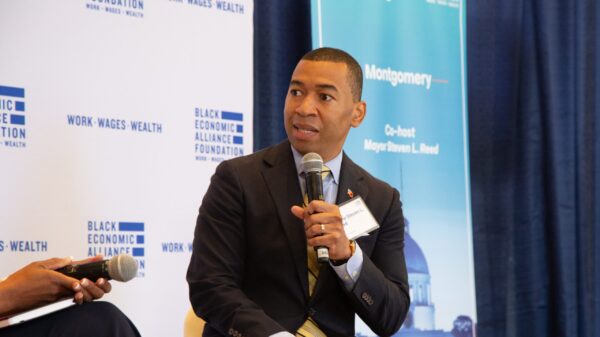
That’s about the same number of officers that Montgomery currently has. For some strange reason, though, I doubt seriously that we’re going to hear state lawmakers publicly criticizing Tommy Battle—not the way they’ve done with Montgomery Mayor Steven Reed.
For months now, Montgomery has been THE focus for Republicans. Everyone from state lawmakers to the Republican nominee for governor to city officials has piled on Reed and the administration of the capital city over crime.
They’ve tried to pass legislation to take over the police force. They’ve threatened to send in the National Guard. They’ve called the city a “war zone.” They’ve talked often and loudly about how dangerous it is.
They seem to believe that much of the problem is related to police staffing, and that may well be the case. (Although the underlying issues that are the root causes of crime will not be fixed even a little bit by increasing the police force.) The Montgomery Police Department is certainly stretched thin. I’ve heard from a number of officers—good people who want to do a good job for a city they love—who say they’re at their breaking point, mainly due to staff shortages.
But as Huntsville proves, police department staffing issues are not unique to Montgomery. In addition to Huntsville, the Alabama Law Enforcement Agency (ALEA) has them, too—down some 30 percent. As many as 10 different cities in Alabama have reported problems over the last few years with maintaining full staffing within their police departments.
So, here’s an opportunity for us to do something rare—actually talk like adults about the problems.
The first one: You’re not paying police officers enough.
We can talk about culture and support and danger and all of the other excuses that have been made about police officer shortages. But in the end, as with so many things in life, the answer to all of your questions is money.
The profession of policing is a microcosm of a much larger problem happening in our country today—people can’t afford to live.
There is such a tremendous gap between the haves and have-nots—between the rich elites and common workers—that prices have been driven upwards to unsustainable levels for a majority of the working public. And police officers are no exception.
In a profession that used to provide a salary at which an officer could maintain a family of four, afford a decent car or two, take a vacation once a year and give the kids a nice Christmas, it now usually pays so little that cops have to pick up extra side jobs to make ends meet. And that nice pension that used to allow a cop to retire after 20 years—one of the greatest recruiting tools this side of a shiny new car for a star running back—was squashed by penny-pinching bureaucrats who thought it would be a good way to save a few bucks.
On our podcast, Alabama Politics This Week, a few weeks back, Reed said the city was now competing with the likes of Amazon delivery drivers for recruits. They get paid roughly the same as a cop, and no one’s (usually) shooting at the delivery guy.
But there’s no reason to rely on hypotheticals, because we actually know that money—and financial stability overall—is the answer to this problem. And how do we know?
Birmingham.
A city that has routinely ranked in the top 10 for “most dangerous cities” over the last several years has over the past couple of years hired more police officers than anyone in the state, probably more than any other city in America. The numbers are, to put it mildly, unreal.
In October 2024, Birmingham PD said it had more than 220 vacancies and 172 patrol vacancies. By February 2026, the department had hired more than 260 officers, filled every open position and then some, and it achieved full staffing.
Crime rates in the city have plummeted. The city’s efforts have made national headlines. Mayors of other major cities are calling Birmingham Mayor Randall Woodfin and asking for advice.
So, how’d they do it?
Mostly with money.
BPD significantly increased officers’ salaries, including big bumps for new recruits. They added in sign-on bonuses and yearly retention bonuses (paid out quarterly) and relocation bonuses. They gave officers referral bonuses, too.
But it wasn’t just money. And this, if we want to be serious about this situation, is the one spot where you could criticize Reed and Huntsville Mayor Tommy Battle and other mayors. Because Woodfin and BPD officials and city leaders and other city stakeholders actually came together to put on the table the most comprehensive, effective plan possible. They stopped the petty bickering and worked together to figure out what would best attract and retain officers, what would make them happier, what would make the job more attractive. Then, they formulated a comprehensive recruiting plan that required city leaders and BPD officials and others to work together.
For example, BPD didn’t rely on the old academy routine—once per year for sign-ups and graduation—for bringing in officers. Instead, working with various officials, it held a series of recruiting events that drew in applicants from a variety of locations and at dates throughout the year.
It took tremendous buy-in from city and police officials and a rather unique level of cooperation.
That seems to be a problem for many cities. It certainly is for Montgomery.
The number of old grudges and new grudges and power struggles and blood feuds and political enemies around Montgomery makes an old-school daytime soap opera seem tame. But if the issue of crime, and specifically the issue of police staffing, is going to be solved, all of that mess has to stop.
For this one thing, a whole bunch of people need to set aside their bad feelings and work together on a plan to do exactly what Birmingham has done. It’s going to have to be led from the top. It’s going to require buy-in from people who don’t like each other. And it’s going to require sharing the glory, although there will be plenty to go around.
Surely, we all see by now where pointing fingers and political games have landed us. Surely, we know by this point that holding grudges and refusing to set aside hurt feelings is only contributing to the downfall of everyone involved. And surely, we see clearly from Birmingham’s success what eliminating those things and working a comprehensive plan can do.
The difference is, quite literally, life and death.