
























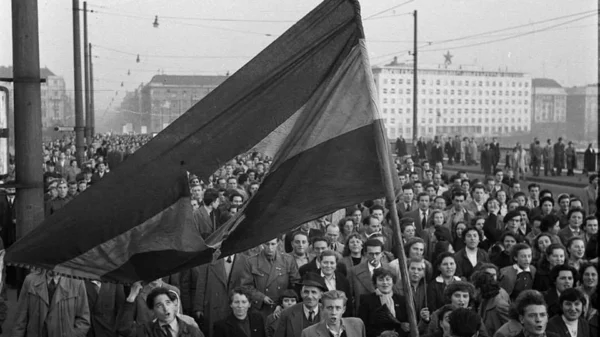

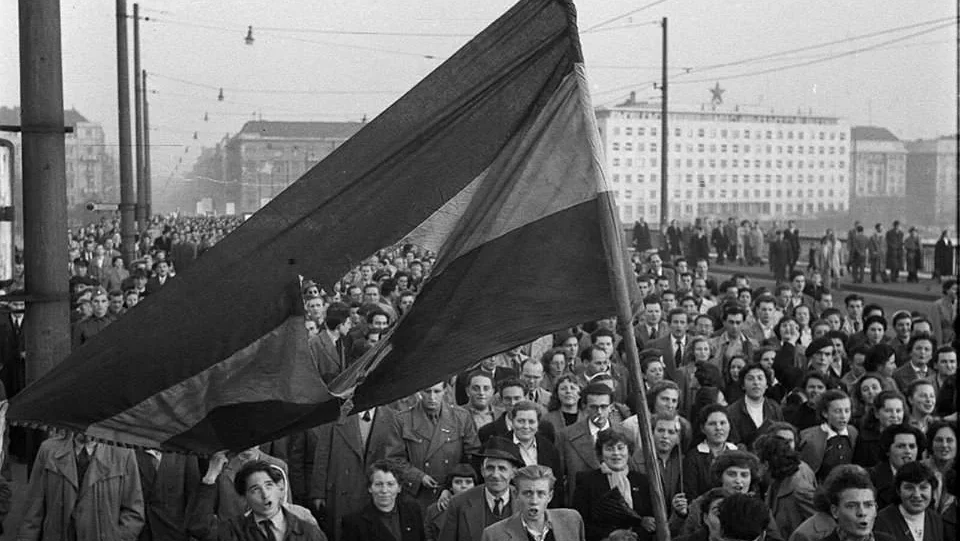
Seventy years ago, for a few extraordinary days, the people of Hungary regained their freedom.
Then the tanks came.
The Hungarian Revolution of 1956 exposed the enormous difference between proclaiming freedom and defending it. After years of encouraging the peoples of Eastern Europe to resist Soviet domination, America discovered it was ill-prepared for meaningful action.
The tragedy began in the settlement following World War II.
Allied with the Nazis, Hungary was defeated and subsequently occupied by the Russian Army. Although postwar arrangements contemplated representative government and political independence, Russia had little intention of allowing Hungry to escape its control.
Hungary’s 1945 parliamentary election demonstrated the problem. The Independent Smallholders’ Party won an outright majority. The Communists received only about 17 percent of the vote.
But the Soviets possessed something more important than votes: an Army.
The Communists muscled their way into the government, taking control over the Interior Ministry and police. Opposition politicians were intimidated, arrested, driven into exile, or eliminated from public life. Elections became increasingly manipulated.
The regime nationalized industries, collectivized agriculture and subordinated Hungarian economic life to central planning. The promised workers’ paradise proved considerably less attractive in practice than in theory.
Economic hardship was accompanied by fear.
Hungary’s secret police became one of the most hated institutions in the country. Surveillance, interrogation, imprisonment and political purges made opposition deadly. Ordinary families learned that an ill-considered remark could have consequences. Political pluralism disappeared. Priests were persecuted; churches closed.
Hungary was nominally independent, but the limits of its independence were determined in Moscow.
The United States understood this and spent much of the early Cold War denouncing Russian domination of Eastern Europe. Radio Free Europe broadcast hope of liberation behind the Iron Curtain. Political officials repeatedly assured Eastern Europeans that their eventual freedom remained an objective of United States policy.
American-sponsored broadcasts emphasized resistance to Stalinism, publicized dissident movements within captive nations and repeatedly reminded Hungarians that the free world supported their aspirations. Statements by President Eisenhower, Secretary of State Dulles and other leaders pledged continued support for the eventual freedom from Soviet domination.
In February 1956, Russian leaders denounced Stalin’s cult of personality and crimes against his comrades. But, if Stalin had been a tyrant, what did that say about the proxy governments Stalin had installed throughout Eastern Europe?
Hungarians could reasonably conclude that grievances once denounced as treasonous had suddenly been legitimized.
In October of 1956, students demonstrated in Budapest in support of political reform and greater national independence.
The demonstration became a revolution.
Crowds toppled Stalin’s enormous statue. Fighting erupted between revolutionaries and the secret police. Hungarian soldiers began joining the uprising. Workers organized councils. With no popular support, communist authority collapsed with astonishing speed.
Hungry announced the end of one-party rule and the restoration of the political parties that had participated in Hungary’s democratic coalition in 1945.
Russian troops began withdrawing from Budapest. Moscow even issued a declaration acknowledging past violations of sovereignty among socialist states and expressing willingness to negotiate the presence of Soviet forces in Hungary. American diplomats in Budapest reported that the withdrawal seemed real.
For several days, freedom seemed possible.
But, when Hungary declared its neutrality and announced withdrawal from the Warsaw Pact, Moscow became alarmed it might lose control if other dominated countries followed suit.
They made Hungary an example.
As part of a massive invasion, tanks rolled into Budapest. Artillery pounded resistance positions. Teenagers and young workers armed only with rifles and Molotov cocktails fought the Red Army.
Hungarian radio stations broadcast desperate messages to the outside world. The Hungarian government itself appealed for American assistance. Hungary was fighting desperately and knew that without outside help the unequal struggle would be lost.
The West listened.
But did not hear.
President Eisenhower demanded the withdrawal of Soviet forces. The United States appealed to the United Nations and condemned the invasion.
But there would be no American troops. No NATO intervention. No Western ultimatum backed by military force.
The revolution was crushed.
Thousands of Hungarians were killed in the fighting and subsequent repression. Thousands more were imprisoned. Leaders were tried in secret and executed; their bodies buried face down.
But the most damaging consequence was psychological.
The United States had spent years exciting Hungarian hopes through Radio Free Europe and then, when the Hungarians revolted, reality proved stronger than rhetoric.
Eisenhower vigorously rejected the accusation that America had encouraged revolt, but the fact that the accusation was being made illustrates the damage already done.
The Hungarian Revolution became one of the bleakest moments of the Cold War.
The lesson seemed brutal: might made right. Moscow had demonstrated it was willing to use overwhelming force, while the democratic West had demonstrated the limits it would risk supporting liberation movements.
Russia looked ruthless but powerful. America looked principled but powerless. The international community noticed the difference.
The Soviet Union could crush the Hungarian Revolution, but it could not erase its meaning. The memory of 1956 survived underground for generations. When Hungary regained independence in 1989, one of the great symbolic acts of national rebirth was the rehabilitation of the revolution’s leaders.
The people of Hungary demonstrated that political legitimacy cannot permanently rest upon tanks, secret police and coerced obedience. Governments can suppress freedom for decades, but suppression does not transform tyranny into consent.
Hungary left the United States and the West with a more difficult lesson.
A great power must be careful about the promises contained in its rhetoric. Words broadcast from safety can sound very different to people risking their lives behind barricades. Encouraging freedom carries responsibilities, particularly when those being encouraged reasonably believe that help may follow.
The Hungarians heard the West proclaim their right to be free. When they rose to claim that right, their radios carried desperate appeals to match rhetoric with action.
The free world heard them.
But no one came.
Seventy years later, that silence remains one of the most haunting sounds of the Cold War and a bleak day for Western integrity.