


















“[Y]our army and your navy … [without the] liberal obedience [derived from the British people and their government and Constitution] … would be [,respectively,] a base rabble and … nothing but rotten timbers,” Edmund Burke stated in 1775.
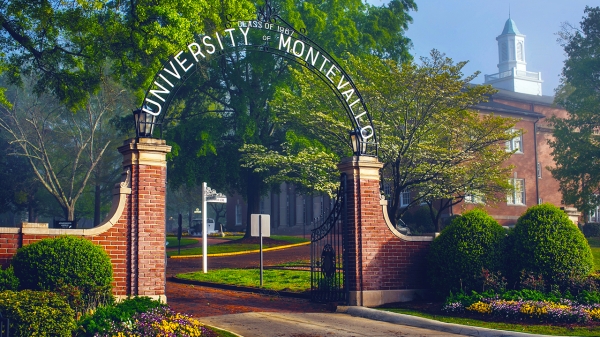
Returning to the University of Montevallo recently, where I was inducted into its presidency in 1977, was a needed nostalgic experience, offering encouraging confirmation that some critical institutional decisions do not change with presidential inaugurations.
The occasion was the investiture of Michelle Johnston as the 16th president of the university, still known by some as Alabama College. It was the fifth such ceremony since I was installed as its youngest chief executive, one of the youngest in the country, nearly 50 years ago. Johnston, most recently the president of three other institutions of higher education elsewhere during a three-decade-long career, became the first woman to head the 130-year-old Alabama university since Alabama icon Julia Tutwiler was briefly appointed to head the then-girls school in 1896. (Thereafter, she had a falling out with the board of trustees and the first of 15 men was appointed to take her place.) Finally, an outstanding woman has been appointed to pick up the mantle of leadership from the late Miss Julia. I cheered the process and its product from afar until my return to the campus.
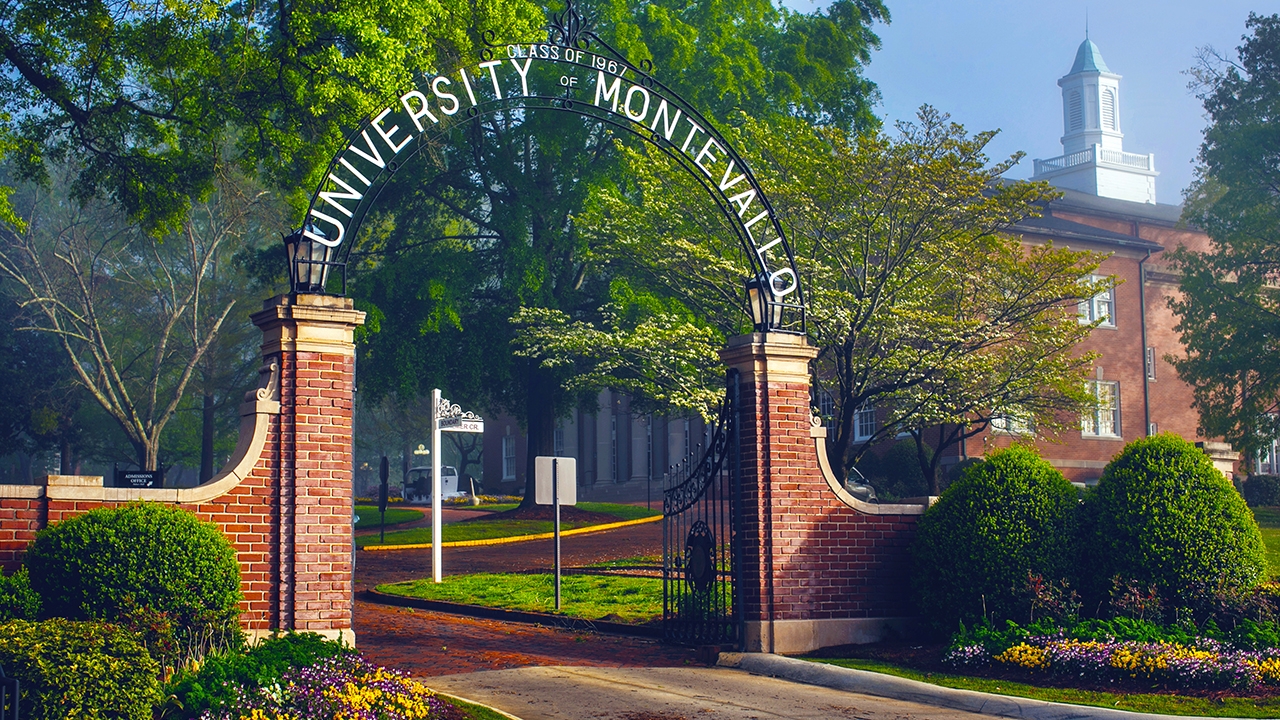
A performance pianist with degrees from the University of Alabama, LSU and Mississippi State University, before completing postdoctoral work in management and marketing from the University of Florida, she enjoys a regional and national reputation as an administrator and a faculty member in Georgia and elsewhere. President since July 1, she hit the red-brick streets of the still-beautiful campus running, doubtless in low heels. Today, she’s most likely seen walking or driving down the scenic streets of the campus, most of which are on the National Register of Historic Places—from Flowerhill, the recently refurbished, century-old president’s home, to Calkins Hall, where her office is located. There, she began focusing on advancing student success, sustaining academic and student developmental excellence, and building strategic partnerships, as well as philanthropic support for the institution—a part of her vision of her presidency.
She says she hopes she can also “write the greatest chapter yet in [Montevallo] … history, one defined by student achievement, academic distinction, and lasting community achievement.” That’s hardly surprising, for community service and partnership-building have been priorities for Johnston throughout her career. She has also been a leader in campus sexual assault response and prevention and has been invited to the White House under two administrations to discuss Title IX, an area of interest of my own and one now sadly back in the news, at least at Cornell.
The University of Montevallo, located near the geographic center of Alabama, is by statute the state’s “liberal arts college,” whose mission contemplates its giving students a “small college experience.” That’s why since the late ’70s its enrollment has been limited to some 3,000 or so undergraduates—appropriate for a public school/college/university with its heritage and mission. It became coeducational in 1956; it’s been a university since 1969. Consistent with its mission, the UM undergraduate enrollment is presently the smallest in the state, well within its policy-determined size; and its graduate degree programs are similarly limited, their enrollment presently totaling the smallest in public higher education. They are limited in number and scope, operating consistently within the UM statutory mission. An example is the College of Business, the smallest accredited college in the country, an achievement of my administration that has only grown better, but not much bigger since the ’80s. “Bigger is not necessarily better,” UM folks like to say.
At the inaugural ceremony, Johnston spoke—after members of the university community, including trustees, faculty, staff, students, alumni, representatives of ACHE and higher education, and after others spoke and she had been invested as “president of the United State,” a gaffe by the trustee-emcee that brought down the capacity Palmer Hall crowd. Before the inauguration, I presented to her a copy of my recent book, “Awakenings to Racism in Alabama,” my memoir of growing up in the Jim Crow South. I also gave one to the UM librarian for interested students to read, because it contains two chapters devoted to my decade-plus years in Montevallo, ending in 1988, which supports her understanding of the purpose of the university. Before my inauguration 49 years ago, I carefully studied Lucille Griffith’s history of “Alabama College” up to the ’70s.
In her brief address, Johnston reconfirmed the university’s statutory mission, as I expected, noting that Julia Tutwiler had worked with her trustees, local citizens and with the local legislator to ensure that the school was founded in Montevallo to meet the educational needs of Alabama girls—the well-located town which then had more train service than any other place in the middle of the state. Given her experiences in Georgia, Alabama and elsewhere, I was not surprised to learn that she knew that history, revered it and wanted to tap into it in developing UM’s potential even more into the future. I appreciated what she was saying, for her words were consistent with what was said, to some extent or another, by the previous five presidents during their tenures on the red-brick campus.
Grounded in that history and heritage, the new president announced that the “130 Plan,” the name of the new strategic planning process, would extend and invigorate it, enjoying the participation of representatives from all stakeholders in order to bring the mission-based planning process further into the 21st century. Later, I learned in talking with the new president and the academic leaders of the university just how serious they were and how they saw the connection between the liberal arts and the AI world into which all of us are being thrust, whether we like it or not.
Reflecting upon the convocation speakers’ remarks, listening to Johnston, Provost Courtney Bentley and chatting with the academic deans, the most congenial group of deans I’ve ever been around, and talking with faculty and student leaders, I was impressed with what seemed to be a broad consensus on campus about the UM purpose in Alabama public higher education. One might think that such a thing is not unusual, but, in my experience, it is very unusual. That even includes the role played by the limited graduate programs at UM, mostly master’s degree programs, with one doctoral program in educational leadership (a major change since the ’80s). Even master’s work is special and related to the UM mission statement. The same is true of the new nursing program that I now heartily endorse, given its liberal arts focus. The latter makes it unique, too, I think.
What impressed me the most at Montevallo, reflected in the quality of its leadership as well as in the understanding of everyone I talked to about the role of the liberal arts, was how they perceive their role in an increasingly AI world. Rather than feeling threatened by artificial intelligence, as if the liberal arts were irrelevant to the world of AI, UM leaders had a positively aggressive posture. They argued that in an AI world our ultimate hope for controlling the awesome technology is to ensure that persons educated in the coursework and experiences that have been the most constant in the history of Western civilization—the liberal arts, humanities and liberal sciences—provide the leadership that controls these daunting new technologies.
With that understanding, Johnston and Bentley, working with their deans, are bringing a new relevance to the mission of the college that used to be one of “the Big Three” in our state’s higher educational hierarchy, the University of Alabama and Auburn University, established in the state constitution, being the other two. Unfortunately, according to many faculty there, Auburn has recently gone its own way, losing its way, in my judgment, by abolishing traditional faculty governance and taking direct control of the AU curriculum. Montevallo, Troy University and the University of Alabama have taken a different approach to implementing legislation (House Bill 580) passed in the last session of the Alabama Legislature. I say, bully for them.
I am delighted that Montevallo’s board of trustees and its new president have not abandoned traditional governance relationships as the university seeks to make its mission more relevant than ever, its graduates more in demand than ever. AI must not be left to the technocrats alone, just as building the data centers on which it is dependent cannot be left to self-interested local and state leaders and agreements not subject to public disclosure. All of that is being debated right now by the two major gubernatorial candidates.
Those educated in ethics, human communication and relationships, history and civics, and the rest of the liberal arts and sciences will be able to provide informed, needed leadership in the years ahead. If they can’t or don’t provide it, who will? Silicon Valley moguls have already shown they cannot protect us from the amoral and immoral uses of their products and the electronic synapses on their integrated circuits. Indeed, court decisions are beginning to confirm their obsession with profits over human values.
One can therefore see why this former college president felt so welcomed back to the campus. For the first time since 1977, I’d never felt more confident that the university had a president and academic leadership who not only fully understood its history, heritage and traditions, but also were prepared to reprioritize its mission at a critical time in the history of Alabama public higher education. In a fast-changing world, Montevallo would not be straying from or neglecting that statement of purpose, developed almost a half-century ago. I could not have been welcomed back better than that.
The statutory mission
The mission of the university, unique in Alabama public higher education, is “to provide students from throughout the state an affordable, geographically accessible, ‘small-college’ public higher educational experience of high quality, with a strong emphasis on undergraduate liberal studies and with professional programs supported by a broad base of arts and sciences, designed for their intellectual and personal growth in the pursuit of meaningful employment and responsible, informed citizenship.”