







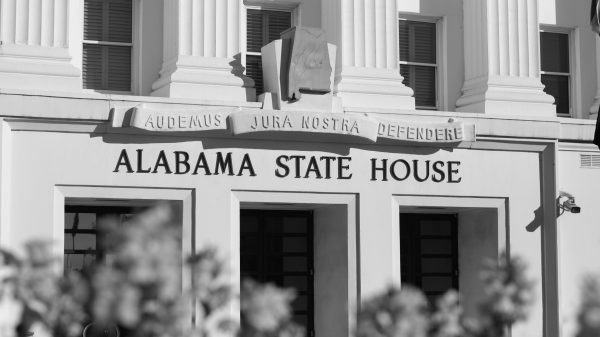


















Two weeks after Gov. Kay Ivey called for a pause on executions to exact a “top-to-bottom” review of the current process, Attorney General Steve Marshall told media Monday that “there is no moratorium, nor will there be, on capital punishment in Alabama.”
“The well-known axiom is true: justice delayed is justice denied,” Marshall said.
Marshall said he has not personally spoken with Ivey and looks forward to having a conversation with her about how to move forward. He told members of the press he would not actively seek an execution date until he felt an execution could move forward.
Ivey’s office responded by signaling agreement with Marshall.
“Gov. Ivey wholeheartedly agrees with he attorney general that justice delayed is justice denied,” Ivey’s office said in a statement. “That is exactly why two weeks ago, Gov. Ivey swiftly moved to do a top-to-bottom review of execution protocol. Discussions have already begun, and Gov. Ivey continues to welcome the attorney general’s team to be apart of this effort to deliver needed justice for victims.”
Marshall said he takes no issue with a review of the process, including the state’s struggles to find a vein to deliver the lethal injections within the two- or three-hour time window it has had in its previous two failed executions.
Both Marshall and Ivey have criticized the individuals facing the death penalty for legal tactics to “run out the clock” on execution warrants.