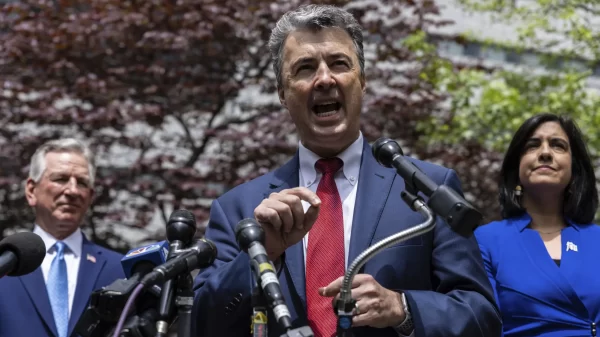




















On Monday, Alabama Attorney General Steve Marshall and Republican attorneys general from twenty other states signed onto an amicus brief in the case LULAC v. Abbott, the lawsuit over Texan Republicans’ attempt to redraw electoral districts in their state.
Following urgings from the Trump White House, Republican lawmakers in Texas passed new district maps intended to increase the number of Republican representatives from the state in Congress by 5. If implemented, the changes would significantly reduce the number of “majority-minority districts.”
But earlier this month, a federal judge blocked the new maps from being implemented, writing that “substantial evidence shows that Texas racially gerrymandered the 2025 Map.” State legislators, Texas Governor Greg Abbott and representatives of the Trump administration have all argued though that the new map was actually a permissible partisan gerrymander.
On November 21, two days after the district court judge’s decision, Supreme Court Justice Samuel Alito issued a stay barring the order requiring the state to continue using its old district maps from going into effect.
In Monday’s amicus brief, the attorneys general state that a past Supreme Court decision requires plaintiffs to “present, except in the most unusual circumstances not present in this case, an alternative map that could satisfy the legislature’s political goals in a race-neutral manner.”
The brief also claims that, by ruling for the plaintiffs, the district court “inserted itself into a political dispute and transferred five congressional seats to the Plaintiffs’ preferred political party.”
The Texas NAACP pointed in its brief to statements by Governor Abbott that the redistricting was enabled by a recent court decision changing how members of minority groups could challenge alleged instances of racial gerrymandering. These comments, the group stated, show that the intent behind taking a “sledgehammer to the voting power of Black and Latino citizens in those districts” was inherently racial in character.
Marshall stated in a press release about the Monday filing that “increasingly, political operatives are taking legal protections designed to prohibit racial discrimination and cynically using them to advance purely partisan ends.”
“That is why the Supreme Court’s alternative-map requirement is so important: to see if plaintiffs can show that the legislature enacted its map because of race—which the Constitution prohibits—or because of its own legitimate political goals,” he wrote.
As the attorney general of Alabama, Marshall has repeatedly intervened in lawsuits over alleged racial gerrymandering, most prominently in Allen v. Milligan. More recently, he filed an amicus brief challenging another judge’s decision in a case over racial gerrymandering in the drawing of Jefferson County’s district maps.
In announcing that earlier amicus brief, Marshall similarly claimed that “courts are transformed into weapons of political warfare” when they do not show sufficient deference to legislative bodies.