














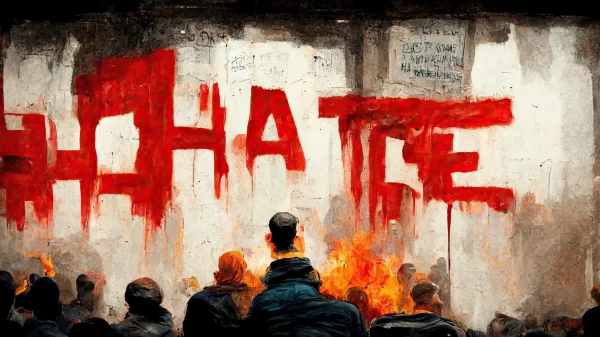





We are losing the tolerance that holds a free society together. Insults have replaced reasoned debate, and words like traitor, fascist and communist are hurled not at enemies of the nation but at neighbors who simply hold different convictions about government’s purpose. When the language of contempt becomes the currency of public life, when distortion is mistaken for plain speaking, it is no surprise that venom seeps into everyday conversation and reshapes how many Americans see one another.
America’s political crisis is rooted in a deeper crisis: the decline of the disciplined citizen a democracy requires.
A free society requires a certain kind of person—one capable of governing themselves before governing others. The founders understood this. So did the Enlightenment thinkers who shaped their world. They believed democracy was not a machine that could run on its own. It was a moral achievement demanding citizens who could discipline their passions, think clearly, and extend tolerance even in disagreement.
Today, that citizen is becoming harder to find.
We see it most clearly in the conduct of some of our leaders. Some look at the rants, threats and bullying we hear from certain figures in public life and call it “straight talk.” But is it? It is the expression of an undisciplined mind governed by passion rather than reason—a performance of aggression mistaken for strength. Leaders set the tone for a nation. When they indulge their impulses, they teach citizens to do the same.
And the same problem echoes closer to home. When Alabama lawmakers pass legislation they present as moral, yet the result is to harm others and divide the state into “us” and “them,” they are not governing from principled understanding. They are acting from a failure to grasp the consequences of their actions. Laws rooted in passion rather than insight may satisfy the moment, but they corrode the future.
No one understood this danger more clearly than Baruch Spinoza, the 17th-century philosopher whose work helped define the Enlightenment. Spinoza argued that human beings are shaped by powerful emotions—“affects”—that, left unchecked, distort judgment and make reason impossible. A free person, he wrote, is “guided by reason,” not driven by impulse. A free society depends on citizens who can restrain their passions long enough to discern truth, respect difference, and act with a view toward the common good.
This is where the nation falters. We speak often of institutional failure, but institutions do not collapse from the top down. They collapse from the inside out—as the civic character that once sustained them erodes.
A legislature cannot function when members elevate spectacle over expertise. A judiciary cannot maintain legitimacy when facts are discarded for faction. A public square cannot survive when disagreement becomes grounds for dehumanization.
Institutions fail when the citizens who animate them lose the virtues that once upheld them.
And this is the truth we avoid at our peril: Democracy is not self-sustaining. It is human-sustaining.
It requires citizens willing to act with restraint when anger would be easier, citizens willing to listen when dismissal would be simpler, citizens willing to rise above their passions long enough to allow reason to operate. Civic responsibility is not heroic work. It is the daily choice to see opponents as fellow citizens rather than enemies. It is the discipline to judge policies by their consequences, not by the slogans used to promote them. It is the courage to refuse the comfort of constant outrage.
The path back to stability does not begin with institutions. It begins with citizens. It begins with recovering the understanding that freedom is not the absence of constraint but the presence of self-governance—freedom of mind, freedom of conscience, and freedom from the tyranny of impulse.
Spinoza warned that a society governed by passion would fracture into hostility and suspicion. But he also believed human beings are capable of rising above their instincts through reason—that clarity itself is a form of freedom.
If this nation is to endure as a republic, it must reclaim the citizen it is losing: the one who can disagree without hatred, who can argue without contempt, who can accept difference as a necessary condition of democratic life.
A free society does not merely need institutions. It needs citizens who understand that freedom requires responsibility. And if we cannot govern ourselves, no institution can save us.