











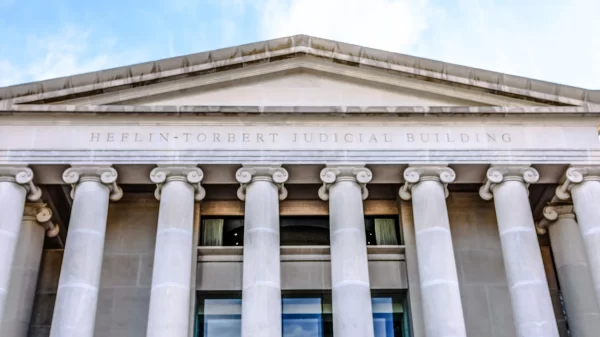




America did not become free, prosperous, or stable by accident. Its greatness was not born from uniformity or a single moral creed. It emerged from a bold, perhaps radical, commitment to pluralism—the belief that a nation could endure, and even thrive, when people with profoundly different values, beliefs, and identities shared a constitutional home. Our institutions were built for disagreement rather than obedience, and our liberty has always depended on a government restrained enough to let individuals seek truth on their own terms.
That vision is now under sustained assault.
For many, MAGA is simply a brand fused to the personality of Donald Trump. But for others—including the movement’s architects—Trump serves as the master of ceremonies for a much larger project: the remaking of America into a nation governed by a single, state-enforced moral order. In their telling, pluralism is decay, democracy is obstruction, and state power must be reshaped into an instrument of ideological conformity.
Many who rally behind MAGA have unknowingly become pawns in this devil’s bargain. Their frustrations are real, their loyalties sincere, but both are being redirected to support a project that concentrates power, weakens institutional safeguards, and elevates ideology above democratic restraint. They believe they are restoring the republic; in reality, they are enabling those who seek to control it.
That worldview could not be further from the principles that made this country great.
The Founders understood human ambition far better than today’s strongmen. They drew from centuries of political wisdom that taught a simple lesson: when any person or movement claims absolute certainty, freedom is the first casualty. Checks and balances, divided power, free speech, and religious liberty were not adornments—they were deliberate guardrails intended to keep government from becoming the arbiter of ultimate truth. Once a state claims that authority, it will inevitably claim authority over the people themselves.
MAGA elites reject those restraints—the guardrails their agenda must overcome to consolidate power. Neutral institutions are recast as instruments of presidential authority. Nowhere is this clearer than in the Department of Justice, where a department created to enforce law impartially is being reshaped into an extension of executive will—a tool to shield allies, intimidate opponents, and blur the line between political interest and federal power. Career prosecutors and civil servants, long regarded as the ballast of the republic, now face pressure to apply not the law as written, but the law as preferred. Equal justice under law, once non-negotiable, becomes contingent on political loyalty.
This shift is not improvisation. It reflects the governing philosophy behind Project 2025—a blueprint designed to replace professional judgment with political obedience. Under this model, federal agencies lose independence; scientific and technical expertise becomes subordinate to ideological conformity; internal checks within the executive branch are dismantled so the president may direct the machinery of government with little resistance. Policies on education, health, civil rights, immigration, and national security are rewritten not to broaden freedom but to narrow it to those who fit a prescribed cultural identity.
The result is a federal government redesigned for loyalty rather than competence, obedience rather than service. A system built to restrain power becomes one built to consolidate it.
Only through this national lens can the developments in Alabama be fully understood.
The Alabama Legislature increasingly mirrors this model, treating the power of the state as a means to enforce what it believes is a single, universal truth. Legislation restricting reproductive care, tightening control over classroom content, intervening in local decisions, and weakening institutional oversight all reflect the same governing impulse: disagreement is treated as error, and the purpose of law becomes the imposition of a preferred moral order rather than the protection of individual freedom.
This stands in direct conflict with the constitutional design. In Federalist No. 10, James Madison warned that the gravest danger to a republic comes not from foreign powers, but from domestic factions convinced of their own singular righteousness. His answer was pluralism—a system that disperses power widely so no faction can dominate and no single worldview can claim the authority of absolute truth. The Alabama Legislature now operates from the opposite premise, narrowing the boundaries of acceptable life in the state instead of protecting the broad freedoms that define a constitutional democracy.
This warning resonates sharply in Alabama, a state whose 1901 Constitution enshrined exclusion and concentrated political control as governing principles. That document restricted participation and limited pluralism—the very conditions that Project 2025 seeks to replicate at the national level. Today’s movement revives that same instinct: to narrow the circle of belonging and declare that only some voices count.
This model of governance does not create strength; it creates fragility. It undermines the institutions that ordinary Alabamians rely on every day. Hospitals close. Schools strain. Agencies lose continuity as expertise is replaced by political loyalty. Businesses navigate policy swings shaped not by the state’s economic needs, but by national culture battles imported for political gain. Alabama becomes not a beneficiary of this movement, but one of its earliest proving grounds.
The choice before us is not between conservative and liberal, right and left, or even Trump and someone else. It is between a constitutional order built to protect freedom through the dispersion of power—and a political project determined to concentrate that power in the hands of the few.
America has never drawn its greatness from a single sanctioned truth.
It has drawn its greatness from a Constitution that refuses to let any one truth rule us all.