




















Senator Katie Britt, R-Alabama, is celebrating the passage of the National Defense Authorization Act, NDAA, for Fiscal Year 2026—the nearly $1 billion defense policy bill signed into law by President Trump last Thursday.
The final version of the bill, voted for by the entirety of Alabama’s congressional delegation, approves a record $901 billion in military spending for FY26, roughly $8 billion more than what the Trump administration requested. Its provisions include a nearly 4 percent pay increase for military members, $400 million in aid for Ukraine over the next two years, and sweeping provisions rolling back existing diversity, equity, inclusion and accessibility initiatives at the Pentagon.
Additionally, the legislation withholds a portion of Secretary of War Pete Hegseth’s travel budget until the Pentagon provides lawmakers with unedited footage of U.S. military strikes on alleged drug boats off the coast of Venezuela, as well as copies of the orders behind the operations. Legislators from both parties have raised concerns over the strikes in recent weeks, particularly concerning Hegseth’s alleged “double tap” order to kill two survivors of a U.S. attack on September 2—a potential war crime.
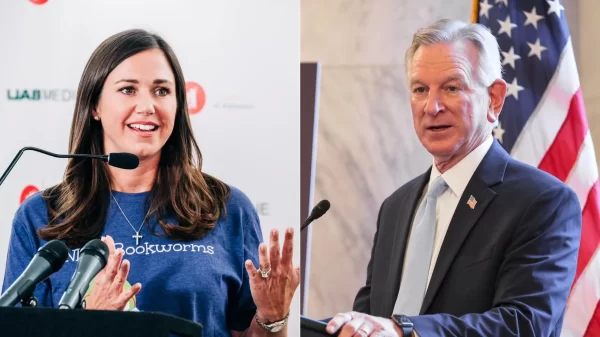
Britt touted the bill’s passage into law in an official press release late last week.
“The NDAA has passed annually for 65 years in a row and is one of our nation’s most important pieces of legislation. I’m proud to have supported the FY26 NDAA, which executes on President Trump’s and Senate Republicans’ commitment to strengthen our nation’s military capabilities and warfighter, ensure America remains equipped to meet 21st-century threats, and maintain our global military leadership,” said Britt.
“The FY26 NDAA returns the Department of War to its warfighting mission, assists President Trump in securing our border and defending our homeland, builds on military recruitment efforts that continue to reach record highs, strengthens deterrence in the Indo-Pacific, and pushes back against Russian aggression and terrorist activity,” the senator’s office added.
In addition to its national-level provisions, the 2026 NDAA also includes several appropriations for military construction in Alabama. The legislation allocates: $50 million for an access control point at the Anniston Army Depot; $55 million for a propulsion systems building at Redstone Arsenal; $64 million for a general-purpose warehouse at the Defense Logistics Agency distribution center in Anniston; and $28 million for area maintenance support activity at Maxwell Air Force Base.
The law also includes a provision introduced by U.S. Representative Dale Strong, R-Alabama, which grants military bases like Redstone Arsenal greater flexibility to issue short-term contracts to security guards and firefighter personnel when faced with understaffing of gate guards.
Britt also touted the legislation’s overhaul of the “broken acquisition system” which she claims will allow companies in Alabama to “get new programs moving faster with less red tape.”
In general, Britt celebrated the NDAA as a win for Alabama, arguing that the law will strengthen the state’s role in contributing to national defense.
“The role that Alabama plays in our national defense is incalculable,” Britt added. “Ensuring our state continues to play a central role in bolstering our warfighter and defense capabilities is pivotal, and I’m proud to have helped deliver continued investment in our state.”