












In November 2026, the people of Alabama will make a fateful choice. We will decide whether our next governor sees this state as one people, or as competing tribes to be played against one another. Will we choose a leader who governs the whole house—or one who governs only for “their people,” even if it means turning neighbor against neighbor?
In a democracy, candidates may run as partisans. But once the oath is taken, the responsibility widens. You govern the whole public—not simply the voters who cheered for you on Election Night.
Alabama has seen what that looks like.
Governor Kay Ivey won reelection in 2022 with 66.91 percent of the vote—a landslide by any modern standard. Yet when she delivered her 2023 inaugural address, she didn’t claim the moment for one side of the state. She closed with a call for unity:
“Today, all Alabamians—regardless of party affiliation—have the chance to stand together, united, to help build a brighter future…”
Now, it’s obvious that not everyone will agree with every decision Kay Ivey makes. No governor escapes disagreement. What matters is whether the people believe their governor is trying to govern for all of them—not just the voters who supported her, not just the members of her own party, but the whole of Alabama.
From the beginning of the American experiment, that has been the expectation. The Founders worried openly about the dangers of faction—that politics might devolve into a bitter contest of “us versus them.” James Madison warned that the “violence of faction” had destroyed republics throughout history. Abraham Lincoln reminded us that a house divided against itself cannot stand.
Self-government only works when those who hold power understand that they hold it in trust—for everyone.
And that brings us to the choice ahead.
Donald Trump did not invent partisanship, but he normalized the idea that government exists chiefly to reward the loyal and ridicule everyone else. His politics has always been about sides. Neighbors became enemies. Fellow citizens became combatants.
That style of politics has seeped into state government—including here.
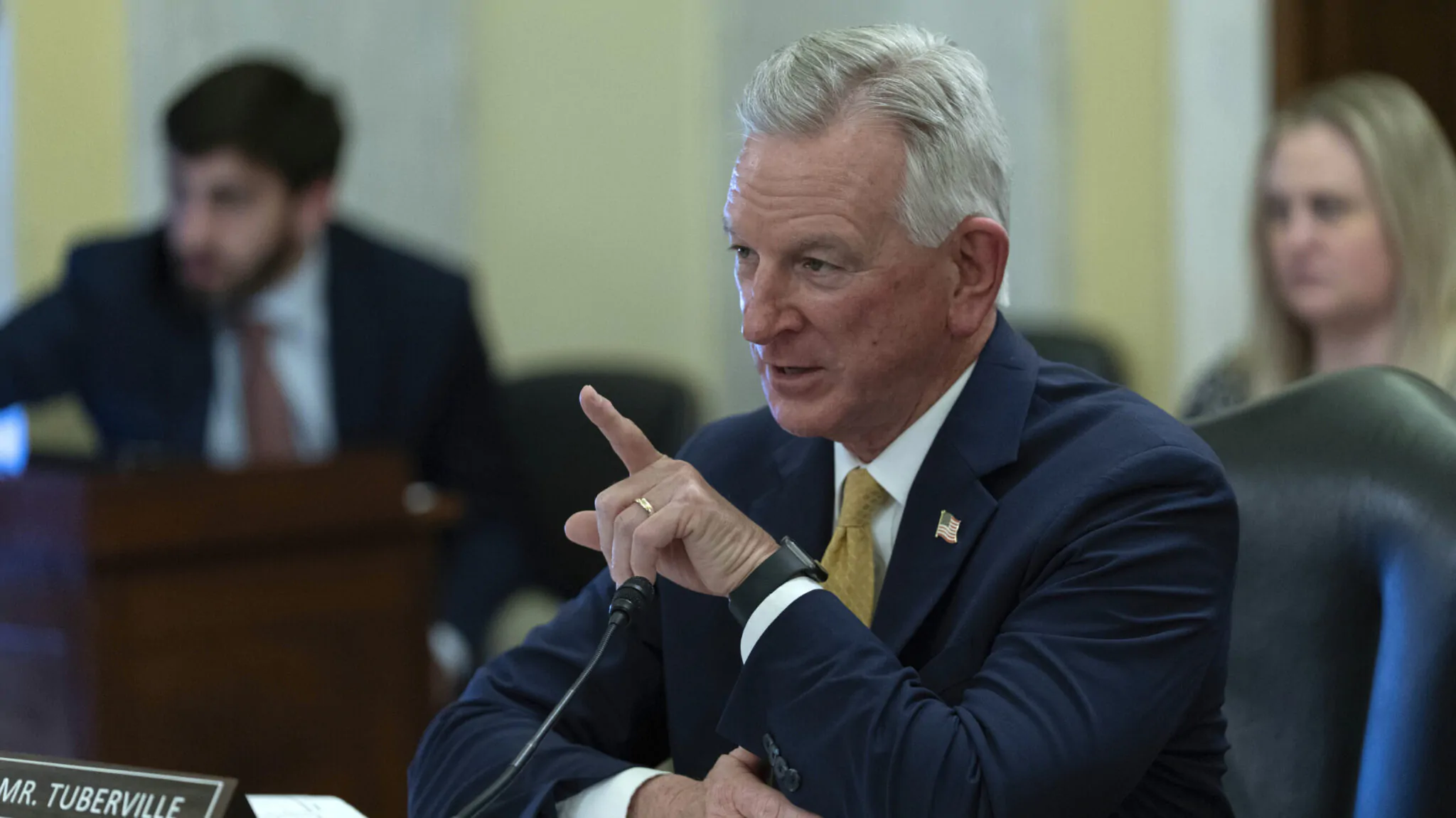
U.S. Senator Tommy Tuberville enters the 2026 race for governor as the frontrunner for the Republican nomination. But nothing in his public record suggests he intends to govern a diverse state of five million people with the judgment and restraint the job requires. In the Senate, he blocked the confirmation of hundreds of senior military officers for nearly a year to protest a Pentagon policy—a move military leaders warned disrupted readiness and stability for service members and their families. And beyond procedure, Tuberville has repeatedly turned to sweeping attacks on Democrats and urban communities, at times using language that echoes long-standing stereotypes rather than uniting a state that depends on cooperation across race, region and party. That style may excite a faction, but it does little to build the trust required to lead all of Alabama.
That isn’t servant leadership. That is factional leadership—the belief that power is a weapon to serve one group and punish another.
Doug Jones, Tuberville’s likely Democratic opponent, has offered a starkly different vision. He speaks often about building a “crowded table,” borrowing the image from the Highwomen song—a table where there is always room for one more chair. A table where disagreement is natural, but dignity is non-negotiable. A table where government is shared work, not a trophy to be guarded.
I say this without malice: I do not believe the people of Alabama are cruel, selfish, racist or bigoted. Most Alabamians are decent folks trying to live honest lives. But too many have grown comfortable electing leaders who appeal to our worst instincts rather than calling us to our better ones.
That may win elections. It does not build a state.
Comparing Tommy Tuberville and Doug Jones is not a partisan exercise. It is a question of governing style—or, more plainly, competence. Alabama is a diverse state with complex needs. Leading it requires judgment and wisdom—more focus than flash. This isn’t a game where goal-line celebrations are the prize. The real rewards are better schools, higher-paying jobs, secure futures, and a state that is known not as a punch line, but as an example of good government.
For much of the last quarter-century, Alabamians have chosen steady hands to guide the ship of state—leaders who, whatever their ideology, understood the weight of the office. Most voters in this state know a fire-breather when they see one. And we’ve seen that show before.
And Alabama has a stake in this choice that goes far beyond ideology.
For decades now, Alabama has worked—slowly, sometimes painfully—to step out from under the shadow of old headlines. The state has invested deeply in recruiting industry and has built world-class automotive, aerospace, agricultural and medical sectors. And the message to the world has been simple: Alabama is serious, stable and open for business.
That progress was not built on chaos. It was built on steadiness.
You don’t grow jobs by scaring away talent. You don’t strengthen communities by turning neighbor against neighbor. And you don’t attract investment by reminding the world of every stereotype it already believes about you.
A government of constant outrage eventually becomes a government of embarrassment. And Alabama has spent too long—sacrificed too much—to allow ourselves to be dragged backward into that caricature again.
Governing a free people demands more than soundbites. It demands character. It demands obedience to the rule of law—especially when the law is inconvenient. And it demands a willingness to serve, not to be served.
Public office is not a throne. It is a trust.
Ultimately, the people will decide what kind of Alabama we want to be. We must choose wisely. Too often, we vote from feeling rather than fact—out of party loyalty rather than asking a simple question: who will govern for all the people, and who can help build a better tomorrow for this state we share?
One vision says government exists to serve our people. The other says government exists to serve all the people.
One shrinks the table. The other makes room for one more chair.
And when the next governor of Alabama raises a hand to take the oath of office, every citizen—whether they voted for that person or not—deserves to know they are seen, they are heard, and they are counted.
Governor Kay Ivey understood that much. So did Madison. So did Lincoln.
And deep down, I believe the people of Alabama still do too.
We’ll find out in November.
Because this isn’t just about politics. This is about who we are—and who we want to be.
And I’d argue—this matters.