

















The 2026 Legislative Session of the Alabama Legislature begins next week, and Birmingham city leaders are hoping to prioritize expanded authority when dealing with blighted properties and to create new pathways for affordable housing and community development.
The Birmingham City Council on Tuesday unanimously passed a joint resolution with the Mayor’s Office outlining the city’s legislative priorities for the upcoming session, which begins January 13. The priorities focus on strengthening the city’s ability to address vacant and dilapidated properties while protecting municipal control over policing and land use.
At the center is a push to hold absentee and neglectful property owners more accountable for leaving properties in disrepair, a problem city officials said drains public resources, discourages investment and contributes to neighborhood decline.
One proposal would allow Class 1 municipalities, such as Birmingham, to enact a “blight remediation assessment” on certain properties. Under the proposal, owners of blighted properties could face an additional 3 to 5 percent in property taxes if they fail to maintain or improve their buildings.
Revenue from the increased assessment would be placed into a dedicated community fund used only for blight-related expenses, such as mowing overgrown lots and demolishing unsafe structures.
Similar legislation addressing these priorities has been filed by Birmingham’s lawmakers in previous sessions, most recently during the 2025 session. House Bill 331, introduced by Representative Ontario Tillman, D-Bessemer, would have authorized Class 1 municipalities to create a vacant property registration program, requiring owners to register unoccupied buildings so cities can track and enforce compliance with local maintenance but died in committee.
Senator Linda Coleman-Madison, D-Birmingham, also introduced Senate Bill 342 during the 2025 session, aimed at enhancing local land bank authority powers. This legislation would have made it easier for land banks to acquire tax-delinquent properties and seek state and federal funding to rehabilitate abandoned parcels, thereby returning them to productive use.
The resolution also calls for legislative review of a potential constitutional amendment that would be required to authorize the blight remediation assessment.
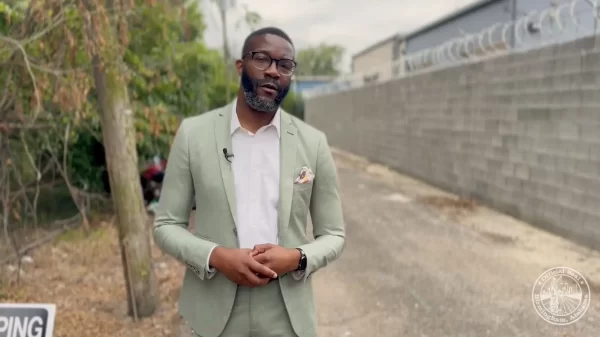
“We’re pushing for stronger land bank authority, a vacant property registry, the ability to enforce maintenance standards, and new tools like a Housing Trust Fund and Community Land Trusts to keep neighborhoods stable and affordable. We’re also standing firm against state efforts that would strip local communities of control over public safety decisions,” said Mayor Randall Woodfin.
Now, Birmingham is taking that case back to Montgomery, hoping lawmakers will grant the city more authority to address blight and shape the future of its neighborhoods.