



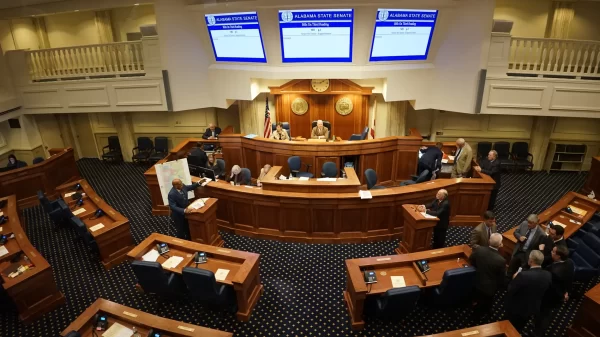







On Wednesday, the Senate Finance and Taxation General Fund Committee voted 11 to 5 to favorably report Senate Bill 57, a bill that would require the state Department of Human Resources to request a waiver from the U.S. Department of Agriculture.
If approved, the waiver would allow DHR to exclude “candy” and “soda” from the list of foods that SNAP benefits can be spent on. The bill additionally requires DHR to submit an application for a waiver every year if the first application is denied and to implement the prohibitions if the waiver is granted.
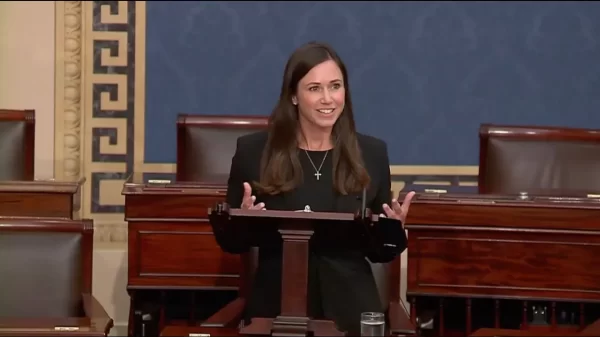
The bill’s primary sponsor, Senator Arthur Orr, R-Decatur, stated during the committee meeting that the bill and waiver are meant to help reduce obesity and other health issues, saying that “the taxpayer shouldn’t be funding sugar type drinks, et cetera, that are contributing to state-wide obesity levels.”
“This is an initiative that I believe, at last count, 18 states have applied for waivers for certain products under the SNAP program—to exclude them,” Orr told his fellow senators. “It doesn’t reduce benefits at all, but it does rein in certain products based on the sugar content.”
Democratic senators on the committee agreed that encouraging healthy eating in the state is an important goal, but criticized the bill for micromanaging poor Alabamians’ lives.
“We all need to be eating better, myself included, but this is very paternalistic to, number one, assuming that people that are on these benefits don’t know how to make the correct decisions for their children,” said Senator Merika Coleman, D-Pleasant Grove. “And then, why single this group out? There are other folks who actually have public benefits, get public money, but yet they will be able to use their funds to purchase whatever they want to.”
“If you’re a veteran, and you get disability or whatever you get as a vet, that’s public money right?” Coleman asked. “So, are we gonna tell them next that they can’t drink a soft drink, although that might not be the best?”
Senator Robert Stewart, D-Selma, similarly emphasized that “it is important to me that we do not legislate dignity away from Alabamians.”
“And what I mean by that is that this legislation would create a two-tier system,” he explained. “You get to have this, you don’t get to have that, because you’re poor. You can’t have a snack cake on your birthday.”
Republican Senator Andrew Jones also criticized the bill on the grounds that passing it wouldn’t result in any significant savings for the state.
“Although I like the concept, I just don’t think the juice is worth the squeeze,” Jones told Orr. “What I mean by that is the SNAP money is the same regardless, but we’re paying administrators to maintain this list.”
“And I don’t need to tell anybody in this room, you know Coke, Pepsi, they come out with seasonal products every quarter, right?” he continued. “There are different things throughout the Christmas holidays, whatever. Somebody’s going to have to be responsible to scan all that or put that all in a list, and then, however often it’s updated, the store is going to be responsible to update that into their software.”
In response to Jones, Orr said that while the bill would not decrease how much the state needs to spend on SNAP, it could have second-order effects on the amount of necessary Medicaid spending. Senator Orr had also linked the waiver program to Medicaid expenses and the national debt during a July interview with APR.
“This is really, really, really complicated and is going to be a pain for everybody,” Alabama Arise senior policy analyst Carol Gundlach told APR. “For recipients who don’t know what they can spend their food dollars on, for other customers who get stuck in line while people are trying to figure this out at the grocery stores, for the Department of Revenue, who’s now gotta maintain a list, it just seems like an awful big effort for very little benefit.”
Gundlach said that instead of further limiting what SNAP beneficiaries can spend their benefits on, the state should invest more money in other programs to help encourage healthy eating.
“Where we ought to be putting our energy is in two things. One is a really good program that Auburn University runs. It’s called Double Up Bucks which is, if you buy produce with SNAP, you can get a coupon that is good for extra produce,” she said.
Gundlach also pointed to Live Well Alabama, a SNAP-Ed initiative meant to inform people about healthy habits also run in part through a partnership with Auburn. Funding for SNAP-Ed, however, was totally eliminated as part of the “One Big Beautiful Bill” federal budget.
“ I just think it makes a lot more sense to help people eat healthy, then it does to prohibit specific foods,” she stated.
A similar piece of legislation to SB57 introduced by Representative Reed Ingram, House Bill 31, was recently passed by the House.