


















This week on The Voice of Alabama Politics, host Bill Britt was joined by Susan Britt and APR columnist Josh Moon to examine the Alabama Republican Party’s swift handling of ballot challenges and the unresolved legal questions left in their wake.
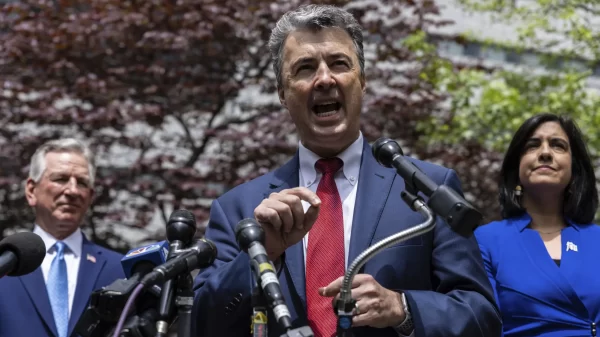
The discussion followed a Sunday conference call in which the GOP steering committee denied a formal hearing in the residency challenge against U.S. Senator Tommy Tuberville, allowing him to remain on the Republican primary ballot for governor.
The party also dismissed a residency-based challenge to lieutenant governor candidate John Wahl, rejected as frivolous a challenge to Senate President Pro Tem Garlan Gudger, and disqualified Dean Odle under the GOP’s “sore loser” rule tied to his 2022 write-in campaign.
On the show, Bill Britt said the outcomes themselves were unsurprising, but the pace of the decisions was notable.
“This was about moving quickly and keeping the train on the tracks,” Britt said. “There was no appetite inside the party to slow this down.”
Susan Britt agreed, noting that party committees operate very differently from courts.
“These are administrative decisions,” she said. “They’re about managing a primary, not answering every legal question that might come later.”
Moon said the speed of the process unsettled some Republicans who wanted a fuller airing of the challenges.
“There were people who felt like the door closed almost immediately,” Moon said. “Especially on the residency questions, there was frustration that those issues never really got daylight.”
The panel emphasized that the GOP’s actions do not resolve the legal meaning of residency under Article V, §117 of the Alabama Constitution, which requires that a candidate for governor be a “resident citizen” of the state for seven years preceding the election.
Britt said Alabama courts have long treated residence for political eligibility as domicile, a legal concept defined by conduct and intent rather than paperwork.
“You can own property in a lot of places,” he said. “But domicile is where you actually live your life. That’s the standard the courts apply, not where your mail goes.”
Susan Britt added that confusion persists because many people expect documents to be decisive.
“People want a single piece of paper to answer this,” she said. “But Alabama law doesn’t work that way. Courts look at where daily life is centered.”
Moon said the issue is unlikely to fade simply because party committees have acted.
“If this ever ends up in court, the analysis changes completely,” he said. “Party rulings don’t control that.”
The episode also turned to gambling legislation, focusing on a proposal by Sen. Merika Coleman, D-Pleasant Grove, that would let voters decide in a single statewide vote whether Alabama should authorize gambling and a lottery, leaving lawmakers to work out the details later.
Susan Britt described the bill as a notable departure from past efforts.
“It asks voters the basic question first,” she said. “Do you want this or not? Everything else comes later.”
Moon said the approach reflects growing public frustration with legislative gridlock.
“The polling shows people want a vote,” he said. “What stops this every time is distrust inside the Legislature, not opposition from voters.”
That stalemate, the panel noted, continues to benefit Mississippi, where casinos collected more than $1.5 billion last year, much of it from Alabama residents.
“We’re not preventing gambling,” Moon said. “We’re just sending the money across the state line.”
The show also examined House Bill 363, which would make intentional disruption of worship services a felony, in the context of the arrest of journalist Don Lemon following a church protest in Minnesota.
Susan Britt cautioned that reactionary legislation often carries unintended consequences.
“When lawmakers rush to respond to a headline, they don’t always think through who gets caught in the middle,” she said.
Bill Britt echoed that concern, warning that political power shifts.
“Whatever authority you create today exists when someone else is in charge,” he said.
The episode closed with a reflection on protest music as a way of preserving public memory when legal accountability lags.
“Sometimes the system moves slowly,” Britt said. “Music doesn’t let us forget while that’s happening.”