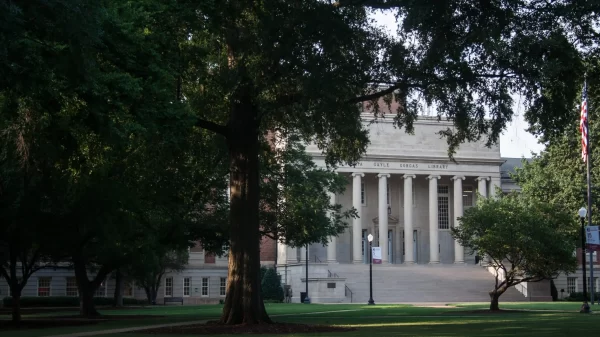


















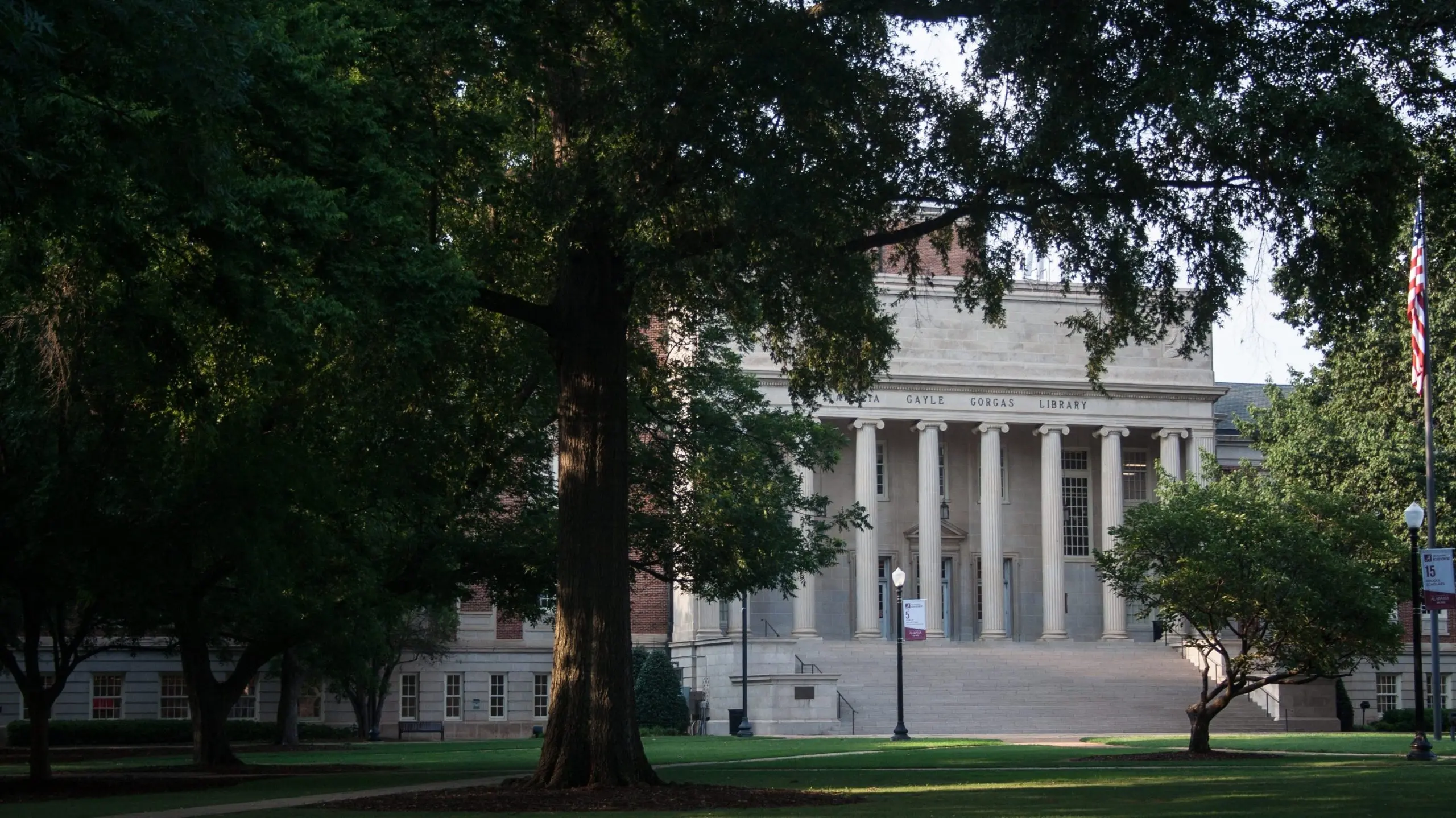
On Wednesday, the Senate Finance and Taxation Education Committee held a public hearing on House Bill 152, a bill that would allow the University of Alabama to restructure by repealing the 1965 law that required that the university open and maintain an independent School of Social Work.
During earlier discussion on the bill in the House, its primary sponsor, Representative Danny Garrett, R-Trussville, said that the change had been requested by the University of Alabama during discussions on “outcome-based funding.”
Alex House, the UA associate director of communications, has specifically stated that HB152 “will provide the University autonomy over curriculum, organization and continued innovation in meeting the needs of the state and our students.”
“There are 300 undergraduate students, 300 graduate students, 600 total, out of 40,000 students,” Garrett stated during Wednesday’s committee meeting. “There are 108 faculty and support staff, so I don’t know what [the University of Alabama’s] plans are.”
“The University believes, I believe, that there is a possibility to do things different,” he said. “Right now, this mandate requires they have that structure which limits their ability to analyze or maybe make changes if they wanted to.”
A February 4th email from the dean of the School of Social Work to the school’s faculty obtained by APR stressed that “according to the University, all degree programs will also remain. Our academic offerings, licensure pathways, and the student experience that defines our School will carry on.”
Three members of the public all spoke against the bill on Wednesday.
Molly Cole, a social work and the founder of social work focused government affairs company Justice Impact Group, said revoking social work’s status as an independent school would be a drastic decision.
“HB152 would be a unique action against a nationally ranked, highly productive professional school,” Cole asserted. “The Alabama legislature has previously established professional schools in statute, including the school of nursing, the school of medicine, and the school of dentistry, recognizing that certain professions serve a distinct state-wide function and require focused, institutional authority and accountability.”
“Now, with HB152, it doesn’t just narrowly erase the requirement that the school have a standalone School of Social Work,” she said. “It completely erases the establishment from our Alabama state code.” So erasing the School of Social Work, Cole explained, would send a very specific message to social workers and aspiring social workers in the state.
Brian Bride, the Hill Crest Foundation Endowed Chair in Mental Health at the School of Social Work, told the committee that he doubted there could be any significant efficiency gains from having social work no longer be its own school.
“One of the things that has come up is the issue of student size and faculty-student ratio, which are actually mandated by our accreditation body,” he pointed out. “For example, MSW programs can have no more than a 12-to-1 student-to-faculty ratio. That does not change if we move that into another college. It also does not change the mandate that each degree program—and we have four—each degree program must have a program administration who’s dedicated at least .5 FTE.”
Later, when asked a follow-up question by a member of the committee, Bride said “moving from a standalone school will diminish the school’s ability to support specific research.”
“Most importantly, it impacts the ability of us to recruit talented, innovative, research productive faculty members,” he continued.
After the comments from members of the public, Democratic senators also criticized the bill.
“What is the reason? What is the rationale?” Senator Vivian Figures, D-Mobile, asked Representative Garrett.
“I see this as a program that needs to stay there as they increase their enrollment and people wanting to go into this area,” Figures then said. “And we need it so badly. I can’t see why they can’t work around that.”
Senator Rodger Smitherman, D-Birmingham, criticized the use of the term “outcomes-based” to justify the bill.
“The standard’s going to be the same for everybody, but some people got apples, some people got oranges, and some people don’t have nothing but some grapes,” he said. “But they’re going to be measured by the same standard as these people who’ve got the apples, and that’s not right.”
In an interview last week, Dani Blakley, a sophomore majoring in social work, told APR that social work “does need to be its own school because it’s one of the only institutions that offers a bachelor of social work, a master’s of social work, a doctorate and PhD program in the state of Alabama, and we pride ourselves on this.”
Blakley also said she thinks that the decision might be politically motivated. “I think it’s come about because of SB129,” she posited. “With the anti DEI initiatives that we’ve had on campus with having to get rid of certain offices, renaming things and the magazines losing funding, I kind of see it as another wave of that anti DEI thing.
“Because I think that it gives them autonomy over our program and that’s also over our curriculum,” Blakley suggested. “If this bill were to pass, then I think our curriculum would be restricted and, certain topics about DEI and things like that, I think would not be allowed.”
Now that the bill has passed the state House and the Senate Finance and Taxation Education committee, it still needs to be passed by the Senate and signed by Gov. Ivey in order to become law.