




















At the start of the 2026 Legislative Session, a proposal to replace the elected Alabama Public Service Commission with an appointed regulatory board appeared to be gaining momentum in the Alabama Legislature.
Then voters pushed back sharply.
Although many Alabamians might struggle to name members of the commission or fully describe its responsibilities, lawmakers quickly discovered something else: citizens strongly opposed surrendering their right to vote for the officials who regulate the state’s utilities.
Within weeks, the proposal collapsed.
Now lawmakers are advancing a different approach.
A bipartisan group of senators has introduced Senate Bill 360, titled the “Power To The People Act,” which would expand the Public Service Commission from three elected members to seven commissioners elected by congressional district.
Supporters say the legislation responds directly to concerns raised earlier in the session by preserving — and expanding — the public’s role in selecting the officials responsible for regulating utilities.
The commission regulates investor-owned utilities operating in Alabama, including companies such as Alabama Power Company and natural gas providers, overseeing rates, service rules and regulatory decisions affecting millions of customers across the state. The commission’s decisions have long carried significant political and economic weight in Alabama, as the body oversees regulatory matters that directly affect the state’s largest utilities and the electricity bills paid by millions of residents.
The debate over restructuring the commission has intensified in recent years as electricity costs have risen across much of the country and regulators have faced increasing scrutiny over how utility rates are approved. In Alabama, the commission’s oversight of investor-owned utilities has drawn renewed attention from lawmakers and consumer advocates who argue the regulatory system deserves closer examination.
Under current law, the commission consists of three members elected statewide.
The legislation, sponsored by State Sen. Clyde Chambliss, R-Prattville, and supported by a bipartisan group of Senate lawmakers, would add four new seats, bringing the total to seven commissioners. Each seat would eventually be elected by voters within Alabama’s congressional districts, a structure similar to the election model used for the Alabama State Board of Education.
Electing commissioners by congressional district would significantly change the political dynamics of the commission. Under the current statewide system, PSC races are expensive and often draw limited competition. A district-based structure would give voters in each region of Alabama a direct representative on the regulatory body and could make commissioners more responsive to local concerns about utility rates and service.
To establish staggered terms, four commissioners would initially be appointed by the governor in July 2026. Two would serve two-year terms and two would serve four-year terms. Beginning in November 2028, commissioners would be elected by congressional district and serve six-year terms.
In effect, the legislation represents a compromise between maintaining the current regulatory structure and restructuring the commission — while preserving the public’s ability to elect its regulators.
A key provision of the bill would prohibit utility rate increases until 2029 — when a majority of the expanded commission will have been elected. The measure would still allow the commission to approve rate reductions during that period.
The temporary prohibition on rate increases effectively places major pricing decisions on hold while the expanded commission is established and voters begin electing members under the new structure. Supporters say the provision is intended to ensure that long-term rate decisions are made by a commission that reflects the new electoral system.
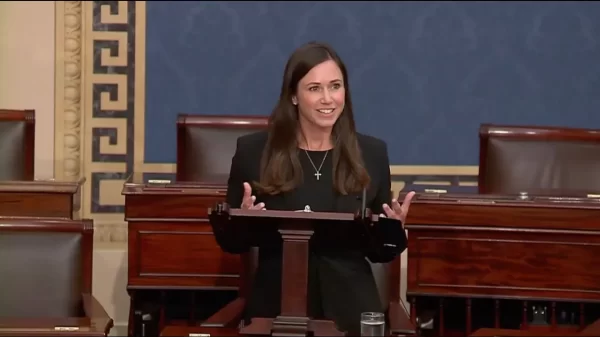
Senate President Pro Tem Garlan Gudger, R-Cullman, said the proposal expands voter participation while placing new restrictions on utilities’ role in the political process.
“The Power To The People Act entrusts Alabamians with the power to elect seven seats on the Public Service Commission rather than three, and it prohibits regulated utilities from engaging in the campaign process,” Gudger said.
Gudger added that the proposal addresses concerns raised earlier in the session when lawmakers considered removing elections from the commission entirely.
“Rather than taking away the public’s right to elect commission members, the Power To The People Act solves the problem by enhancing and expanding the public’s right to vote,” he said.
The bill also places several new restrictions on regulated utilities.
Utilities would be prohibited from passing certain expenses on to consumers when rate decisions are made, including the costs of employing lobbyists, most advertising campaigns and certain grant programs. The legislation also prohibits regulated utilities from contributing to candidates seeking election to the Public Service Commission.
Members of the commission, their spouses and immediate family members, the proposed Secretary of Energy, and commission employees would also be barred from providing paid services to regulated utilities.
The legislation would additionally create a cabinet-level Secretary of Energy responsible for overseeing the administrative functions of the commission, an idea recently discussed by Republican gubernatorial candidate Tommy Tuberville.
Not everyone supports the proposed restructuring.
The Energy Institute of Alabama, which advocates on behalf of the state’s energy sector, warned that the legislation could set a troubling precedent.
“The Energy Institute of Alabama does not support the wholesale restructuring of our regulatory system in response to systemic pressures. Further, the legislation that has been presented goes so far as to actually set utility rates which sets a dangerous precedent.”
The institute has historically received support from utilities operating in Alabama, including Alabama Power Company, which declined to offer public comment on the legislation.
For lawmakers, the debate surrounding SB360 reflects a political reality that became clear early in the session: while many voters rarely focus on the Public Service Commission, they remain reluctant to surrender their right to elect the officials responsible for regulating essential utilities.
Rather than removing voters from the process, the legislation now before the Senate moves in the opposite direction — expanding the number of commissioners elected by the public and shifting those elections to congressional districts across Alabama.
Whether the proposal ultimately becomes law, the debate surrounding the bill has already underscored something lawmakers heard clearly from constituents: even in the complex world of utility regulation, many Alabamians believe the power to choose their regulators should remain with the voters themselves.