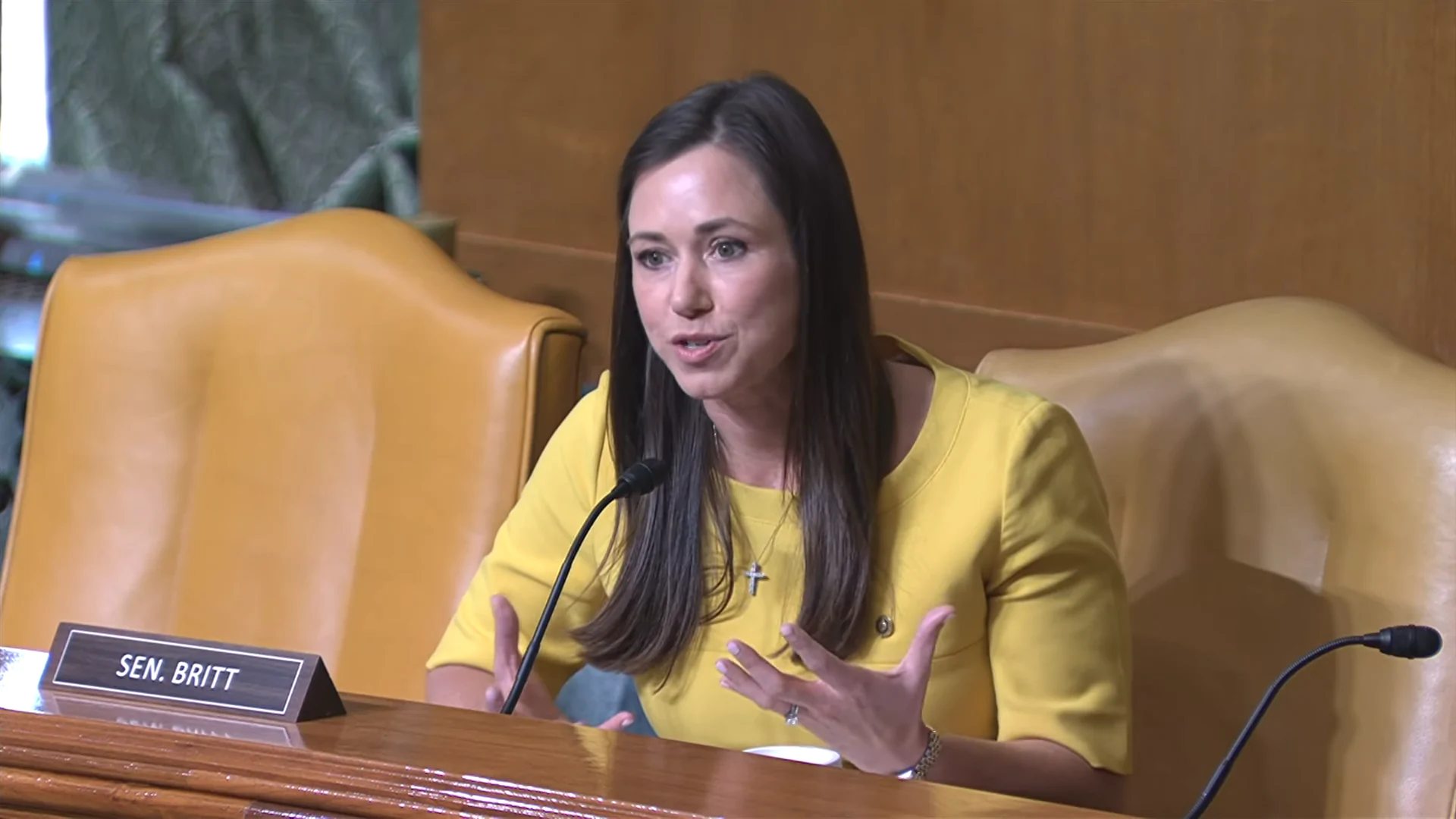




















U.S. Senator Katie Britt, R-Alabama, joined Senator Raphael Warnock, D-Georgia, on Thursday to introduce the bipartisan HBCU Research Capacity Act, legislation aimed at streamlining federal funding opportunities for Historically Black colleges and universities, or HBCUs.
To announce the bill, Britt and Warnock hosted more than 30 HBCU presidents from across the country for a roundtable discussion. Those in attendance included Alabama A&M University President Daniel K. Wims, Alabama State University President Quinton T. Ross Jr., Drake State Community and Technical College President Patricia G. Sims, Shelton State Community College President Jonathan Koh, Lawson State Community College President Cynthia T. Anthony, Trenholm State Community College President Kemba K. Chambers and Bishop State Community College President Olivier Charles.
During the discussion, the presidents addressed the need for legislation such as the HBCU Research Capacity Act and for continued federal support.
“It was a privilege to be joined by so many HBCU presidents from across the nation. One of my biggest takeaways from the roundtable was our shared passion for ensuring all HBCUs have the resources available to provide their students with the highest level of opportunity—which I’m committed to continue fighting for,” Britt said. “I am proud to represent the state with the most HBCUs in the nation. As a former trustee to one of Alabama’s 14 HBCUs, I’ve seen firsthand how impactful these institutions are—I am a fierce advocate for their funding, not only in Alabama, but also nationwide. I’m proud to co-lead this commonsense legislation with Warnock, which will help these institutions grow their research capacity and continue paving the way for generations of students.”
“HBCUs are incubators of diverse excellence and have proven their ability time and again to punch above their weight. Despite not always having every tool at their disposal, they continue to make massive contributions to the research and development community. This bipartisan bill will make securing federal dollars for their research efforts that much easier, and I am proud to work alongside another champion of HBCUs in Katie Britt,” Warnock said.
Despite their significant contributions, HBCUs receive less than 1 percent of the roughly $60 billion in federal research and development funding allocated to colleges and universities.
In May 2024, the National Science and Technology Council released a report identifying barriers to research and development funding for HBCUs. The report also recommended that the federal government improve interagency collaboration to compile grant opportunities for HBCUs.
The legislation would establish a federal clearinghouse of all available federal grant opportunities for HBCUs to help them apply for funding and support their missions and students. Specifically, the HBCU Research Capacity Act would amend Title III of the Higher Education Act of 1965 to direct the secretary of education to coordinate with federal agencies to create a centralized website listing those grant opportunities.
The website also would share best practices for building research capacity, including recommendations from federal, state and local organizations.
In addition, the bill would require the secretary of education to:
- Assign personnel to administer the federal clearinghouse.
- Provide written notification of the federal clearinghouse to HBCUs and Congress.
- Send Congress an annual report on the clearinghouse and provide quarterly updates to HBCUs that opt in.
The HBCU Research Capacity Act is endorsed by the United Negro College Fund, the Thurgood Marshall College Fund, the National Association for Equal Opportunity in Education and the Transnational Association of Christian Colleges and Schools.