





















Alabama Public Television is asking viewers to trust it at the very moment its leaders are refusing to show their work.
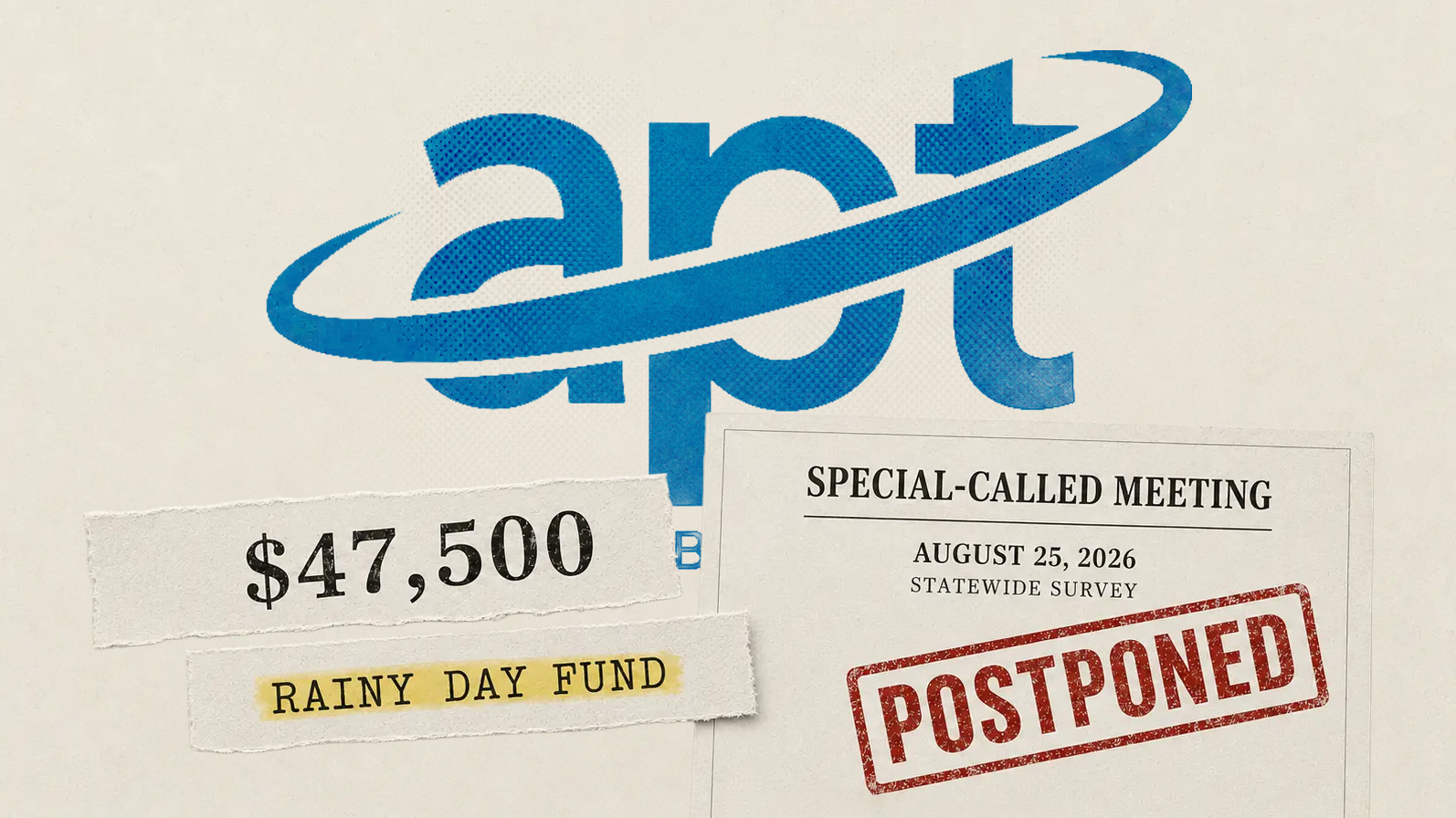
Its Foundation was preparing to approve spending $47,500 from a reserve created for emergencies on a statewide survey by a longtime Republican polling firm. Neither the revised contract, the proposed questions nor the survey methodology has been released. Foundation Chair William Green then postponed the vote without explaining why.
That is not merely poor communication. For a public broadcaster sustained by state support, donors and viewers, it is a failure of stewardship.
On August 20, Alabama Political Reporter published a detailed examination of the special meeting, the proposed expenditure and the unanswered questions surrounding it.
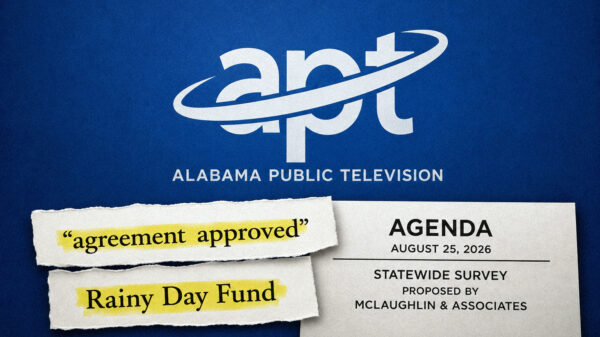
The Alabama Educational Television Foundation Authority had scheduled the meeting for August 25 at APT’s Montgomery studio. Its only substantive purpose was to approve the amount to be taken from the Rainy Day Fund for a statewide survey by McLaughlin & Associates.
Before publication, APR asked Green why a special meeting was necessary, who requested it, whether a contract had been signed, whether McLaughlin had begun work, what the final price would be and why emergency reserves were being used. APR also requested the revised contract, proposed questionnaire and documents explaining the survey’s methodology and purpose.
Green answered none of those questions and provided none of the requested records.
Later that evening, Green emailed board members to postpone the meeting, according to an email obtained by Alabama Daily News. His message gave no reason.
APT’s website now identifies the meeting as postponed but offers no explanation, replacement date or indication of how the Foundation intends to proceed.
The meeting disappeared. The duty to answer did not.
The price that did not fall
The most troubling new development is not the postponement itself. It is what happened to the price.
The preliminary McLaughlin proposal called for APT to pay $47,400, plus possible travel expenses, for a survey of 600 Alabamians lasting approximately 20 minutes and containing between 45 and 50 questions.
That proposal went far beyond conducting a poll. It called for McLaughlin to advise APT on advertising, fundraising, programming schedules, staffing and press strategy. It also designated the company as APT’s media buyer.
APT Chief Financial Officer Melissa Austin said staff received the agreement only five days before the July 21 meeting and had not completed a thorough review. Board members described the additional provisions as boilerplate language that would be removed.
Green said eliminating those unrelated services might reduce the price to approximately $27,500.
That apparently did not happen.
Commission Chair Ferris Stephens has now told Alabama Daily News that the final price will be $47,500, even after the consulting, media-buying and other provisions are removed. APT therefore appears prepared to pay essentially the same amount for a substantially narrower agreement.
That does not necessarily mean the revised price is unjustified. The methodology might have changed. The sample might be more expensive to construct. The revised agreement might contain additional work not described during the July meeting.
But that is precisely why the contract must be released.
Without it, the public cannot determine what changed, what McLaughlin will be paid to do or why the expected savings vanished. Public bodies do not answer legitimate questions about spending by asking people to trust a document they are not allowed to see.
The contradiction goes deeper.
At the July 21 Foundation meeting, board member Dick Brewbaker said, “We’re not committing ourselves to any contract.”
Green agreed. He said the final price remained unknown and suggested the project might not proceed if the problems with the proposal could not be resolved.
The Foundation authorized using the Rainy Day Fund for an amount not to exceed $47,500, but it did not approve a final expenditure. Yet the August 25 agenda described the matter as funding for an “agreement approved” at that same July meeting.
It cannot be both. Either an agreement was approved or it was not. Either the final price was known or it was not. Either removing substantial services reduced the cost or APT needs to explain why it did not.
Postponing the vote resolves none of those contradictions.
Transparency matters more when politics is involved
McLaughlin & Associates is not simply a market research company. Its political clients include President Donald Trump, the Republican National Committee, the Republican Governors Association, the Alabama Republican Party and numerous Republican officeholders.
The firm’s partisan history does not prove that an APT survey would be biased. It does place a greater burden on APT to demonstrate that the questionnaire, sample and methodology are designed to measure public opinion rather than produce a politically useful result.
APT has not met that burden.
The Alabama Educational Television Commission selected McLaughlin without considering competing firms or conducting a request-for-proposal process. Stephens has declined to release the questions he submitted for possible inclusion. Commissioner Pete Conroy has said he does not know what questions the survey will ask.
Neither does the public.
The survey grew directly from the Commission’s debate over reducing or ending APT’s relationship with PBS. Governor Kay Ivey urged commissioners not to make such a sweeping decision without first determining what Alabamians wanted and developing a plan for replacing PBS programming.
The Commission later voted to continue its PBS partnership indefinitely unless a proven financial reason justified reconsideration. The survey continued moving forward even after disaffiliation was taken off the table.
Green has since said the survey has a broader purpose: determining what Alabamians want from public television. If that is true, releasing the questions and methodology should strengthen confidence in the project. Keeping them secret weakens it.
A credible survey should withstand public examination before it is conducted, not merely after its conclusions are announced.
Emergency money requires an emergency
The proposed funding source makes that transparency even more important.
The Foundation’s investment policy describes the Rainy Day Fund as a reserve for emergency purchases that cannot be covered through the existing budget, new revenue or spending reductions. It identifies circumstances such as proration, transmission failures and the loss of federal operating support.
APT has suffered precisely that kind of financial emergency. It lost more than $2.5 million in annual federal support and eliminated 11 positions.
The Rainy Day Fund was not used to prevent those layoffs.
During the July meeting, Austin raised that point and asked why the survey could not be included in the regular budget. When Conroy questioned whether the Foundation was declaring an “emergency survey,” Stephens identified no emergency. He argued instead that the Foundation created the Rainy Day Fund policy and could change it.
Possessing the authority to spend the money is not the same as having a compelling reason to spend it.
APT is currently asking viewers for additional donations to help replace the federal funding it lost and preserve another year of PBS programming. At the same time, its Foundation was preparing to spend $47,500 from emergency reserves on a political polling firm.
Perhaps the survey is worth that price. Perhaps it will produce useful information that helps APT better serve Alabama. But those possibilities cannot substitute for a contract, a methodology and a clear explanation of why the expenditure is urgent.
The Foundation’s leaders now have an opportunity to reset the process. They can release the revised agreement, questionnaire and sampling plan. They can explain why the price remained $47,500 after significant services were removed. They can disclose whether McLaughlin has signed a contract or begun work. And they can place the matter on a regular agenda that allows meaningful public examination before a vote.
None of those steps would prevent the Foundation from conducting a legitimate survey. They would make such a survey more credible.
The issue is not simply whether $47,500 is a large or small expenditure. It is whether APT’s leaders believe they may bypass the regular budget, select a politically connected vendor without competition, withhold the terms and then offer no explanation when the vote is postponed.
APT cannot fulfill its public mission without the confidence of the people it serves. Openness is not an inconvenience imposed upon public institutions. It is the obligation that comes with being trusted.
Public trust is its own rainy-day reserve. Once depleted, it is far more difficult to replenish.