





Legislature
Senator Robert Stewart warned that the state Legislature should not “legislate dignity away from Alabamians” before voting against the bill.
Hi, what are you looking for?


Gov. Ivey encourages veteran hiring through the HIRE VETS Medallion Program

Gov. Ivey signs bill requiring English proficiency for truck drivers

Alabama reacts to governor sparing death row inmate Sonny Burton
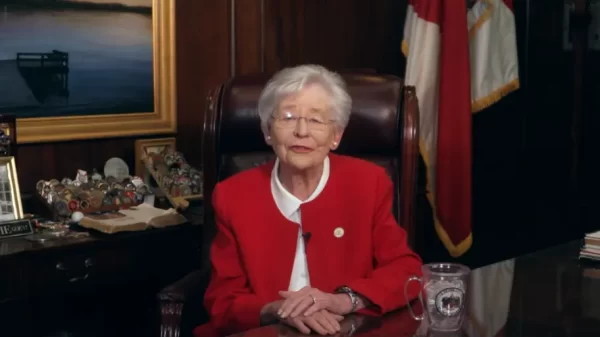
Ivey commutes Burton death sentence over unequal punishment

Gov. Ivey’s summer internship program deadline is approaching

Interfaith clergy rally against bills inserting religion into schools

Alabama House advances party registration bill

Coastal Alabama solar project sparks debate over regulation, local control

Bill to raise EMS reimbursement rates advances to House vote

Alabama Senate committee passes school prayer and pledge bill

Alabama Senate passes bill to rein in data center tax incentives
Bill to pause new solar developments advances to Alabama Senate for vote

Lockheed Martin to invest in Pike County production facility

Hadrian to partner with Navy on northwest Alabama defense project

Retail giant expands baby departments, adds products at Alabama stores

Sens. Britt, Tuberville receive League of Municipalities’ 2026 Hometown Hero award

Rep. Figures secures over $3 million for Montgomery region projects

Alabama airman Alex Klinner killed in Iraq in refueling plane crash

Reps. Sewell, Rogers introduce bill to address rural wastewater crisis
Hadrian to partner with Navy on northwest Alabama defense project

ACHE reviews higher education bills, approves new academic programs at quarterly meeting

Alabama bill aims to let professors profit from research

Alabama House passes $10.9 billion education budget

Lawmakers review Education Trust Fund as reserves decline

Bill to restrict discussion of contraceptives in sex ed faces pushback in public hearing
Bill to raise EMS reimbursement rates advances to House vote

UAB Hospital now fifth-largest in the nation

Children’s of Alabama to host giveback night at Walk-Ons Sports Bistreux

ADPH reports downturns in healthcare-associated infection rates

Bill to eliminate out-of-pocket costs for breast cancer screenings heads to Ivey’s desk

HB541 would require voters to register by party before primaries, raising concerns about disenfranchising independents and reshaping Alabama elections.
Alabama faith leaders gathered outside the Statehouse to protest proposed legislation pushing school prayer, chaplains and the Ten Commandments.

Trump has failed to deliver on every promise and sold out his base in every way imaginable. Yet, the loyalty for some doesn't fade.
An Alabama House committee advanced a bill designed to support struggling EMS providers, while insurers warned the legislation would raise premiums.

Lawmakers consider solar regulations and a moratorium after Baldwin County residents raised concerns over the environmental impact of a new project.

Doc Mancuso launched an independent campaign after being removed from the GOP ballot, arguing the decision limits voter choice.
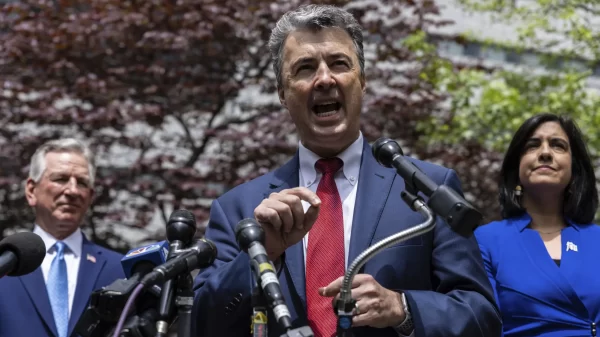

A mother featured in the prison documentary challenged Marshall’s claim, as footage appears to show attorney general speaking directly with filmmakers on camera.


The mayor added that Birmingham's legislative delegation has shown strong bipartisan support for the policies.


On Wednesday a national group of more than 60 Democratic challengers will pledge support for ethics reforms and congressional term limits.

State officials reviewed legislation to expand teacher loan repayments and scholarship eligibility while approving several new academic programs at Alabama's public universities.

Republicans still control every lever of state government in Alabama. The question is whether they can continue governing together.


Why are lawmakers spending so much time targeting transgender people when our state faces real challenges?


General George Washington outmaneuvered British forces 250 years ago, using captured artillery to force an evacuation from Boston without a bloody frontal assault.


State leaders moved to expand the Public Service Commission after out-of-state groups influenced recent elections in neighboring Georgia.
Senator Robert Stewart warned that the state Legislature should not “legislate dignity away from Alabamians” before voting against the bill.


The bipartisan measure requires the Parole Board to analyze an inmate’s employment, education and risk assessment when determining release, aiming for better outcomes.


Candidates promote competing financial narratives as endorsements, donor origins and campaign messaging define an increasingly competitive Republican primary contest.


The future of Alabama depends on strong infrastructure, strong families and strong jobs.


Governor Kay Ivey's newly established advisory group met for the first time, marking a major milestone for the state's federally funded rural health transformation...


Crews installed the bridge decks in December 2025, moving closer to doubling travel lanes across the busy Intracoastal Waterway.


Governor Kay Ivey distributed $4.5 million in grants to 18 agencies that guide low-income residents toward economic stability and financial self-sufficiency.


Following a tragedy in Texas, legislators filed House Bill 381 to establish new minimum safety requirements for all Alabama summer camps.


Less than two weeks after two inmates died, ADOC Commissioner John Hamm failed to address deadly conditions during the Legislature's prison oversight meeting.


The Food Bank of North Alabama encouraged the community to donate nutrient-rich peanut butter throughout February to help combat food insecurity in 11 counties.