





Legislature
State senators debated a proposal Thursday to prevent local governments from collecting sales tax on credit card transaction fees.
Hi, what are you looking for?


Bill to rename the Alabama Office of Minority Affairs sent to governor’s desk

Gov. Ivey highlights National Teacher of the Year nominee Katie Collins
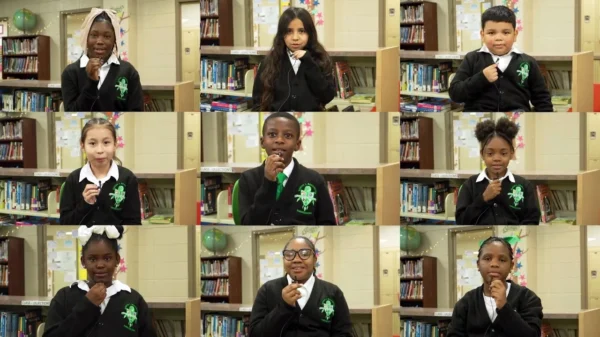
Gov. Ivey celebrates Birmingham students for academic growth in turnaround schools

Gov. Ivey authorizes bonds to support Jackson Hospital in Montgomery

Gov. Ivey proclaims Public Schools Week, celebrates gains by students

Bill to eliminate out-of-pocket costs for breast cancer screenings heads to Ivey’s desk
Bill to rename the Alabama Office of Minority Affairs sent to governor’s desk

House passes bill to allocate $43.1 million in opioid settlement funds

Alabama Senate passes bill to limit screen time in early childhood education

Rep. James Lomax files overtime tax cut

January 2026 Alabama Economic and Real Estate Report

House committee advances expansion to seafood labeling regulations

Alabama home sales, median prices soar in 2025 report

German chain manufacturer to invest $34M into new Auburn operation

Alabama achieves record $14.6 billion in economic development investment

Rep. Sewell slams Trump’s 2026 State of the Union address

Rep. Aderholt to host Passport Fair in Florence

Alabama Sens. Britt and Tuberville decry Supreme Court ruling against Trump’s tariffs

Southern Research secures $2 million for scientific expansion projects

Alabama leaders remember civil rights icon Rev. Jesse Jackson Sr.
Alabama Senate passes bill to limit screen time in early childhood education

Alabama lawmakers propose $150 million to expand career tech programs

Alabama House passes scholarship bill for law enforcement families
Gov. Ivey highlights National Teacher of the Year nominee Katie Collins
Gov. Ivey celebrates Birmingham students for academic growth in turnaround schools
Bill to eliminate out-of-pocket costs for breast cancer screenings heads to Ivey’s desk
House passes bill to allocate $43.1 million in opioid settlement funds

Health committee votes against ER doctor staffing transparency effort
Gov. Ivey authorizes bonds to support Jackson Hospital in Montgomery

Alabama AG urges AMA to disavow hormonal treatments for trans minors


University officials say personal social media advocacy—not institutional research or public funding—created confusion surrounding the so-called “queer animals” label.

Why should taxpayers be forced to pay tens of millions of dollar for primary elections in which they can't participate?
The Alabama Senate advanced a bill eliminating cost-sharing for breast cancer screenings, and the measure now heads to Governor Kay Ivey.

Terrence Johnson's chances to win an Alabama House seat have gone up in flames.


The House passed legislation to rename the cabinet-level agency within the governor's office.


Alabama lawmakers approved a task force to develop innovative technologies for restoring seagrass ecosystems and preserving environmental stability along the Gulf Coast.

The Alabama House passed legislation Thursday establishing a new scholarship program to help law enforcement families pay for college and workforce training.


If you find yourself in a season of pruning right now, don’t rush it or fight it.


The bill would require the parole board to consider an inmate's history of employment while incarcerated.


There is no one—aside from a few morbid freaks—who wants to see Charles Burton put to death at the hands of the state.

Alabama’s ethics laws rely heavily on disclosure and public trust. When reports leave key questions unanswered, voters are left to interpret the record themselves.


The bill strengthens consumer protections and address the rapid spread of illicit digital material created by artificial intelligence.


Alabamians should be at the forefront of writing our nation’s next chapter.


No matter how it came to be sponsored by Republican Senator Larry Stutts, it is a good, necessary and consequential piece of legislation.
State senators debated a proposal Thursday to prevent local governments from collecting sales tax on credit card transaction fees.

The organization announced plans to upgrade research equipment across multiple scientific disciplines using federal funding secured by Senator Katie Britt to support biomedical innovation.


First grader Cason Williams won the 14th annual Big Buck Photo Contest after harvesting an eight-point deer in Dallas County.

Alabama home sales saw a seasonal dip in January, yet median prices climbed 17.3 percent annually amid a steady state economy.

Alabama lawmakers advance legislation mandating genetic testing and menu labels to ensure seafood is properly labeled as foreign or domestic.


Montgomery's problems were built by conservative ideals put in practice over 50 years. Those same ideals won't save the city.


The House Ways and Means General Fund Committee heard proponents and opponents of a bill that would impose reimbursement requirements.


Two committees advanced bills to exempt some farm energy use from utility taxes, hoping to ease costs for farmers.


Representative Paul Lee, R-Dothan, was selected by the Republican caucus as a replacement for Representative Scott Stadthagen, who stepped down on Wednesday.


Alabama lawmakers advanced a measure Wednesday to extend child support payments back to the point of conception if paternity is legally established.