























Perhaps Alabama’s most famous Civil Rights Era lawyer, Tuskegee attorney Fred Gray, is now memorialized in the Smithsonian.
Gray’s portrait, an oil painting by artist Michael Shane Neal, was installed in the Smithsonian’s first-floor presentation hall in December and commemorated Sunday during a ceremony featuring the civil rights icon. Gray’s portrait will be part of the museum’s permanent collection, the Smithsonian announced.
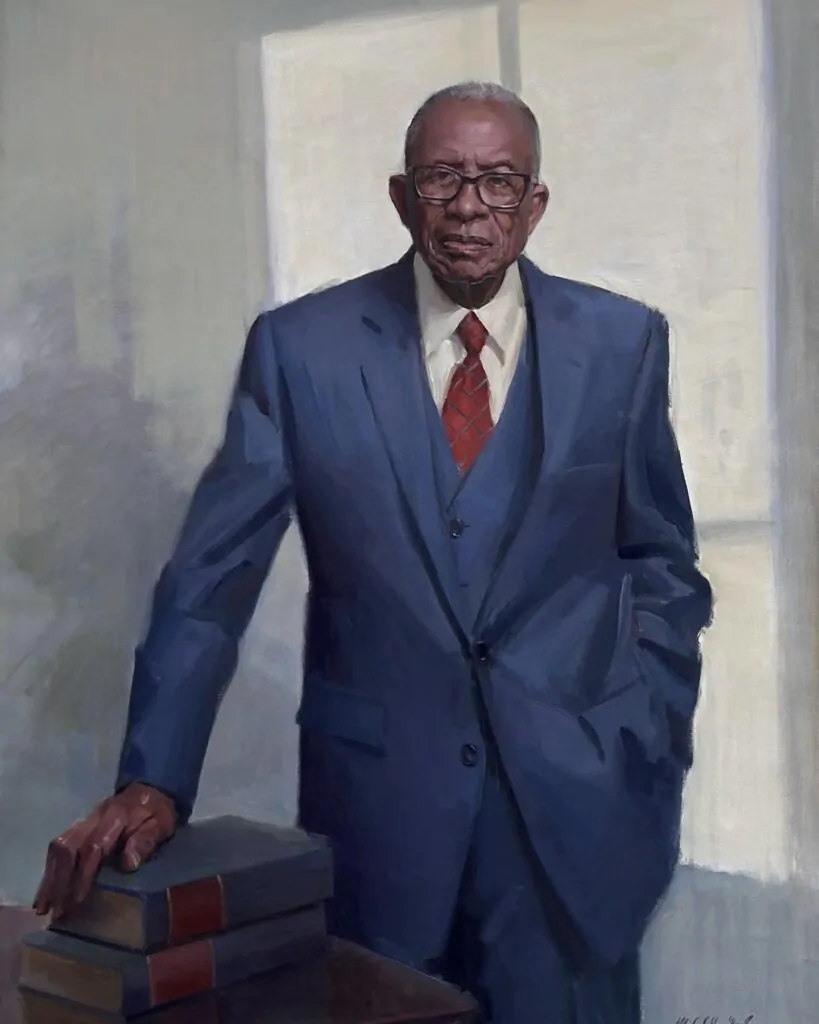
A portrait of Fred Gray that will be displayed in the Smithsonian. Michael Shane Neal
Gray was involved in virtually every major legal battle during the Civil Rights Movement of the 1950s and 60s. He represented both Rosa Parks and Claudette Colvin following their arrests on Montgomery’s city buses in 1955. Those arrests led to the Montgomery Bus Boycott and the unofficial start of the Movement.
Gray also represented Martin Luther King Jr. in numerous matters, was the attorney of record for the federal lawsuit that cleared the way for the Selma-to-Montgomery march, was the attorney of record for the lawsuit that desegregated Alabama’s public schools, and later, the lawsuit that desegregated Alabama’s public colleges, and he represented the victims of the Tuskegee syphilis study.
Gray said he began practicing law with the intent to “attack everything segregated.” No one was more successful. Gray received the Presidential Medal of Freedom in 2022.