










We are living in violent times. We all know the terrible history of mass shootings and terrorist attacks:
- Charlie Kirk murdered in Utah.
- Democratic State Speaker Melissa Hortman and her husband murdered in Minnesota.
- Two Israeli Embassy employees were murdered in DC.
- 14 people killed by an Islamic terrorist driving through a crowd in New Orleans.
- 4 killed and 32 injured at a birthday party in Dadeville.
- 7 children killed in the Covenant school shooting in Nashville.
- 35 homicides of transgender people in 2023, mostly in the South.
- 10 black Americans killed by a white supremacist in a supermarket in Buffalo.
- 5 killed in an attack at Club Q, a gay bar in Colorado.
- 23 Latinos murdered by a white nationalist at a Walmart in El Paso.
- 11 murdered by an antisemite at the Tree of Life Synagogue in Pittsburgh.
And so many more.
Each one is a tragedy and each deserves to be mourned. Let us take a moment, though, to really look at that list. Most of these murders are not based on the victim proclaiming a bold political opinion, but based on the perpetrator’s hatred for a victim’s immutable identity—Black, Latino, Israeli, Jewish, trans, gay. In most cases, we don’t know anything about the victims’ politics, nor do we have any evidence that the victims were targeted for their political views.
Murders of political figures, it turns out, are incredibly rare. Stalking and harassment are common (I can tell you from experience), but physical violence against political figures has been quite rare in the last 5 years.
- Two Assassination attempts on Donald Trump
- Assassination attempt on Minnesota Democratic Senator John Hoffman and his wife.
- Arson attack on the home of Pennsylvania Democratic Governor Josh Shapiro
- Attack on Paul Pelosi (and attempted attack on Nancy Pelosi)
- Attacks on four Democratic state lawmakers in New Mexico
- The January 6 attack on the members of Congress and the vice president
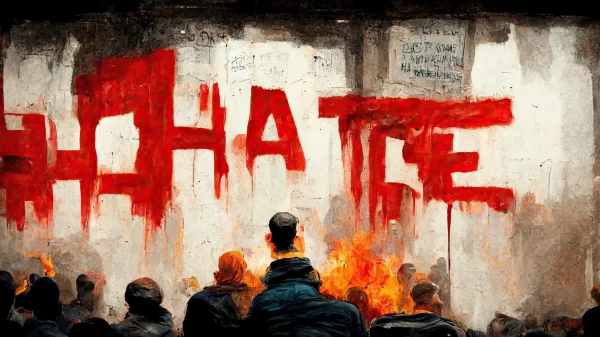
These are all horrific, but the good news is that politically-motivated violence has been declining in the US (at least since 1975). The bad news is that hate-based violence has been on the rise.
What’s the difference, you might ask, between politically-motivated violence and hate-based violence? Politically-motivated violence is violence carried out because of the victim’s political beliefs, while hate-based violence is based on the victim’s race, ethnicity, religion, or sexual orientation. (We’ll leave out violence against women for the moment, but Lord knows it remains a serious problem.)
The majority of hate-based victims are regular people. They have not made the choice made by politicians to put themselves in the spotlight. They are simply living their lives. Moreover, these folks can’t stay safe just by avoiding a microphone or camera. They don’t have the option to change their skin color, ethnicity, or sexuality to guard their own safety.
Given the role that race, ethnicity, religion, and sexual orientation play in today’s politics, it seems obvious that hate-based violence is connected to political rhetoric. Political leaders and influencers attacking minorities with their words are correlated with violent individuals attacking minorities with their weapons. So if we’re serious about reducing deaths from political violence, we can’t just talk about protecting politicians from violence, we have to be just as serious about protecting regular people from hate-based violence.
Spoiler alert: That’s not what’s happening.
We are not taking seriously the dangers of rhetoric that demonizes minority groups. We are not concerned about stopping the kind of rhetoric that leads to the bulk of the violence. Instead, institutions are taking very seriously the dangers of pissing off the president.
President Donald Trump has made it clear that criticizing him or his allies makes you an enemy of the state. As Trump told us at Kirk’s memorial, he “does not want the best” for his opponents, a comment that is a thinly veiled threat coming from the most powerful man in the world. Criticizing Trump could result in loss of federal funding for your institution, cancellation of your TV show, dismissal from your job, prosecution by the Justice Department, perhaps even kidnapping by masked men and deportation.
In contrast, demonizing minority groups may result in actual physical violence against large swaths of our community, but as long as you do it as part of Trump’s team, you’re not likely to face any consequences for your words. He’s not condemning all antagonistic statements, just the ones against his allies. If you’re attacking his opponents, he’ll gladly issue a hall pass for hate.
Alabama has taken that hall pass and run with it.
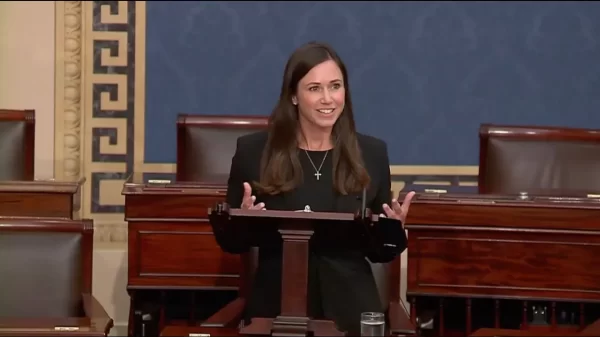
Senator Tommy Tuberville condemned “dangerous rhetoric from Democratic leaders,” insisting that their criticism of Kirk would lead to more violence. This is the same senator who defended White Nationalists serving in the military, but introduced legislation to remove transgender troops from the military, regardless of their meritorious years of service.
The message is clear. White supremacy beliefs are to be tolerated; being transgender is not.
Auburn University this week fired employees for social media posts that called out the violent effects of Kirk’s rhetoric. But you might recall that Auburn Professor Bruce Murray posted homophobic and transphobic memes publicly on social media in 2019. Although students were offended, the university did not impose any consequences for the professor, citing his right to free speech.
In the last week, State Superintendent Eric Mackey welcomed people snitching on teachers’ social media posts criticizing Kirk and insisted on those teachers being fired. Meanwhile, you might recall that in 2019, teachers at Ashford High School had a group chat in which they used racial slurs and homophobic slurs to describe children, and yet these teachers were merely suspended, not fired. Again, we see evidence that it is more dangerous in Alabama to call out hateful language than it is to engage in it.
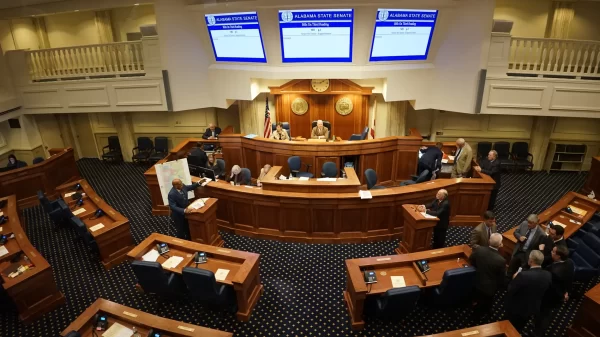
More broadly, Alabama has shuttered numerous DEI offices, programs that were intended to ensure the safety and inclusion of minority groups. The legislature said the intention was to end the teaching of “divisive concepts,” but the examples above reveal the truth. Divisive topics are not only tolerated but celebrated when they come from the perspective of the political Right. Divisive topics are only a problem when it is people on the political Left speaking in defense of Black, Hispanic, non-Christian, and LGBTQ people.
Let me be extremely clear. Time and again, Alabama leaders and institutions have chosen to sacrifice the safety of Black, Hispanic, LGBTQ, and non-Christian people to stay in the good graces of the Trump administration (and white Christian nationalists more broadly). It’s offensive, crass, and immoral, and I’d rather face Trump’s wrath than be silent about it.