







The Alabama Commission on Higher Education approved budget requests for Fiscal Year 2027 alongside numerous college program proposals during its Friday meeting.
Commissioners unanimously approved a roughly $2.7 billion budget recommendation for Alabama’s two- and four-year public universities.
The budget requests constitute a $148 million, or nearly 6 percent increase from the current fiscal year budget. Roughly $106 million more in funds were requested for four-year colleges, while roughly $30 million more in funds were requested for community colleges.
Additionally, ACHE approved a $96.3 million agency budget, including $80 million in grants and funding to support state-level education programs.
Accounting Director Veronica Harris explained that although the requested amount is less than the commission’s current fiscal year budget of $138 million, the agency’s spending will also include funds reappropriated from previous years. Reappropriated funds include $15 million for a higher education performance funding program that has yet to be developed.
“Until there is an agreement on what the fund is, that $15 million will continue to roll over in our budget,” said ACHE Executive Director Dr. Jim Purcell. “It looks like we have all this extra money that we did not spend. But in fact, it already has some assignment that just hasn’t been actually spent.”
The budget requests will be considered by Governor Kay Ivey in her budget proposal to lawmakers at the start of the 2026 legislative session in January.
Additionally, in his report to the commission, Purcell outlined workforce trends’ impacts on higher education, including the emergence of artificial intelligence technology.
Purcell cited a 2019 McKinsey Global Institute report that roughly two-thirds of Alabama counties will have more than 25 percent job displacement.
“They may have different jobs, but they certainly won’t have the job they have,” Purcell said. “For those of you that are from my generation, there’s a Pac-Man chasing us—our jobs.”
“Our role in higher education is to address this and address it quickly,” he added.
Purcell went on to cite a poll from NBC that found 63 percent of Americans don’t see the value in a four-year college degree.
The commissioner attributed the loss of confidence in four-year degrees to their rising cost.
“A lot of it is state divestment,” he said. “Back when I started in higher-ed, three-quarters of the money came from the state, and just a little bit enough money for tuition was provided just to make sure the student had skin in the game. Now it’s pretty much flipped.”
Purcell also pointed to program expansions, aimed at recruiting students, and institutional compliance requirements, such as those laid out by Title IX and the ADA, as adding to universities’ costs and driving up tuition.
The executive director reported that Alabama is nearing its current goal set forth by Ivey’s Success Plan initiative. The program, established in 2018, aimed to add 500,000 workers with post-secondary educations to Alabama’s workforce by the end of 2025.
According to Purcell, Alabama has reached 470,000 additional college-educated workers since the benchmark was set. The Lumina Foundation, which set the state’s 2025 targets, has challenged states to have 75 percent of their workforce have a college degree or “other credential of value,” by 2040.
“So, we’re on that treadmill. We’re going to have to keep educating and moving forward,” Purcell said.
Four-year and community college program proposals, as well as a plan to restructure program listings at Wallace State Community College, were also approved by the commission.
The board approved Alabama A&M’s proposal to offer a Bachelor of Science in Artificial Intelligence, Auburn University’s proposal to offer a Master of Science in Biological and Agricultural Technology Management and the University of South Alabama’s proposal for a Doctor of Education in Teacher Education and a Bachelor of Science in Data Science and Applied Statistics.
Approved community college programs were: Calhoun Community College’s proposal for an Associate of Applied Science in Video Game Production program, Drake State Community College’s proposals for an Associate of Applied Science in Systems Engineering Technology program and an Associate of Applied Science in Cybersecurity, Ingram State Technical College’s proposal for a Certificate in Horticulture program, Jefferson State Community College’s proposal for an Associate of Applied Science in Diagnostic Medical Sonography and Wallace State Community College’s proposals for an Associate Degree of Applied Science in Speech and Language Pathologist Assistant program.
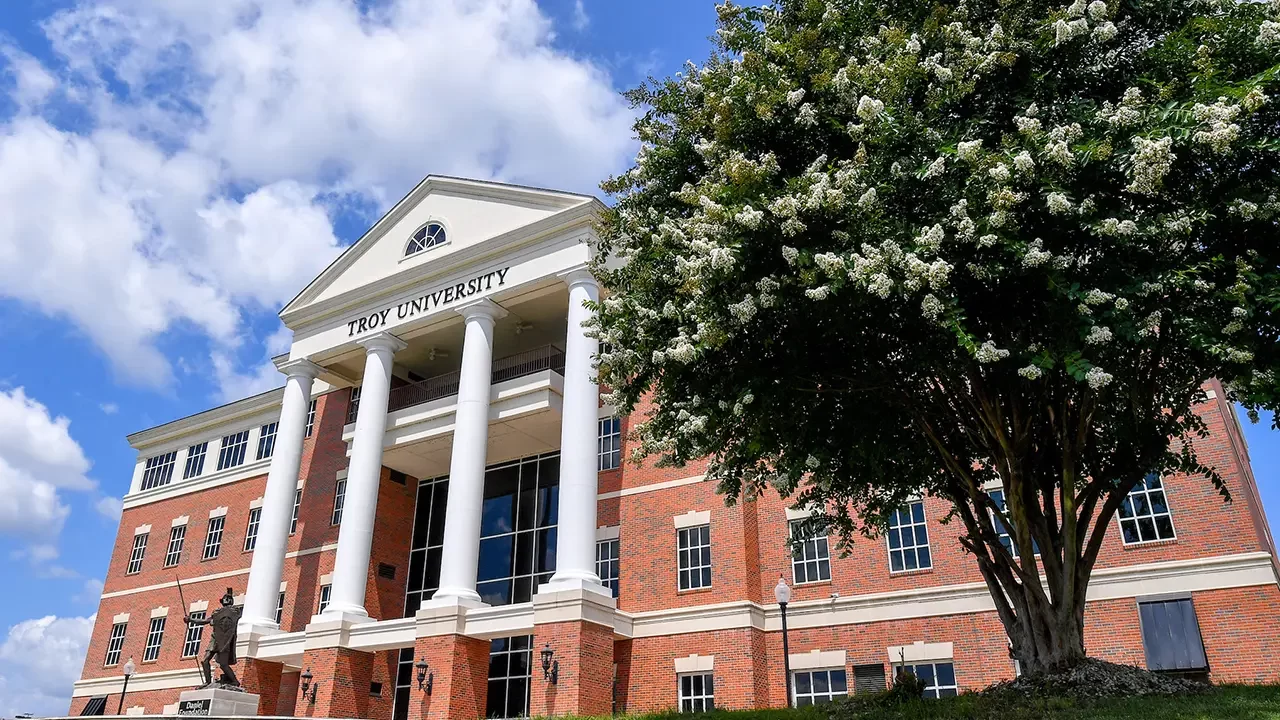
The board also approved a proposal to close Troy University’s Phenix City campus and to sell the university’s Riverfront Building property. The closure, approved by the Troy Board of Trustees in March, is expected to yield $1.1 million in annual savings for the university, and the property sale is expected to bring approximately $11.6 million in revenue to the school’s general fund.
Trenholm State Community College, meanwhile, received approval for an off-campus site for culinary, hospitality and health sciences programming. Construction of the site is projected to cost roughly $52 million and will be funded through the Alabama State Community College System, local and ETF funds.