











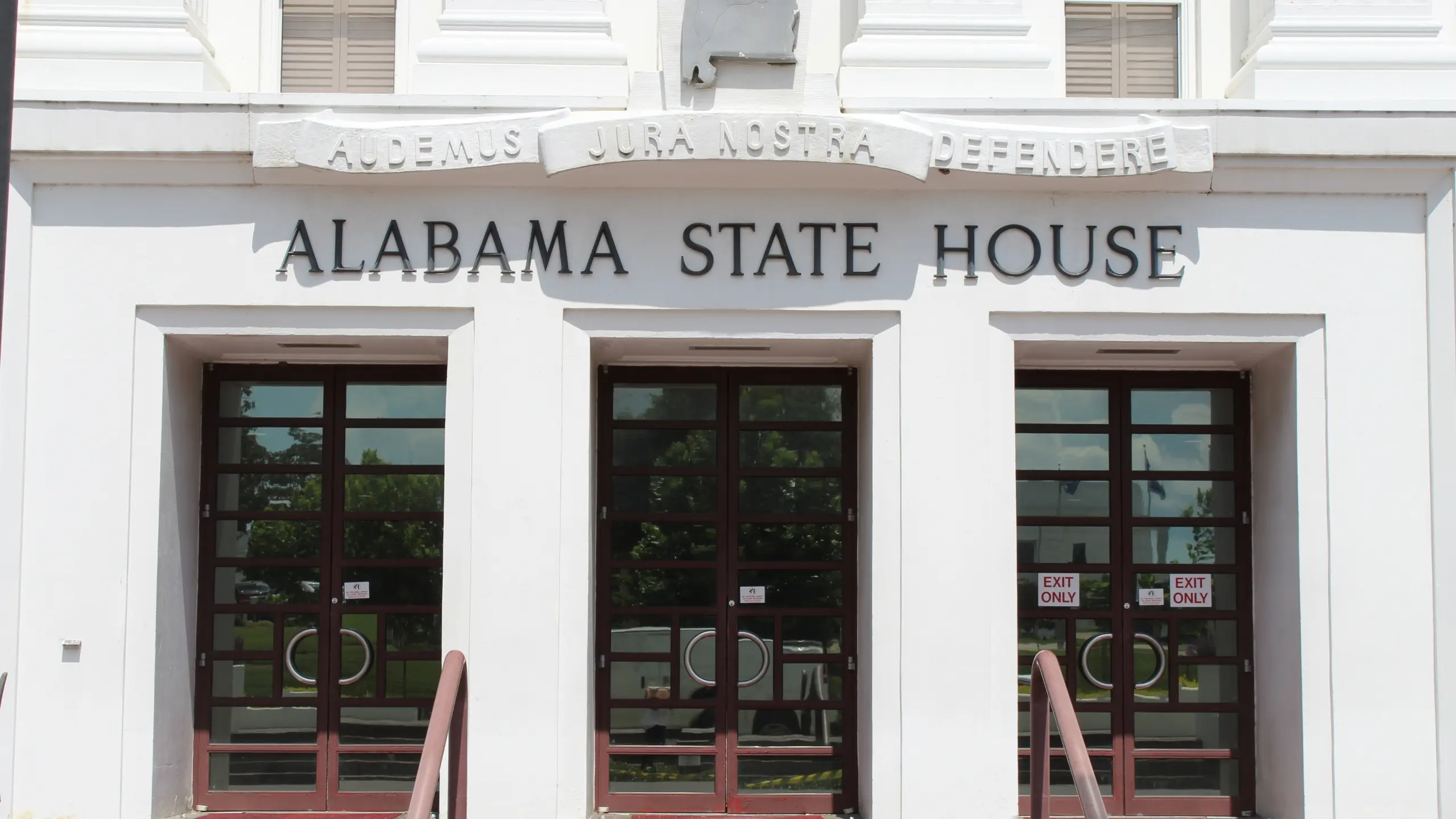
The Alabama House Public Safety and Homeland Security Committee reviewed a slew of law enforcement and vehicle regulation bills during its first meeting of the 2026 session.
Five bills concerning vehicle registration regulations and retirement benefits for law enforcement officers were given unanimous favorable reports from the committee.
House Bill 74
House Bill 74, sponsored by Representative Chad Robertson, R-Heflin, and advanced by the committee, would require county and municipality agencies to provide a qualifying law enforcement officer their badge as part of their retirement package. The bill would also allow agencies to either present or sell an officer their service pistol as part of their retirement benefits.
The bill was introduced by Robertson last year, passing unanimously in the House.
House Bill 35
House Bill 35, sponsored by Representative Ron Bolton, R-Northport, seeks to limit the presence of trucks squatted on their rear wheel on Alabama’s roadways. The bill would ban trucks with a more than 4-inch differential between their front and rear fender heights from driving on public roads and provide penalties for violating its statutes.
“This is our squat truck bill that we’ve passed through committee the last couple of years. It’s got hung up on the calendar, the last day of the session, up in the Senate last year. Basically, it hasn’t changed,” Bolton said.
An individual’s first conviction of the bill’s mandates would require them to pay up to $50 in fines. A second conviction would mandate fines of up to $100, while subsequent convictions would require fines of up to $250.
House Bill 107
House Bill 107, sponsored by Representative Donna Givens, R-Loxley, would create a military combat action license plate and establish criminal penalties for non-combat veterans applying for the tag. The bill would make applying for a tag without having served in combat a Class C misdemeanor, punishable by up to three months in jail or fines up to $500.
House Bill 10
House Bill 10, sponsored by Representative Phillip Pettus, R-Killen, which would allow 14, 15- or 16-year-olds driving a vehicle to receive a regular citation instead of being required to attend a juvenile court hearing.
A 2025 version of Pettus’ legislation passed in the House during the last legislative session.
House Bill 42
House Bill 42, sponsored by Representative Allen Treadaway, R-Morris, was also given a favorable report. The bill would amend reporting requirements for individuals towing unclaimed vehicles.
Currently, vehicles left unattended on a public road or on another person’s private property for more than 48 hours are considered unclaimed. A person in possession of an unclaimed vehicle must report the vehicle to the Department of Revenue’s unclaimed vehicle portal within five days of the department declaring the vehicle unclaimed.
Treadaway’s bill would provide that individuals who have towed unclaimed vehicles may report the vehicle as unclaimed immediately after the vehicle is towed.
Other bills
The committee also tabled votes to approve two bills until a later date.
The vote to approve House Bill 33, sponsored by Bolton, which would remove school enrollment and attendance requirements for driver license and learners permit applications, was carried over by the committee at the request of the sponsor.
Following discussion from the committee, a vote on House Bill 102, sponsored by Representative Kerry Underwood, R-Tuscumbia, was also delayed.
The bill would allow the husbands or wives of disabled veterans who have died to keep their spouse’s disabled veteran car tag for the remainder of their lifetime or until they remarry.
Underwood explained that he developed the bill after a resident of his hometown, whose spouse was a disabled veteran, was required to replace their spouse’s disabled veteran car tag following their death.
“The disabled veteran passed away when the surviving spouse went to renew her license. She was asked to return the disabled veteran tag and get a regular tag, which is the law,” Underwood said. “Their family asked me to look at the possibility of changing that.”
“My question is, if the spouse is not disabled, does this allow them to park in the handicap parking?” Pettus asked Underwood. “If it does, it violates our handicap law.”
“This bill doesn’t address that,” Underwood replied. “Happy to do that. That’s good.”
The representatives agreed to hold a vote to approve the bill until a later meeting.
All bills given favorable reports by the committee will advance to the Alabama House of Representatives for a full vote.