














Last month, a preliminary settlement was reached in A.A. v. Buckner, a lawsuit brought against the Alabama Department of Human Resources, ADHR, over the state’s practice of unnecessarily institutionalizing children with mental health disabilities in psychiatric residential treatment facilities, PRTFs. The plaintiffs in the lawsuit—the Alabama Disabilities Advocacy Program, Children’s Rights and the Southern Poverty Law Center—accused ADHR of violating the Americans with Disabilities Act by “isolating children in highly rigid and often dangerous settings instead of meeting their mental health needs in a loving home or community-based setting.”
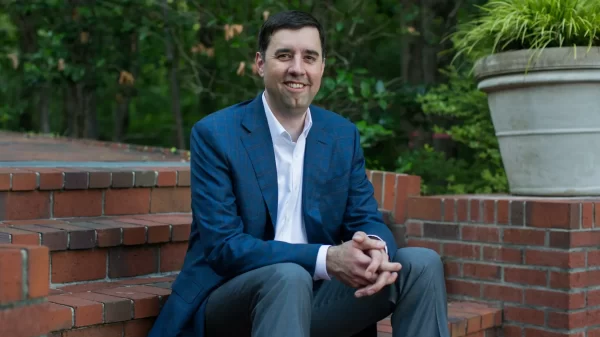
Following the settlement’s announcement, APR spoke with Claire Sherburne, senior staff attorney at SPLC, to learn more about the issues behind the suit, the tangible effects the settlement will have and what other reforms SPLC is pursuing for disabled children in Alabama.
“We had just been hearing lots of concerns from various members of the community in Alabama about Alabama’s foster care system, and so we took kind of a wide lens initially, just looking into the system as a whole,” Sherburne said of the initial motivations behind the lawsuit. “As we started to do that, it became really clear that Alabama was over-relying on institutional placements for young people with disabilities and that those placements were causing quite a bit of harm to the kids that were placed there. So we zoned in on that issue, partly just because it was so prevalent and partly because it aligns with SPLC’s objective to deinstitutionalize and decarcerate people, including young people, in Alabama and our other states.”
Sherburne went on to describe the specific negative effects which PRTF placements can have on children, especially when those placements are unnecessary.
“Historically, the conditions are not good,” Sherburne said. “Often these institutions are plagued by unsafe conditions, unsanitary conditions. There is a high level of staff turnover that tends to happen in these facilities. We see a lot of staff that’s either undertrained or underqualified or oftentimes both. And so kids in these placements were facing quite a few dangerous conditions.”
“That being said, even under the best circumstances PRTFs are not ideal,” she continued. “Even where these explicitly harmful conditions don’t exist, research shows that PRTFs harm kids. So even under the best of circumstances, kids that have spent time in PRTF placements tend to experience worse outcomes than their peers that haven’t.”
In their suit against Alabama, SPLC and their fellow plaintiffs cited research showing that children placed in PRTFs do indeed experience worse life outcomes than their non-institutionalized peers. Experts who testified in the case also found that Alabama’s failure to require standardized clinical assessments led to children being improperly institutionalized, resulting in worsened conditions rather than improvements.
“These are super rigid institutional placements and so kids in these placements don’t get the same opportunities that other kids have,” Sherburne continued. “They’re not able to attend community schools, they’re typically going to school and getting their education on site at the PRTF. They don’t get the same extracurricular opportunities, social opportunities—they don’t have the same opportunities to explore hobbies or interests. They’re isolated and segregated from their family members and peers.”
“Even under the best of circumstances, PRTFs should be used as an absolute last resort, and in those cases, the goal should be for the child to reintegrate into their community as quickly as possible,” she added. “But that’s not what we saw happening in Alabama’s foster care system.”
Sherburne argued that PRTF placements are not even in Alabama’s best interest from a financial standpoint. In her view, Alabama’s overreliance on PRTFs may simply come down to ADHR’s inability or unwillingness to put in the added time and effort needed to find adequate community placements for children with disabilities.
“Frankly, financially, it doesn’t make a whole lot of sense,” Sherburne told APR. “PRTF placements charge by the bed, so ADHR is paying these facilities to house these children and supposedly meet their treatment needs, although their treatment needs often aren’t being met there.”
“In fairness to ADHR, recruiting foster families that are equipped to handle the needs of children with mental health disabilities is more difficult than recruiting foster families for children without any kinds of mental health needs,” she continued. “And so, I think the recruitment process and the extent to which ADHR has historically focused on supporting those community-based placements with access to services and supports and things like that, it just hasn’t been where it needs to be. And so the knee-jerk reaction is often just to send this kid to a PRTF, and then the caseworker doesn’t really have to worry about connecting them with services in a community placement to the same extent that they might otherwise have to.”
However, ADHR will now need to take additional steps to avoid unnecessary PRTF placements moving forward.
Under the terms of the new settlement, Alabama will be required to institute standardized assessments for children at risk of PRTF placement, requiring physician certification of need in 95 percent of cases. Additionally, the state has agreed to implement six-month quality reviews to ensure children’s care plans meet professional standards and to place children in community-based and family-like placements, including kinship care and therapeutic foster care, when appropriate. Congregate care in shared living facilities will also be capped at no more than 7 percent of children in state custody.
Sherburne said there has already been a significant decrease in PRTF placements since the lawsuit was initially filed in 2021.
“We’ve already seen some tangible change since the litigation began,” Sherburne explained. “When we filed the case in 2021, I think over 500 kids were placed in PRTFs in the foster care system. In response to the litigation in 2021, ADHR implemented some changes even prior to the settlement, and now there’s only like 150 kids in PRTF placements.”
“The number has gone down pretty significantly, which is great, and we hope to see the number continue to go down as ADHR implements the settlement,” she continued.
Sherburne went on to describe how the terms of the settlement will further change Alabama’s use of PRTFs once they are put into practice.
“The settlement safeguards against unnecessary entries into PRTFs, so if kids can be served elsewhere in community placements, they will be,” Sherburne stated. “The settlement also ensures quick exits from those placements. Before the litigation, we were often seeing kids languishing in PRTFS, sometimes spending the majority of their adolescence there—I’m talking three, four years exclusively in PRTF placements.”
“I think the second big thing that the settlement does is make sure that those kids are getting checked up on more regularly so that they’re not falling in the cracks or through the cracks, and then establishes an expectation that kids that go to PRTFs are going to be discharged quickly,” she continued. “Previously, kids were being placed in these facilities with an indefinite discharge date and sort of having to ‘earn’ their release. We hope that this settlement kind of flips that on its head, such that the expectation is that kids are going to be discharged and reintegrated into their communities as quickly as possible, and only under extreme circumstances will those discharge dates get extended… the settlement [also] ensures that a thorough discharge planning process is started from the moment the kid enters a PRTF placement.”
In addition to reducing unnecessary PRTF placements and improving discharge processes, Sherburne said that the settlement will also bolster the support system that exists for children with disabilities while they are in community placement.
“The settlement will strengthen the individualized service planning process that ADHR conducts to ensure that kids in community placements are receiving the supports and services that they need in those placements so that they can maintain stability there,” she explained. “It obviates the need for any kind of emergency crisis institutional placements, which is how a lot of kids wind up in PRTFs in the first place.”
Sherburne called the settlement a “great outcome” for children with disabilities in Alabama and a win for SPLC. However, she noted that more work needs to be done, as SPLC hopes to ultimately eliminate the need for PRTF placements altogether.
“I think it was a super successful first step in reducing the state’s reliance on those placements, and like I mentioned before, at SPLC that’s one of our core pillars: deinstitutionalizing and decarcerating young people in the Deep South,” Sherburne told APR. “That said, there is 100 percent more to be done. Institutional placements, in my view, are always harmful for kids, so ideally we could get to a place where the state really isn’t relying on these placements at all, not even as a last resort, because kids are able to get the quality mental health care that they need at home and in their communities.”
Sherburne added that while SPLC does not have any current plans for additional litigation related to PRTF placements in Alabama beyond monitoring the settlement agreement, they will continue to listen to communities within the state and “address additional issues as they arise.”