



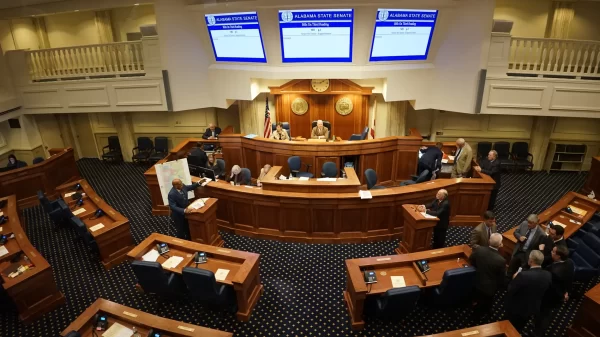








The Alabama House of Representatives passed House Bill 161, the App Store Accountability Act, on Thursday.
The bill would give parents greater control over their children’s digital activity amid growing concerns about how children use smartphones and tablets. The legislation would sort children into age categories when new accounts are created on app stores and allow guardians of underage users to set up linked accounts to approve or deny app downloads and in-app purchases. If developers make changes to applications, parents would be required to reauthorize their use.
“The most pressing challenge I face as a parent, grandparent and Speaker of the Alabama House of Representatives is placing our state’s children on a safe pathway to success,” Speaker Nathaniel Ledbetter said. “Smartphones, tablets and other electronic devices have become a major part of our children’s lives, and if used properly, they can be excellent educational tools. At the same time, there is a great deal of content available on these devices that kids simply have no business ever seeing. The bottom line is that parents — not Big Tech or bureaucrats — deserve the final say on what their children can access, and I am proud that the House stepped up to protect this right by passing the App Store Accountability Act.”
A recent Cygnal poll conducted for the Alabama Policy Institute found that 83 percent of Alabamians support requiring app stores to obtain parental approval for teens to download apps.
Rep. Chris Sells, R-Greenville, sponsored HB161.
“Whether it be issues related to cyberbullying, exploitation or access to inappropriate content, online safety has become a top concern for parents across the state of Alabama,” Sells said. “The disturbing reality is that there are people out there who wish to do our children harm, and many of them are utilizing content available in app stores to do so. The safety of Alabama’s children should always come first, and I believe that by passing this bill, we are sending a clear message that there is no level of convenience that outweighs our responsibility to protect them.”
The bill now heads to the Senate.