











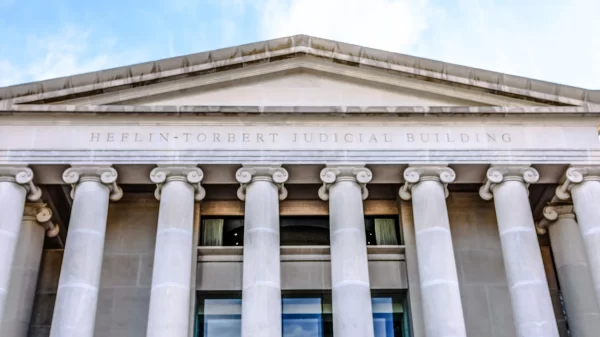





The world looked wildly different in 1999 than it does today. Bill Clinton was President, The Phantom Menace was the top movie globally, and Britney Spears was the top music artist in the country. That year was also the last time Alabamians had an opportunity to vote on a constitutional amendment to legalize gaming—specifically the lottery.
Twenty-six years later, it is long overdue that we, as voters, get to have our say on this divisive issue. Almost every session, some form of legislation to legalize betting is introduced in the Alabama State House or Senate, and, without fail, is swiftly defeated. Whether it be a lottery-only bill or a comprehensive package, they all have the same outcome.
Since “gambling” was banned in the state constitution in 1901, a constitutional amendment passed by voters is the only way to legalize any form of gaming. However, both chambers need to approve the amendment’s terms and the date it would appear on the ballot by a three-fifths margin before voters can approve or deny the measure. Just last year, a gaming package passed the House easily but failed in the Senate by just one vote after many alterations were made to the bill in the upper chamber.
Attempting to satisfy all parties on this topic has been, and will continue to be, a gamble.
Even the contents of the amendment have become a significant point of contention among legislators and lobbyists. Some argue that, as in 1999, the measure should focus solely on lottery approval, while others contend that it should also include casino regulation, online sports wagering and new casino licensing. Still others oppose any expansion of gaming altogether, citing moral objections. At present, Alabama permits only online horse racing betting and limited casino operations run by the Poarch Creek Indians, which are prohibited from offering table games.
As such, the Poarch Creek Indians are a major player in these discussions, and they should be. They have long pushed for a comprehensive gaming bill that would allow table games at their resorts and sports betting on their properties as well. The economic development potential for tribes is astounding. However, conservative legislators in the state are unwilling to consider any amendment that does more than just legalize the lottery. The concept of new casino builds has also been a major holdup.
But polling of Alabama residents shows strong support.
According to polling, between 80 percent and 89 percent of Alabamians support the right to vote on a constitutional amendment related to gaming. Other polling conducted by Alabama Governor Kay Ivey’s office showed that 71 percent of Alabamians support a statewide lottery and 67 percent support expanded casino gaming across the state. Widespread support also exists for legalizing online sports betting. If this amount of our residents’ support not only secures the right to vote on a constitutional amendment, but also the gaming items themselves, it is long overdue to give us our say at the ballot box, when 45 states have legalized the lottery and 38 have some form of sports betting.
Conservative estimates suggest that a comprehensive gaming package in Alabama could generate roughly $750 million per year. That money could help improve state infrastructure on roads without raising taxes further, or even create a community college fund to help lower the cost of Associate degrees for students, as Tennessee’s lottery did. At a time when many Alabama residents already feel overtaxed, why shouldn’t gaming be considered?
Studies show that Alabama loses hundreds of millions of dollars annually to neighboring states with lotteries, not to mention all the money that leaves our state when residents drive to Tunica or Biloxi to enjoy table games, when they should be able to enjoy them at a Poarch Creek casino in our state.
It is time to bring lost revenue back to our area to enhance our economy without further overtaxation, while giving voters the freedom to make an informed decision for themselves. A comprehensive gaming package must be on the ballot for the 2026 midterms, or our state will continue to miss out on a generational financial opportunity.
Lucas J. Parker is the vice president of consumer affairs at the Southwest Public Policy Institute, a nonprofit think tank whose mission is simple: better living through better policy.