




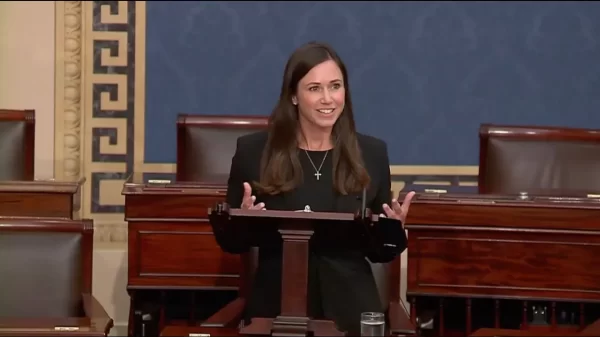




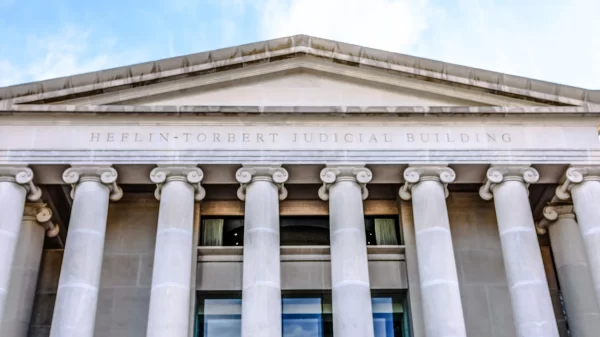






The Alabama State Senate voted unanimously on Thursday to confirm Hal Nash to the Alabama Board of Pardons and Paroles.
Governor Kay Ivey appointed Nash as chairman of the Board in July 2025.
Pursuant to the law, the governor selects the candidate from a list of five qualified persons nominated by a board consisting of the Lieutenant Governor, Speaker of the House of Representatives and President Pro Tempore of the Senate. The appointee is then confirmed by the Senate during the state legislature’s regular session.
“I’m grateful to Governor Kay Ivey for her confidence in me and look forward to continuing to fulfill my duties to the people of Alabama,” Nash said. “As a law enforcement officer for more than three decades, I understand the importance of our role to serve and protect the people of Alabama. We will be detailed, diligent and strive to ensure a stronger, safer state through my work with fellow board members and our partnership with the Bureau and its officers in the field.”
Nash most recently served as chief corrections deputy with the Jackson County Sheriff’s Office. He previously served with the DeKalb County Sheriff’s Office, among other law enforcement agencies. The governor sought to identify a tough-on-crime, fair and pro-law enforcement candidate with leadership experience from the list of nominees. Nash has also held leadership positions in civic organizations, serving as international vice president of the Jaycees, and on various public boards, including as the chairman of the Chattanooga/Hamilton County Air Pollution Control Board and the Jackson County Hospital Authority.
Following Gov. Ivey’s appointment of Nash, Alabama Bureau of Pardons and Paroles Director Cam Ward issued the following statement.
“Governor Ivey’s appointment and the Alabama Senate’s confirmation of Hal Nash to the Board is a fine choice. I know with Chairman Nash’s background that he will continue to represent our law enforcement community well,” Ward said. “The Bureau functions separately from the Board, but we enjoy cooperation with its members and work to promote the safety of our state’s citizens while providing meaningful paths to reentry into society for formerly incarcerated Alabamians.”
The Board is separate from the Bureau and serves as an entity of Alabama’s legislative branch of government. It’s the sole legal authority under law to approve or deny who receives parole and is comprised of three members who serve six-year terms. The Bureau is a separate entity from the Board of Pardons and Paroles and is an Executive Branch agency. The Governor appoints the director of the Bureau, who serves at the pleasure of the Governor. The Bureau is tasked to provide administrative and legal support for the Board. Additionally, the Bureau director is vested with all power necessary to perform the duties assigned to the Board by law except the power to adopt rules, guidelines or other policies and to make grant or deny pardons, paroles, the restorations of political and civil rights, the remission of fines and forfeitures and the revocation of parole.