











Independent Senate hopeful Craig Jelks, on Wednesday, called on Alabama’s U.S. senators to commit to not trading stocks during their tenure in office.
Jelks, an Alabama native and educator, running for the seat currently held by U.S. Senator Tommy Tuberville, R-Alabama, additionally, urged Tuberville and U.S. Senator Katie Britt, R-Alabama, to commit themselves to greater transparency regarding their financial dealings.
“I’m calling on Senators Katie Britt and Tommy Tuberville to commit to no stock trading and full transparency of their economic gains while in office,” the candidate said in a written statement.
“Recent reporting about late disclosures and past violations of the STOCK Act shows exactly why these reforms are needed. Alabama deserves political leaders with integrity who play by the same rules as everyone else,” he continued.
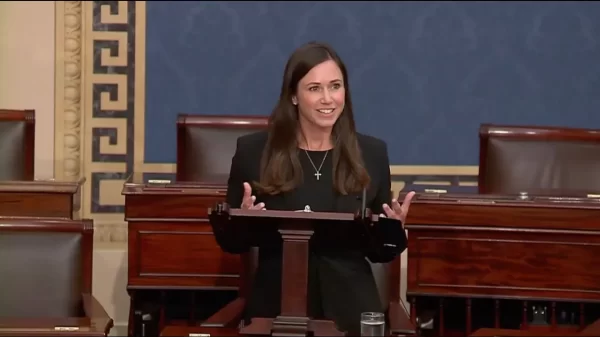
Jelks’ announcement comes after Britt last week filed a periodic transaction report with the Senate Ethics Committee, required to be filed within 45 days of a transaction involving at least $1,000 of a stock or security, nearly eight months late.
The 22 transactions reported by Britt were made from a retirement account owned by her husband, Wesley Britt, and occurred between April 14 and November 7, 2025.
While the exact value of the stocks traded by Britt is unknown, as Senate reporting requirements only mandate senators provide a dollar range, the report indicates that the senator’s husband made between $22,000 and $330,000 worth of stock purchases and sales, which Britt reported late.
The senator’s office has said Britt had no knowledge of the trades made in her husband’s account until this month, attributing the transactions to Britt’s stockbroker.
Under the federal Stop Trading on Congressional Knowledge, or STOCK Act, first-time late reporters may face a $200 fine, regardless of whether they were aware of the trades made in their or their spouse’s name.
The transactions made in Britt’s account included the purchase of between $1,000 and $15,000 worth of JPMorgan Chase stock, the price of which has increased nearly 30 percent since it was bought in April. Britt currently sits on the Senate Banking Committee.
Since the transaction was made public, Britt’s office said that all Chase stock in her husband’s account will be unloaded, and the proceeds from the transaction donated to charity, “to avoid any appearance of a conflict of interest.”
In 2021, Tuberville similarly failed to properly disclose roughly 130 stock and stock-option trades valued between $894,000 and $3.5 million, resulting in a complaint with the Senate Ethics Committee filed by the Campaign Legal Center.
Jelks condemned elected officials who fail to file financial disclosures on time as a violation of the public’s trust and went on to describe congressional stock trading as degrading the value of public service.
“When members of Congress file financial disclosures late or treat the law like it doesn’t really matter, it sends a clear message: one set of rules for them, another set for everyone else,” he wrote. “That’s not how trust works. The people of Alabama deserve to know their U.S. Senators are making decisions for the public good—not their own bank accounts.”
Jelks condemned elected officials who fail to file financial disclosures on time, whom he described as violating the public’s trust.
“As an Independent candidate, I don’t owe anything to party bosses or special interests—and will tell the truth no matter who it offends. I believe the rules should mean something,” Jelks continued. “That means real enforcement, real penalties, and ending stock trading by members of Congress and their spouses. Public service shouldn’t be a side hustle. It should be a promise.”
In early January, U.S. House Republicans advanced the Stop Insider Trading out of committee, which would place limits on stock trades for lawmakers, their spouses and dependent children.
While the bill would not bar congresspeople from owning stocks outright, and would allow members to keep their current stocks, it would require that congresspeople file a public notice seven days before selling existing holdings.
House Democrats, meanwhile, have argued the bill does too little to curb insider trading and have rallied behind a rival piece of legislation, the Restore Trust in Government Act, which would ban congresspeople, alongside the president and vice president, from owning or trading stocks and mandate divestment of their current holdings.
Cosponsors of the bill include U.S. Representative Terri Sewell, D-Alabama, who, despite owning only two stocks last year, both worth up to $15,000, came in as the congressperson with the third highest performing profile in 2025, according to the congressional stock monitoring site, Unusual Whales, with a nearly 70 percent return on her investments.
Tuberville and Representative Robert Aderholt, R-Alabama, also traded stocks in 2025, according to the site.


