




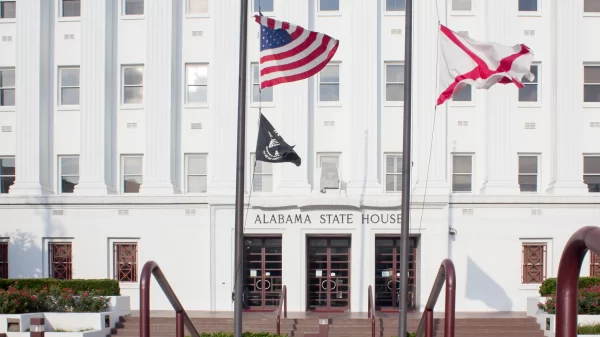








Last week, State Representative Greg Barnes introduced legislation that would make it a felony to enter a place of worship and intentionally disrupt services.
“What we saw in Minnesota was unacceptable and disgusting behavior, and we are not going to tolerate it in Alabama,” Barnes said. “If passed, HB363 will send a crystal-clear message that our churches are off limits to radical activists who have no respect for others’ right to worship.”
House Bill 363 makes disrupting a worship service a crime under Alabama law. A first offense is classified as a Class C felony, with repeat offenses carrying the same charge and a mandatory minimum sentence of five years in prison.
“No one has the right to disrupt a church service and infringe on their fellow citizens’ right to worship freely,” Barnes said. “In Alabama, we are not going to sit by and allow crazy people to intimidate our women and children in our churches. We simply will not tolerate it.”
HB363 would make it illegal for an individual to intentionally enter a church building or its contiguous property during a scheduled worship service with the intent to disrupt services or block access, and then engage in unlawful protest activity, riot, disorderly conduct, harassment of worshippers, or obstruction of entry or exit.
HB363 has more than 50 cosponsors, and the legislation has been assigned to the Public Safety and Homeland Security committee.