














A bill to close Alabama primaries to registered party members was the most notable bill to die on the last day of Alabama’s legislative session last week.
But there were a handful of other bills that were also teed up for final passage and awaiting only one final floor vote to be sent to Gov. Kay Ivey.
Reshaping the Department of Archives board
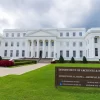
Once again, a bill to reshape the board of the Alabama Department of Archives and History failed to cross the finish line, and actually stopped shorter than its progress last year. HB169 by Rep. Jamie Kiel, R-Russellville, would have given politicians the power to choose the members of the board, which is currently self-appointing. The governor would get to pick eight members of the expanded 17-member board, and would also have a vote of their own, ultimately giving the governor the power to control the board.
The bill originated from Sen. Chris Elliott, R-Josephine, in response to an hourlong event 2023 at the archive where a guest speaker discussed the difficulty of archiving LGBTQ+ history.
Making local cops into ICE agents
HB13 by Rep. Ernie Yarbrough, R-Trinity, garnered intense backlash particularly from advocacy groups supporting Alabama immigrants. The bill would have empowered local police to work alongside ICE and ensure they could carry out detentions based on immigration status. Yarbrough filed the bill at a time when ICE was in the national limelight, committing two high-profile killings of protestors in Minneapolis.
Disrupting worship services
Another event in Minnesota inspired Rep. Greg Barnes, R-Curry, to file HB363 establishing new criminal penalties for disrupting a worship service. The bill came on the heels of a protest in a Minneapolis church that led to federal arrests of the protest leaders, plus two journalists including former CNN anchor Don Lemon. The protestors were criticizing a St. Paul church where ICE agent David Easterwood is listed as a pastor.
Requiring a doctor’s note to mask while protesting
HB168 by Rep. Jamie Kiel technically would have created new protections for masking during protest, but in the negative created new restrictions. The bill would allow protestors to wear a medical mask—something that is not clarified under current anti-masking laws—but would have specifically required protestors to have a doctor’s note that could be presented to law enforcement on demand. Masking laws have had a complex legal history dating back to prosecutions of the Ku Klux Klan, but anonymity has been protected as a part of free speech in other situations. Attorney General Steve Marshall also said during the pandemic that Alabama would not enforce anti-masking laws against people wearing Covid masks as the intent of the law is public safety.