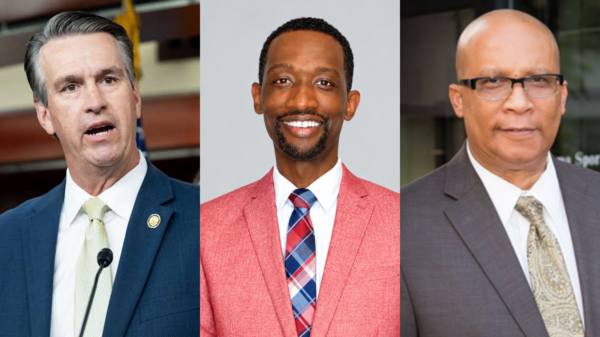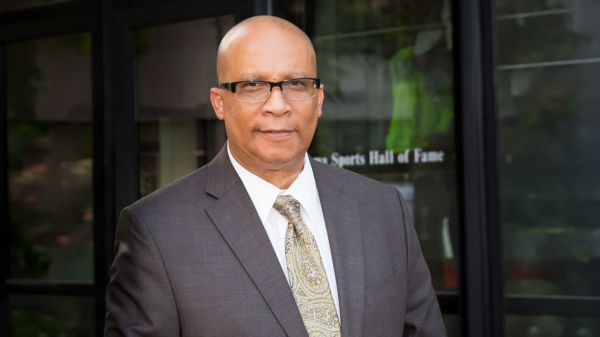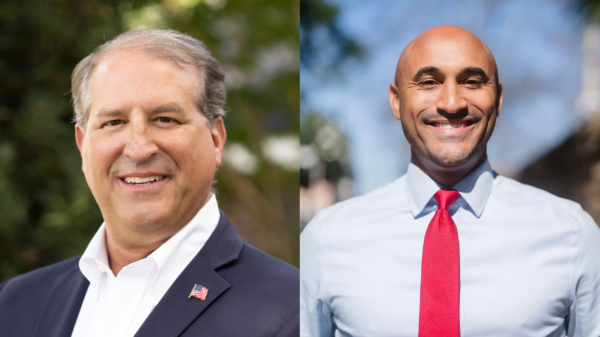
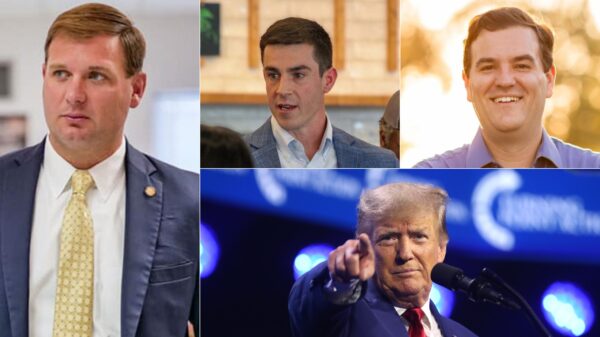




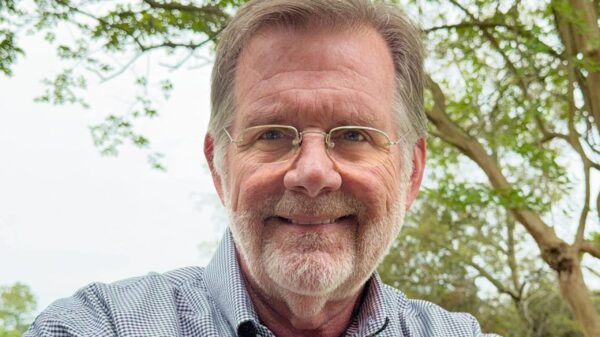
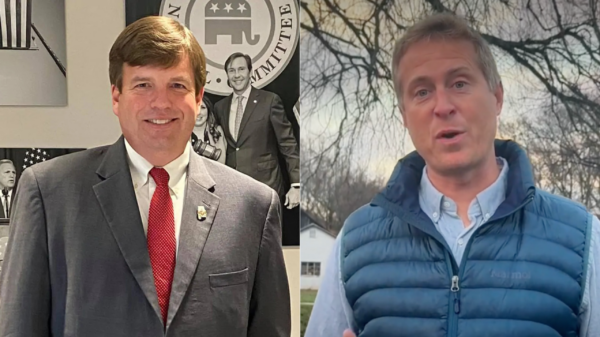


Independent U.S. Senate candidate and local educator Craig Jelks has called on Democratic nominee Everett Wess to drop out of Alabama’s U.S. Senate race, calling Wess an “invisible candidate” who has not generated enough statewide attention to defeat Republican nominee U.S. Representative Barry Moore, R-Alabama.
“I am calling on Everett Wess to withdraw from the Alabama U.S. Senate race,” Jelks said in a statement Wednesday. “This is not a personal attack. This is a strategic reality that all Alabama voters deserve to hear out loud.”
“The numbers tell the story,” he continued. “Our campaign has generated more organic statewide media coverage than the Democratic nominee. We have challenged Republican nominee Barry Moore’s record on healthcare, war powers, Elon Musk donations, crypto money, and his blind loyalty to the president. We have done this consistently, boldly, and on the record—while the Democratic nominee has remained largely invisible.
“Alabama cannot afford an invisible candidate. Not this year. Not with this much at stake.”
Jelks went on to reference the U.S. Senate race in Nebraska, where Democrats ultimately elected not to field a nominee, instead allowing independent candidate Dan Osborn to challenge incumbent Republican U.S. Senator Pete Ricketts, R-Nebraska.
“In Nebraska, Democrats cleared the field for independent Dan Osborn because they understood that winning—actually winning—required making a strategic choice over a partisan one,” Jelks said. “Alabama Democrats have that same opportunity right now.”
“The sharpest contrast to Barry Moore isn’t a Democrat. It’s an Independent educator who has the integrity, vision, and compassion to move our state forward without partisan bias,” Jelks added. “This is the race Alabama deserves. This is the race Alabama needs. And this race becomes possible the moment Everett Wess steps aside.”
While Jelks is running as an independent, he has previously said he leans conservative on several issues, including his belief that “marriage is between one man and one woman.” At the same time, Jelks has criticized the modern Republican Party for what he views as an abandonment of fiscal conservatism and a fixation on culture war issues.
Jelks concluded his statement by again arguing that Wess has failed to generate sufficient enthusiasm for his campaign ahead of the general election and that Jelks would be a stronger opponent against Moore in November.
“I have deep respect for anyone willing to run for public office—it takes courage. But courage alone doesn’t win races,” Jelks said. “Alabama needs a candidate who can generate excitement, command attention, and give voters a genuine reason to show up in November. Everett Wess has had months to do that. The silence has been deafening. A Millennial independent educator who interned for both a U.S. Senator and a Senate Majority Leader—who has built a movement without asking a single supporter for a dollar—can do what a low energy party nominee cannot: make Alabama pay attention.
“We have a state to save. But time is running out. Party loyalty has done enough damage to Alabama. Let it end here.”
Wess’ campaign declined APR’s request for comment on Jelks’ statement.
The latest poll in the race, conducted by a pro-school choice organization in early July among 601 likely Alabama voters, showed Moore at 47 percent and Wess at 32 percent, with 1 percent supporting “other” and 20 percent undecided. The poll did not list Jelks, and it reported a margin of error of plus or minus 4 percentage points.