





State
Audit found Alabama Agriculture Department failed to properly verify lawful presence and had no uniform bad check fees, repeating previously cited compliance problems.
Hi, what are you looking for?


Analysis | How a Tuberville residency challenge would unfold in party, Legislature

Local educator Craig Jelks officially launches independent bid for US Senate

Opinion | There’s a better, more realistic way forward for Will Boyd

Marshall remains in GOP primary after Trump announces Moore endorsement

Alabama Civil Justice Reform Committee endorses Justice Brad Mendheim

Governor expands Alabama school choice with federal tax credits

Governor launches statewide flood notification system after Texas tragedy

Gov. Ivey proposes modest budgets as financial experts warn of looming downturn

Gov. Kay Ivey delivers final State of the State address

ALGOP Chairman Wahl shares statement on Gov. Ivey’s State of the State address

House Democratic Caucus makes affordability center of 2026 agenda

Alabama Senate advances bill to restrict environmental regulation expansion

Senate unanimously advances bill aligning sickle cell commission with ADPH

Gov. Ivey pushes for more veterans to teach in Alabama classrooms
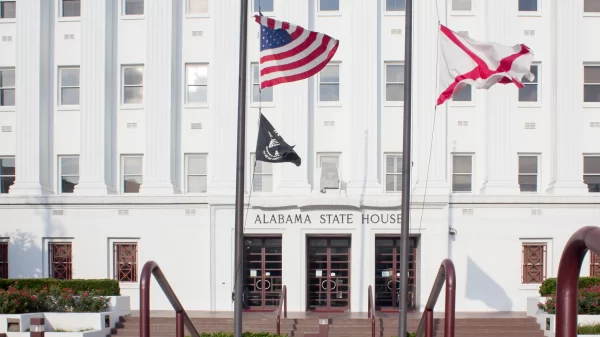
Advocates to rally at Alabama Statehouse for Reproductive Justice Advocacy Day

Alabama achieves record $14.6 billion in economic development investment

Alabama home sales drop 3 percent in December amid seasonal trends
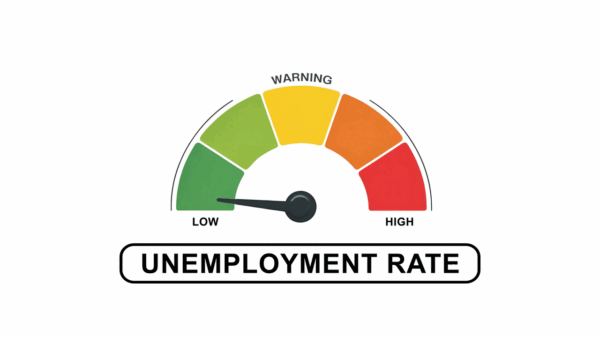
Alabama’s unemployment rate drops to 2.7 percent in November

Alabama home sales stable, prices surge in November report

Gov. Ivey welcomes $10.5M Bad Boy Mowers Tractor Plant, 50 jobs headed to Monroeville

Opinion | Alabama small businesses want choice in health care

Sen. Britt requests DOT funding to complete I-10 Mobile bridge project
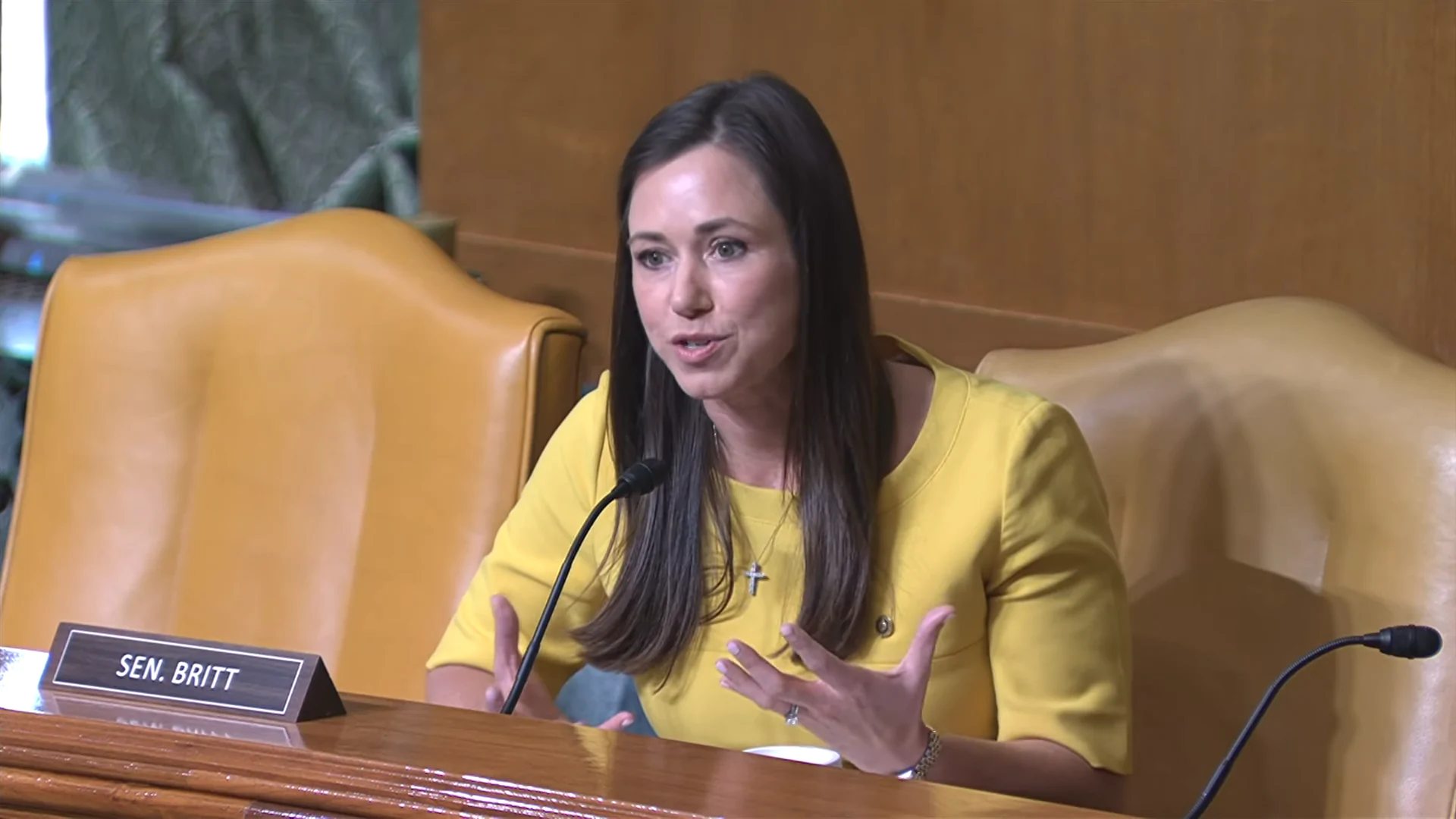
Sen. Britt secures $50.7M for Alabama in FY26 spending package

Sen. Britt applauds Alabamians appointed to USDA FSA State Committee
Sen. Britt leads bipartisan letter to CDC urging action on rise in youth sports gambling
Gov. Ivey pushes for more veterans to teach in Alabama classrooms
Governor expands Alabama school choice with federal tax credits

Alabama State receives Carnegie community engagement classification

Alabama approves $6.48 million in school safety mapping, software contracts

State education committee takes aim at reducing classroom paperwork

Opinion | A healthy workforce keeps rural Alabama working
Opinion | Alabama small businesses want choice in health care

Alabama Senate committee advances prostate cancer screening legislation

New national report shows opioid prescriptions continue to fall in Alabama
Board of Medical Examiners accepting applications for Medical Cannabis Certification Permits

Opinion | A legislative agenda we should all support

Opinion | Andrew Sorrell, campaign cash, and the quiet shutdown of Stable Revolution
Opinion | There’s a better, more realistic way forward for Will Boyd
Opinion | A healthy workforce keeps rural Alabama working
Opinion | Alabama small businesses want choice in health care

Alabama law puts post-election eligibility disputes in the hands of lawmakers, not judges, with major consequences for succession and democratic legitimacy.
Disillusioned with both major parties, the career educator announced he was running as an independent to represent everyday Alabamians.
Sometimes, a good idea is just a good idea, no matter who proposes it.
The Alabama House Democratic Caucus unveiled its 2026 legislative priorities Tuesday, focusing on tax elimination, voting access, and public education funding.


The controversial bill, which prohibits state agencies from setting environmental standards stricter than federal law, passed committee 5-2 after heated debate.
Will Boyd was offered an opportunity to build a coalition of support and stop the endless cycle of losing elections. He should take it.

President Donald Trump announced his endorsement of Congressman Barry Moore for Alabama's open U.S. Senate seat on Saturday


Before the settlement, thousands of disabled youth were unnecessarily isolated and segregated in highly rigid placements, often facing unsafe conditions.

A healthy workforce keeps rural Alabama working. Rural communities keep health care alive.

Pharmacy Benefit Managers are instrumental partners we have to keep prescription drug costs manageable.

From Washington’s restraint to executive immunity, constitutional limits are fading and king-like authority is quietly reentering American political life.


No decent person could ever seriously justify honoring Robert E. Lee at all, much less on the same day the state honors MLK.


I witnessed and experienced the glory and the power of the Lord as it melted hearts and changed minds with truth and grace.


This action is necessary to protect the people of Alabama from the threat posed by the Chinese Communist Party.
Audit found Alabama Agriculture Department failed to properly verify lawful presence and had no uniform bad check fees, repeating previously cited compliance problems.


Alabama's CON process has ensured decent, quality care throughout the state, and protected consumers and taxpayers, but it's under attack.


The ESTUARIES Act marked the freshman lawmaker's first legislation to pass the House, securing vital estuary protection funding through 2031.
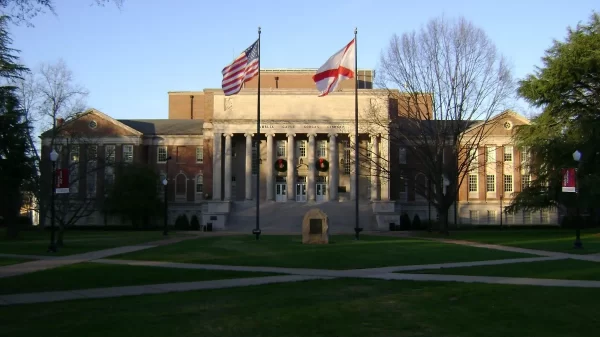

Civil rights groups allege the anti-DEI law unconstitutionally abridged First and Fourteenth Amendment rights, causing distress among students and faculty.
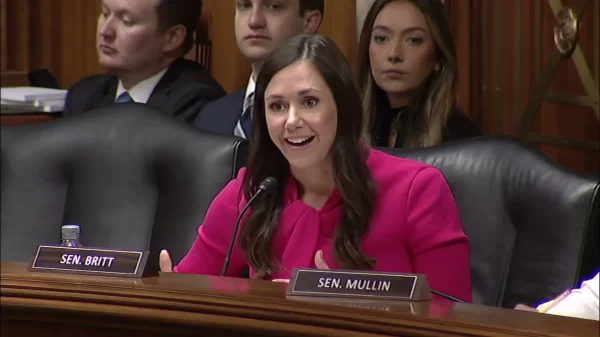
The bipartisan group highlighted reports that artificial intelligence chatbots encouraged dangerous behavior among children, including suicidal ideation and self-harm.

Alabama leaders reorganized the Department of Labor into the Department of Workforce, creating a central hub for industry, education and government collaboration.


Once considered the "kiss of death," political endorsements in Alabama shifted from local truisms to powerful tools driven by national allegiance and key organizations.


Crimiel, a prosecutor focused on special victims cases and a lifelong Montgomery resident, announced her candidacy for House District 74.
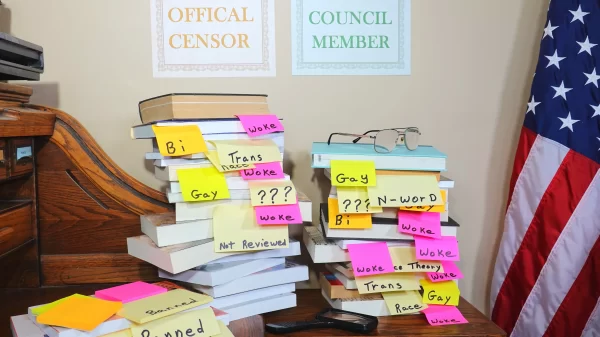

State Sen. Chris Elliott introduced Senate Bill 26, establishing a pathway for local governments to remove library board members after months of controversy.

The Alabama Teacher Streamlining Paperwork Act is expected to focus on eliminating redundant attendance and grade book requirements