






Governor
Governor Kay Ivey signed legislation Tuesday requiring parental consent for minors to download apps, strengthening online safety measures for Alabama families.
Hi, what are you looking for?


Gov. Ivey celebrates Birmingham students for academic growth in turnaround schools

Gov. Ivey authorizes bonds to support Jackson Hospital in Montgomery

Gov. Ivey proclaims Public Schools Week, celebrates gains by students

Gov. Ivey announces 31 appointments, including judgeships and Lauderdale DA

Gov. Ivey attends Alabama Veterans Resource Center grand opening

House passes bill that would rename Gulf of Mexico

House passes bill criminalizing disruption of worship services

Senate approves bill to create central office for professional licensing boards

Committee OKs bill to allow ALEA takeover of understaffed police agencies

Alabama House passes bill for Second Amendment sales tax holiday

January 2026 Alabama Economic and Real Estate Report

House committee advances expansion to seafood labeling regulations

Alabama home sales, median prices soar in 2025 report

German chain manufacturer to invest $34M into new Auburn operation

Alabama achieves record $14.6 billion in economic development investment

Rep. Aderholt to host Passport Fair in Florence

Alabama Sens. Britt and Tuberville decry Supreme Court ruling against Trump’s tariffs

Southern Research secures $2 million for scientific expansion projects

Alabama leaders remember civil rights icon Rev. Jesse Jackson Sr.

Democrats call for investigation into IRS taxpayer data leak
Gov. Ivey celebrates Birmingham students for academic growth in turnaround schools

Troy University signs engineering partnership with Enterprise State Community College
Gov. Ivey proclaims Public Schools Week, celebrates gains by students

Opinion | Growing is the purpose: keeping education first in high school sports

Alabama State University to host Montgomery.AI summit in March
Gov. Ivey authorizes bonds to support Jackson Hospital in Montgomery

Alabama AG urges AMA to disavow hormonal treatments for trans minors

L. Keith Granger recognized with Alabama Healthcare Hall of Fame induction

Alabama Rural Hospital Investment Program reaches $20M cap in just one month

Governor marks first meeting of Alabama Rural Health Transformation Advisory Group

Opinion | The prison oversight bill is good, no matter how it came about

Opinion | Defending the Alabama GOP’s ballot access rules

Opinion | Alabama has a rare Senate seat opening this year

Opinion | Alabama women should not fight for reconstruction after cancer
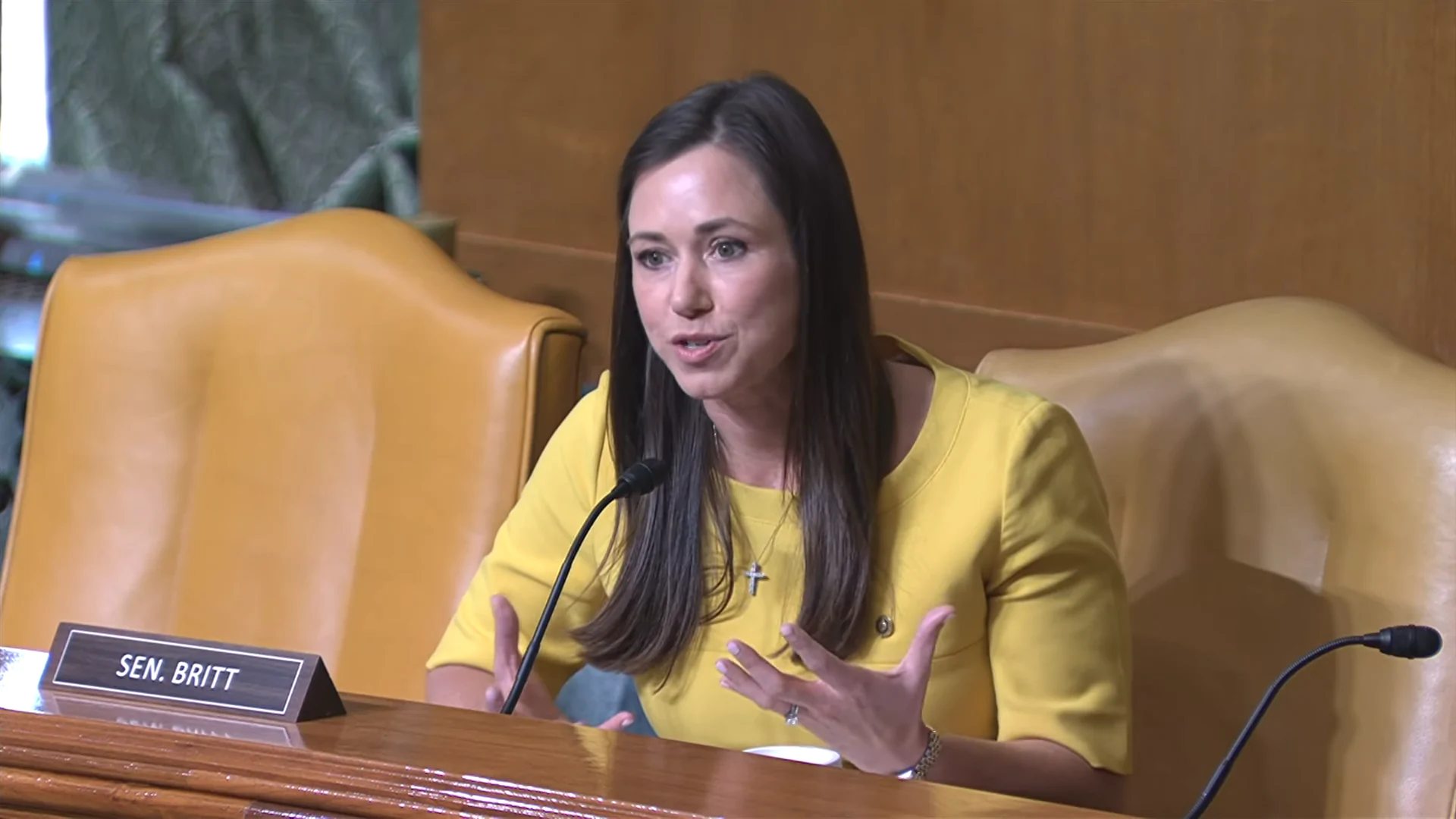
Opinion | Sen. Britt stepped up to protect Alabama’s economy and Trump’s vision for America

No matter how it came to be sponsored by Republican Senator Larry Stutts, it is a good, necessary and consequential piece of legislation.
State representatives voted Tuesday to make disrupting religious services a Class C felony after a high-profile protest interrupted a Minnesota church service.
An Alabama Senate committee debated a bill Tuesday allowing the state to oversee major police departments if they fail to meet staffing requirements.
State representatives voted Tuesday to waive state sales taxes on firearms and ammunition during a new annual holiday scheduled for late August.


If the bill passes the Senate, the body of water would become known as the Gulf of America.

Governor Kay Ivey and the Amendment 666 Bond Commission authorized future bonds to support Jackson Hospital and fund Space Command's relocation.


House Majority Leader Paul Lee appointed Representative James Lomax as majority whip, while Representative Chip Brown remained vice chairman of the caucus.

Five candidates entered the race for Alabama’s rare open U.S. Senate seat following Senator Tommy Tuberville’s decision to run for governor.

Troy University and Enterprise State Community College signed an agreement Tuesday creating a pathway for students to earn bachelor's degrees in engineering.

Our responsibility as lawmakers is straightforward: when a law guarantees care, patients should be able to receive it.
Senator Katie Britt protected Alabama jobs and medical research by securing critical funding to keep the nation competitive in biomedical innovation.


New legislation aims to eliminate Alabama’s status as a refuge for predators by extending civil statutes and creating a revival window.


Come along, let's go steal a vote. It's really quite easy. Let me show you how.


We must force ourselves to look beyond slogans, stigmas and slurs, and instead seek those motivated by service.
Governor Kay Ivey signed legislation Tuesday requiring parental consent for minors to download apps, strengthening online safety measures for Alabama families.


Representative Scott Stadthagen resigned his leadership post Wednesday to seek the state party chairmanship following internal friction over a leaked recording.


Invitation by Trump family places Wahl among CEOs, investors, and policymakers overseeing trillions in capital at Palm Beach forum.

The House approved SB71, locking state environmental regulations to federal standards, despite Democratic opposition and concerns about public health protections.

State Democratic leaders on Tuesday mourned the civil rights giant who paved the way for generations of Black political leadership.


Alabama lawmakers advanced bipartisan legislation aimed at removing financial barriers to early prostate and breast cancer detection.


State lawmakers unanimously approved a bill requiring emergency licenses for overnight camps following a 2025 flash flood that killed 27 people.


“For us, allowing the state to override local officials is a bridge too far,” Montgomery Mayor Steven Reed said.


Alabama officials will host a job fair Thursday in Montgomery to recruit workers for several agencies after last year's event drew 1,200 applicants.


National honors recognized Alabama’s first-of-its-kind platform designed to connect employers and job seekers through a shared, data-driven skills framework.