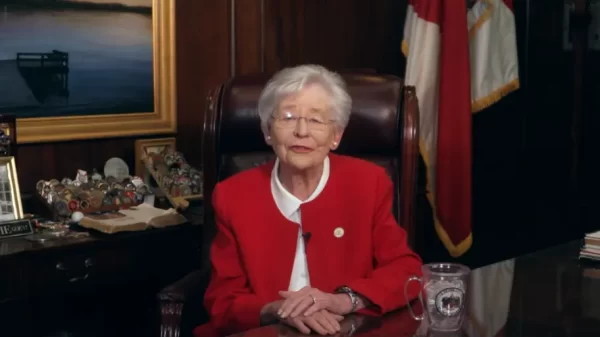




Governor Kay Ivey convened the first meeting of the Alabama Rural Health Transformation Advisory Group on Wednesday, the panel she created by executive order to guide policy for the state’s Rural Health Transformation Program.
The meeting follows the Trump administration’s notification that Alabama will receive $203,404,327 in first-year funding for the initiative.
“Today’s inaugural meeting is an important step toward implementation of our rural health strategy,” Ivey said. “The Trump administration has entrusted Alabama with significant funding to make generational reforms to an important but struggling portion of our health care system. We have an excellent group of legislators to help us be successful, and I am excited to see what they come up with.”
Advisory group members are House Speaker Nathaniel Ledbetter, Senate President Pro Tem Garlan Gudger, Senator Greg Albritton, Senator Clyde Chambliss, Senator Donnie Chesteen, Senator Bobby Singleton, Representative Anthony Daniels, Representative Jamie Kiel, Representative Rex Reynolds and Representative Pebblin Warren.
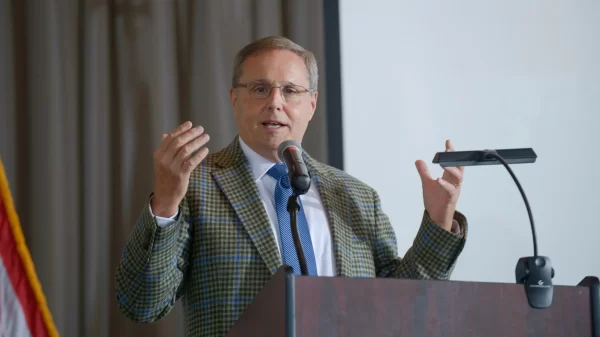
During the session, members elected Chesteen chair and Kiel vice chair. Kenneth Boswell, director of the Alabama Department of Economic and Community Affairs—the agency administering the program—outlined the initiative. Members then questioned Boswell and discussed timelines, processes and possible legislation to support implementation.
Ivey said she wants the group to craft policy changes that keep the program effective long after the federal money is spent.
“To turn around our rural health care system—to make it financially sustainable and available to deliver lifesaving care to all Alabamians—we must rethink how things have always been done,” she said. “That means thinking critically about policies, regulations and even the way health care providers operate.”
In her January 13 state of the state address, Ivey challenged health care leaders “to work with us in thinking outside the box and identifying new partners as we strive to improve health care in Alabama.”
Congress created the federal Rural Health Transformation Program in the One Big Beautiful Bill Act, which President Trump signed July 4, 2025.
Chesteen called the Alabama program “a once-in-a-generation opportunity to strengthen health care access in our rural communities.”
“By bringing together legislative leaders and health care stakeholders, we are positioning Alabama to make smart, sustainable reforms that will improve patient outcomes and ensure rural hospitals and providers can continue serving families across our state,” he said. “I look forward to working with Ivey and my colleagues to turn this historic investment into lasting results for the people of Alabama.”
The five-year, $50 billion federal program empowers states to improve rural health care access, quality and outcomes by transforming delivery systems, according to Ivey’s office.
Kiel said the initiative will guarantee “that every Alabamian, no matter where they live, has access to the quality care they deserve.”
“We want to build a stronger, healthier future for our rural communities and I am proud to support an initiative that ensures Alabama remains a great place to live, work and raise a family,” he said.
Alabama’s award-winning proposal, the Alabama Rural Health Transformation Program, outlines 11 targeted initiatives to improve health care delivery and patient outcomes in rural parts of the state.