









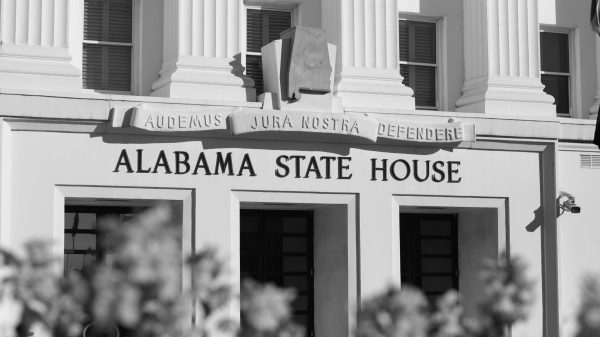



























A bill filed last week in the House of Representatives could change how courts distribute money collected from criminal defendants, giving crime victims priority when restitution is ordered in a case.
HB481, introduced by Rep. Chris England, D-Tuscaloosa, would amend Alabama’s restitution statutes to make clear that “an order of restitution shall have priority over all other fines, costs, and fees associated with that criminal conviction.” The measure was referred to the House Judiciary Committee for consideration.
Under current Alabama law, restitution is required to compensate victims for financial losses resulting from the defendant’s criminal conduct. Courts are required to hold a restitution hearing when a victim has suffered pecuniary damage to determine the appropriate amount owed.
Judges consider factors including the defendant’s financial resources, ability to pay and the burden payment may impose, as well as the victim’s losses. Restitution can cover expenses such as medical bills, property damage, lost wages and other out-of-pocket costs directly tied to the offense. It does not cover pain and suffering.
Once ordered, restitution may be due immediately or paid in installments, often as a condition of probation or a suspended sentence. Payments are typically made through the clerk of the court and then distributed to victims. Failure to pay can lead to probation violations if a court determines that the nonpayment was willful and that the defendant could have paid.
While restitution is mandatory when a victim has documented financial loss, legal financial obligations also include fines, court costs and various fees. In practice, money collected from defendants is often applied to those obligations according to statutory distribution formulas.
That can mean that court costs and fees are satisfied before restitution is fully paid, particularly when a defendant is making partial payments over time.
HB481 would alter that structure and specify that when restitution is ordered in a criminal case, it must be satisfied before other monetary penalties tied to the conviction. In effect, any payment made by a defendant would first be applied to compensating the victim before being applied to fines or administrative costs.
Prioritizing restitution could ensure victims are made whole to the extent possible before the state collects revenue from fines and fees. Victims can otherwise wait months or years for compensation, especially in cases where defendants face significant court debt.
If enacted, the legislation would represent a policy shift emphasizing victim compensation over other financial assessments in criminal cases. The bill would take effect on October 1 if signed into law.