










There is a reason insecure power eventually turns its attention to history.
Alabama knows that.
We have lived it.
Those who want to secure the future understand that shaping policy is not enough. To hold power, they must shape memory. Whoever controls the story controls the ground on which debate stands.
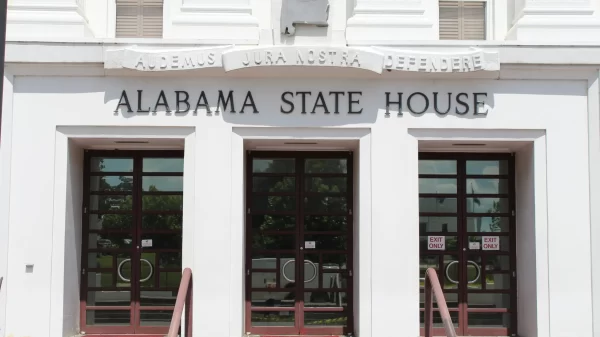
House Bill 169 is not a housekeeping bill.
It is an assertion of authority over the state’s memory.
Representative Jamie Kiel, R-Russellville, is carrying the bill. Senator Chris Elliott, R-Josephine, began pushing for this restructuring after the Alabama Department of Archives and History declined to cancel an event highlighting the documented contributions LGBTQ individuals have made to Alabama history. The program was part of a longstanding educational series the Archives has hosted for years.
The board did not break the law. It did not mismanage funds. It hosted an educational event.
The response was not discussion. It was restructuring.
Under HB169, the governor would appoint eight of the 17 members of the Archives board and cast a vote personally. The speaker of the House and the Senate president pro tem would appoint the remaining at-large members.
That is not oversight. That is control.
Alabama has redesigned institutions before under the banner of order and reform.
In 1901, delegates to our Constitutional Convention declared openly that their purpose was to entrench political dominance and establish white supremacy. They did not seize power through chaos. They did it through structure—through qualifications, through boards, through rules that appeared neutral while serving an agenda.
Structure is power. And when structure is adjusted, power shifts.
For decades, the official story of Alabama elevated one narrative and minimized others. Reconstruction was framed as corruption. Civil rights activism was treated as disruption. It took federal courts, citizen courage and generational struggle to bring our public institutions closer to the full truth of who we are—our failures and our triumphs alike.
The Archives has been part of that long correction, which is why the retroactive provision in HB169 cannot be dismissed as technical.
Resetting the board to January 2025 would remove two previously confirmed Black members. In any state, that would raise questions. In Alabama, it raises history. Representation in public institutions was once denied here by design. That is not ancient memory. It is documented fact.
Supporters argue this bill ensures accountability — that elected officials should exercise greater oversight over state institutions. But oversight to whom? To history — or to politics? There is a difference.
Across the country, similar patterns are unfolding. Cultural institutions are challenged not because they are inaccurate, but because they are inclusive. Programming is scrutinized not because it is false, but because it is uncomfortable.
When discomfort becomes the trigger for restructuring, something fundamental has shifted.
History shows how insecure power behaves.
In ancient Rome, emperors practiced damnatio memoriae—erasing rivals from inscriptions and monuments. In Stalin’s Soviet Union, officials were removed from photographs after falling out of favor. During China’s Cultural Revolution, archives and artifacts were destroyed in the name of ideological purity. The Taliban detonated the Bamiyan Buddhas because a pluralistic past could not coexist with rigid control.
The method changes. The instinct does not.
Modern democracies rarely move with explosives. They move with appointment letters. They redefine who sits at the table. They call it reform.
But reform strengthens institutions. Control narrows them.
Alabama does not need a narrower memory. We need a fuller one.
An Archives that answers upward to political authority will eventually think upward. Programming decisions will be filtered through tolerance. Inclusion will be weighed against convenience. That is not how historical stewardship works.
History belongs to the people of Alabama—Black and white, gay and straight, rural and urban, descendants of enslaved people and descendants of slaveholders. It belongs to those who marched and those who resisted. It belongs to those who built, those who suffered and those who endured.
It does not belong to whichever faction holds a temporary majority.
Truth does not weaken a state. It strengthens it. A mature society does not fear its full record. It does not flinch at uncomfortable chapters. It understands that honesty builds credibility, and credibility builds trust. And trust is what holds institutions together.
We have already lived through a century in which structure was used to control voice and shape narrative. The 1901 Constitution proved how procedural language can mask profound political intent—and how long it can take to undo that design.
We are still repairing the consequences.
HB169 may be quieter than 1901. But structural control over memory is still control.
If Alabama is confident in who it is—in its progress, in its resilience, in its ability to confront its past—then it should not fear an independent Archives. It should protect it.
That is not partisan. It is principled.
Because once memory answers to power, power begins to shape memory.
And that is not reform. It is retreat.