














Public safety is not a seasonal priority. It is a structural responsibility.
Over the past six years, the City of Montgomery has taken a sustained, disciplined approach to strengthening our police department and improving community safety. These efforts have not been reactive to headlines or election cycles. They have been rooted in long-term investment and operational reform.
Since 2019, Montgomery has directed more than $11 million in targeted public safety investments, including structural compensation adjustments and modernization of equipment and technology. These investments reflect a consistent strategy: build capacity, improve competitiveness and modernize infrastructure.
Recruitment and retention begin with pay. In 2022, the City implemented a 14.5 percent market adjustment for public safety personnel. In 2024, we corrected step inconsistencies across every pay grade. In Fiscal Year 2025, we added a 15 percent incentive for officers and lieutenants, a 5 percent increase for senior ranks, and a 5 percent cost-of-living adjustment for remaining staff. Our FY2026 budget retains merit increases to ensure continued competitiveness.
These are permanent structural changes designed to stabilize staffing and strengthen morale in a national law enforcement hiring environment that remains highly competitive.
We have been clear: while our staffing levels are not yet where we ultimately want them to be, we are making measurable progress. Interest in joining the Montgomery Police Department has increased significantly, and the incentives and structural reforms we have implemented are helping us recruit and retain the right people for this profession.
Behind every hiring statistic is a family, a neighborhood and an officer who chooses to serve. Strengthening public safety is not only about numbers on a page—it is about ensuring that the men and women who wear the badge have the support, compensation and equipment they need to protect our community effectively and safely.
At the same time, the City has averaged between $1.4 and $1.7 million annually in capital upgrades since 2020. We have expanded and modernized fleet capacity, upgraded tasers and mobile data terminals, deployed network cameras and shot-detection systems, and invested $1.4 million in Automated External Defibrillators. Our FY2026 proposal includes replacing an outdated communications system and expanding camera infrastructure.
These are not cosmetic upgrades. They are foundational improvements designed to ensure officers have the tools necessary to perform their duties effectively and safely.
We have also invested directly in recruitment efforts. The City Council approved $10,000 recruitment bonuses and funded a dedicated $120,000 recruitment campaign to compete more effectively in a challenging hiring market. These steps reflect recognition that workforce challenges require deliberate, targeted strategies.
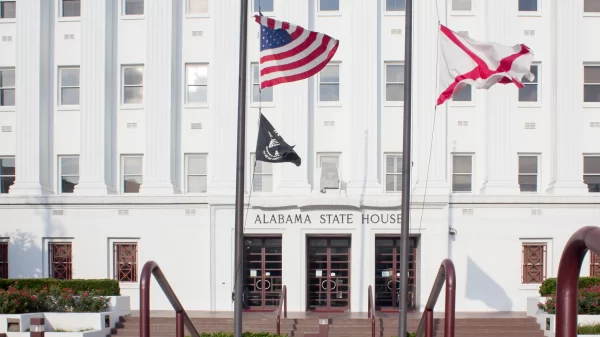
As discussions continue at the State House regarding public safety policy, it is important to emphasize that local governments across Alabama share the same objective as state leaders: safer communities.
Where local leaders offer particular value is in implementation.
Police staffing levels, deployment strategies, training pipelines, compensation structures and budget realities differ significantly across municipalities. Effective policy must account for those operational variables. Local governments are positioned to assess real-time conditions, adjust strategies and manage resources in a way that reflects the specific needs of their communities.
One-size-fits-all approaches can unintentionally limit flexibility, complicate recruitment strategies or strain local budgets without addressing underlying workforce realities.
The goal should be alignment—not duplication. Partnership—not preemption.
Strong cities are essential to a strong Alabama. Our economic competitiveness, workforce development efforts and community stability are interconnected. Public safety is central to that equation.
Montgomery’s approach has been to invest steadily, modernize deliberately and manage responsibly. We welcome continued collaboration with state leaders, including resources and policy alignment that support local efforts.
Public safety requires sustained investment and shared accountability at every level of government. When state and local leaders work in coordination—respecting both statewide priorities and local operational expertise—Alabama communities are stronger for it.
Lasting public safety is built through sustained commitment, responsible governance and partnership rooted in respect for local expertise. That is the model we are committed to advancing.