




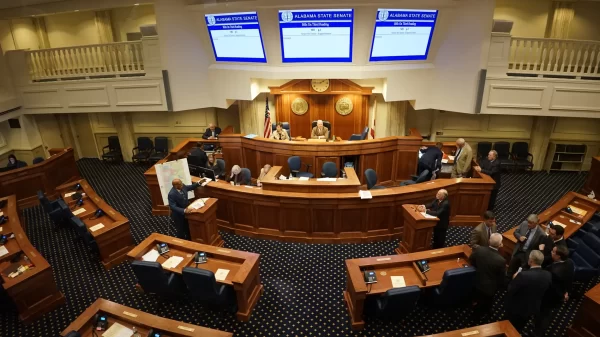








The Alabama Board of Pardons and Paroles went before the Joint Legislative Contract Review Committee, which approved a new housing services agreement on Thursday with a Birmingham nonprofit aimed at helping people on parole avoid homelessness and reduce recidivism.
The contract, valued at $897,596, was awarded to Cooperative Downtown Ministries, Inc., operating in Birmingham as Firehouse Ministries, to provide recovery-oriented housing services for participants in the Birmingham Day Reporting Center program. The agreement runs from April 1, 2026, through March 31, 2028.
According to documents submitted for the March 5 meeting, the nonprofit will provide housing support to individuals supervised through the Birmingham Day Reporting Center who lack stable housing. The services are intended to stabilize participants and reduce the likelihood that they will reoffend.
Day Reporting Centers operate as alternatives to incarceration, allowing individuals on probation or parole to remain in the community while receiving supervision, treatment and other support services. Participants typically attend programming several times a week while living in the community.
Housing instability is one of the most common challenges faced by people at Day Reporting Centers. Stable housing is widely considered one of the most significant factors in helping people successfully reenter society after incarceration. Without stable housing, individuals may struggle to maintain employment, attend required programming and comply with supervision conditions.
The contract request indicated that state employees would have difficulty providing the services internally. According to the contract review materials, performance by merit system employees “would be problematic for timely program initiation,” and existing staff do not have the specialized expertise required to deliver recovery-oriented housing services.
The contract was awarded through a request-for-proposals process and is funded entirely with state funds.
The agreement also reflects a broader push by the parole board in recent years to address housing barriers for people under supervision. Officials have increasingly emphasized transitional housing, recovery residences and partnerships with nonprofit providers to help individuals stabilize after release and complete Day Reporting Center programs.
Firehouse Ministries, based in Birmingham, provides emergency shelter, recovery housing and supportive services for individuals experiencing homelessness. The organization helps residents transition to stable housing.
The housing contract also aligns with Alabama’s Reentry 2030 strategy, which the state joined with the goal of cutting recidivism in half by the end of the decade. The initiative focuses on expanding programs that help people successfully transition from incarceration back into their communities, including employment services, treatment programs and stable housing.
Alabama’s overall recidivism rate has been reported at about 29 percent, but outcomes for participants in the state’s Day Reporting Center programs have been significantly lower. Data from the Alabama Bureau of Pardons and Paroles shows individuals who complete Day Reporting Center programs have reported three-year recidivism rates of roughly 15–16 percent, with some centers reporting rates as low as about 0-4 percent among successful graduates.
Officials have maintained that expanding housing support is essential to those outcomes and meeting the goals outlined in the Reentry 2030 plan.