














More than 50 cancer researchers from universities across Alabama gathered in Montgomery on Tuesday for a symposium at the State Capitol.
During the annual Cancer Action Day, the American Cancer Society Cancer Action Network partnered with Blue Cross Blue Shield of Alabama, the Alabama Hospital Association, the Medical Association of the State of Alabama and Susan G. Komen to invite cancer advocates, survivors and university researchers to highlight the current state of cancer research in Alabama.
Attendees included professors, staff and students from the University of Alabama at Birmingham, Alabama State University, Auburn University and the University of Alabama.
Ahead of the event, UAB researcher Dr. Ankur Saxena told APR the symposium gives researchers a valuable opportunity to connect with the public and state politicians.
“It’s always a good thing if folks can connect a little bit more, right?” Saxena said. “I think the last year plus national-level chaos has illustrated why it’s really important for scientists to get out there and talk to the public and share what we’re doing.”
Saxena said that although Congress reined in sweeping cuts the Office of Management and Budget proposed to the National Institutes of Health for fiscal 2026, grant disbursement has slowed significantly compared with previous years.
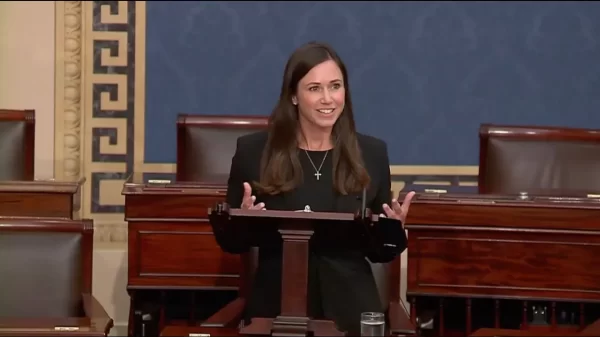
“We certainly appreciate what Congress did to push back against some of the proposed cuts,” Saxena said. “Senator Katie Britt, R-Alabama, was actually a strong proponent of helping to move that forward in a way that was beneficial, in terms of preserving funding and actually slightly increasing NIH funding.”
“There’s a good news and bad news side to this,” he added. “And the flip side of that is that there is still a pretty significant issue with the Office of Management and Budget not dispersing those funds that have been allocated by Congress.”
Saxena said the event allows researchers to connect with the public and urge people to contact their federal representatives to request the full disbursement of appropriated research funding.
“It’s been a process that has had some wins here, but we don’t want to lose sight of the fact that there’s a lot more to do,” Saxena said.
During the symposium, Saxena joined Dr. Nicole Carter and ACS CAN advocate Hannah Adams for a panel discussion on how scientists and researchers can advocate for their work.
Researchers from the Saxena Lab at UAB, meanwhile, presented findings on methods for converting cancer cells into neurons and stopping the disease’s growth.
“We’re trying to essentially find ways to turn cancer cells into non-cancer cells, and then they die,” Saxena said.
Jackie Brunson, a staff researcher at the Saxena Lab, and undergraduate student researcher Hayleigh Smith both described the event as an opportunity to highlight the public service their work provides and to advocate for research funding.
“I feel like this is a great opportunity to show people what research is like at the base level,” Brunson said. “Specifically, what I’m going to be talking about is how we turn the data we get at the bench into info that we can then process and turn into maybe something that means something to pretty much everyone, more like real-life translation.”
Smith said she saw the event as an opportunity to explain her work and its significance to the public in a way that can reach scientists and laypeople alike.
“I’ve always been really interested in the science and math fields, and it wasn’t really until I came to UAB, enjoying this particular lab, that I realized how I would be able to have an impact on people,” Smith said.
“It’s really cool to be able to turn a really complex thing that I do, into more general understanding for people,” she added. “I think having that translational aspect of being able to make science cool to everyone has really been beneficial for me.”
Saxena also highlighted the importance of biomedical research conducted at universities like UAB to Alabama’s economy and to Alabamians pursuing careers in medicine.
“I think perhaps taxpayers are not as aware, and this is partly on us, of how much amazing work their tax dollars are helping to fund and, just as importantly, how many of the people who work in my lab and other labs have deep ties to Alabama,” Saxena said. “These are young people who have a great amount of talent and give them opportunities, and they shine, and they do wonderful things that benefit everybody.”
He said that although cancer research is a lengthy process and the public seldom sees immediate results, breakthrough cures are less likely to come from private-sector research, making strong support from elected officials vital.
“There’s decades sometimes before you have a therapy that comes with the work we might do today, and that’s not something that’s sustainable for a private company or a corporation,” Saxena said.
“It won’t matter tomorrow or next week or next year, maybe even to the average person,” he continued. “But if you think about what you will need 20, 30 years from now in terms of your own health, or if you think if you have kids and you’re thinking about ‘what kind of world do I want my kids to have 20 years?’—those are the therapies that will be missing because of what’s happening today.”
Jessica Barnes, a graduate student conducting research through the ASU Cancer Research Center, presented links between tobacco smoke and chronic stress to the rare and aggressive cancer cholangiocarcinoma, which forms in the bile ducts.
Barnes, whose father died from cholangiocarcinoma in 2014 after years of working in a tobacco processing plant, described her research as “personal work” aimed at further exploring how health care disparities across the state may affect cancer patients.
“Having that connection is what inspired and has motivated me to explore the connection of smoking, exposure to smoke, as well as chronic stress,” Barnes said.
“In Alabama, where we, you know, are also a state where we don’t have the Medicaid expansion and just the health disparities that we have, there can be an elevated level of stress for the patient once they’re diagnosed, as well as the family who are caring for that patient,” she added.

ASU graduate student Jessica Barnes presents her research at the Alabama Capitol.
The researcher described the symposium as a chance both to thank state lawmakers for legislation eliminating copays for prostate cancer care for high-risk men and secondary breast cancer screenings and to push for continued investment in institutional research.
“After we thank our lawmakers, we want to then plead for them to continue investing in cancer research,” Barnes said. “My personal request is for, as we’re continuing to invest in research, to also shine light on less common cancers, such as cholangiocarcinoma.”
Barnes also said the advocacy day and advances in research funding may help prospective students and researchers better understand and access opportunities available at Alabama universities.
“I would love to see more funding available so we could give that exposure to more students. The Cancer Center has amazing mentors,” Barnes said. “I’ve been mentored, and that has really been helpful in being able to change my perspective, and again, to detect the problem and look for a solution and then work with community leaders and whomever else is willing to come into the conversation—for us to work together for the greater good.”