





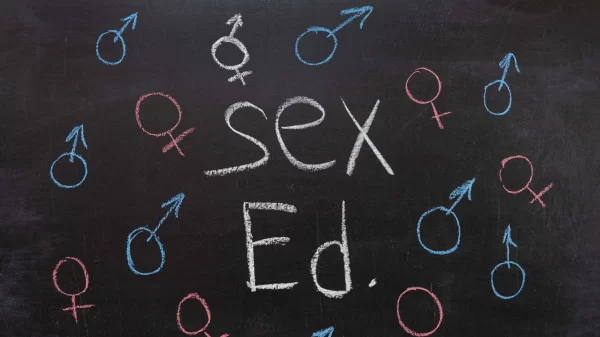













The Alabama House of Representatives passed legislation that would revise the state’s public school sex education law to teach sexual-risk avoidance instead of comprehensive sex education.
Senate Bill 209, sponsored by Senator Shay Shelnutt, R-Trussville, moved to the House floor through Representative Susan Dubose, R-Hoover. Dubose said the measure builds on existing law rather than replacing it.
“This bill simply updates our sex ed curriculum,” she told lawmakers. “We are maintaining abstinence-based instruction. We’re updating the terminology to be sexual risk avoidance.”
Dubose said confusion had spread about whether the bill removes discussion of contraception. She said the updated text maintains that contraception does not eliminate risk.
Current law already requires medically accurate instruction on HIV and other sexually transmitted infections, and the bill keeps that requirement in place.
One of the main changes in SB209 adds instruction on digital behavior. Dubose pointed members to language that requires schools to teach “knowledge and skills to resist cyber bullying, sexting, pornography and online sexual predators,” as well as “the legal implications involved in participating in sexting.”
The bill requires schools to give parents at least 14 days’ notice before sex education instruction begins and to let them review the full curriculum.
Under the legislation, parents may opt their child out of the instruction without penalty. Dubose said that provision is intended to respect families who prefer to address the topic at home or through their church.
SB209 also prohibits sex education instruction before fifth grade. Dubose acknowledged that many districts introduce basic biology in upper elementary grades but said local systems would continue making those decisions within the state framework.
The bill also adds content on identifying and avoiding unhealthy relationships, including “factors predictive of physical, emotional and sexual abuse and exploitation,” Dubose said.
It also incorporates what lawmakers have called the success sequence. Senate Bill 289, sponsored by Senator Arthur Orr, R-Decatur, would require the Alabama State Board of Education to encourage students to graduate from high school, get a job, marry and then have children as a path tied to improved life outcomes.
Representative Marilyn Lands, D-Huntsville, questioned how the proposal differs from existing law and raised concerns about teen pregnancy rates and access to comprehensive reproductive health information. She cited data suggesting states with more comprehensive approaches rank lower in teen pregnancy rates and argued that limiting discussion of contraception access could leave students without critical information.
“I think it was 2019… 40.7 percent of Alabama high schoolers reported that they are having sex. So keeping critical sex information away from our young people, I think, only exacerbates their risks of experiencing sexual violence, unintended STDs and pregnancy,” Lands said.
Lands offered an amendment that would have allowed conversations about accessing contraception. Dubose moved to table the amendment, and the House voted 71-30 to do so before moving to final passage.
The bill passed 82-16, with six abstentions, and now goes to Governor Kay Ivey.