






























Freedom is seldom stolen. More often, it is handed over.
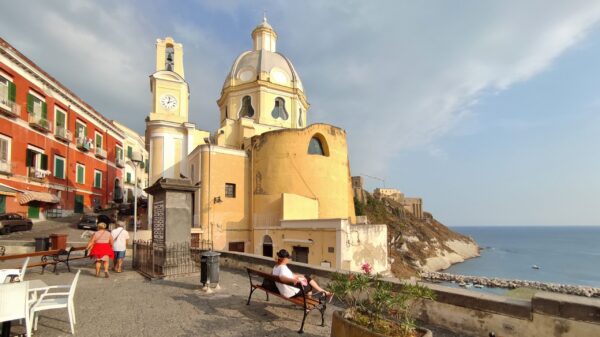
Susan and I have spent this past week in Naples and on the islands of its bay, where the sea is so blue and the afternoons so slow that it is hard to imagine anything terrible ever happened here.
But beyond the horizon to the west lie Ventotene and Ponza. A century ago, Benito Mussolini’s government used these islands as prisons for people whose only crime was disagreeing with it. Italians called it confino, or internal exile. Journalists, labor organizers, teachers and former members of parliament were taken from their homes, their work and their public voices, then set down on rocks in the sea where they could trouble no one.
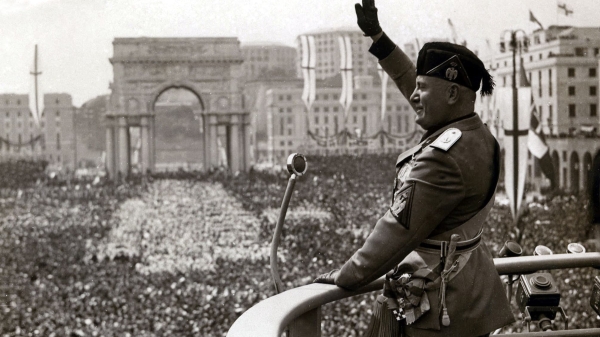
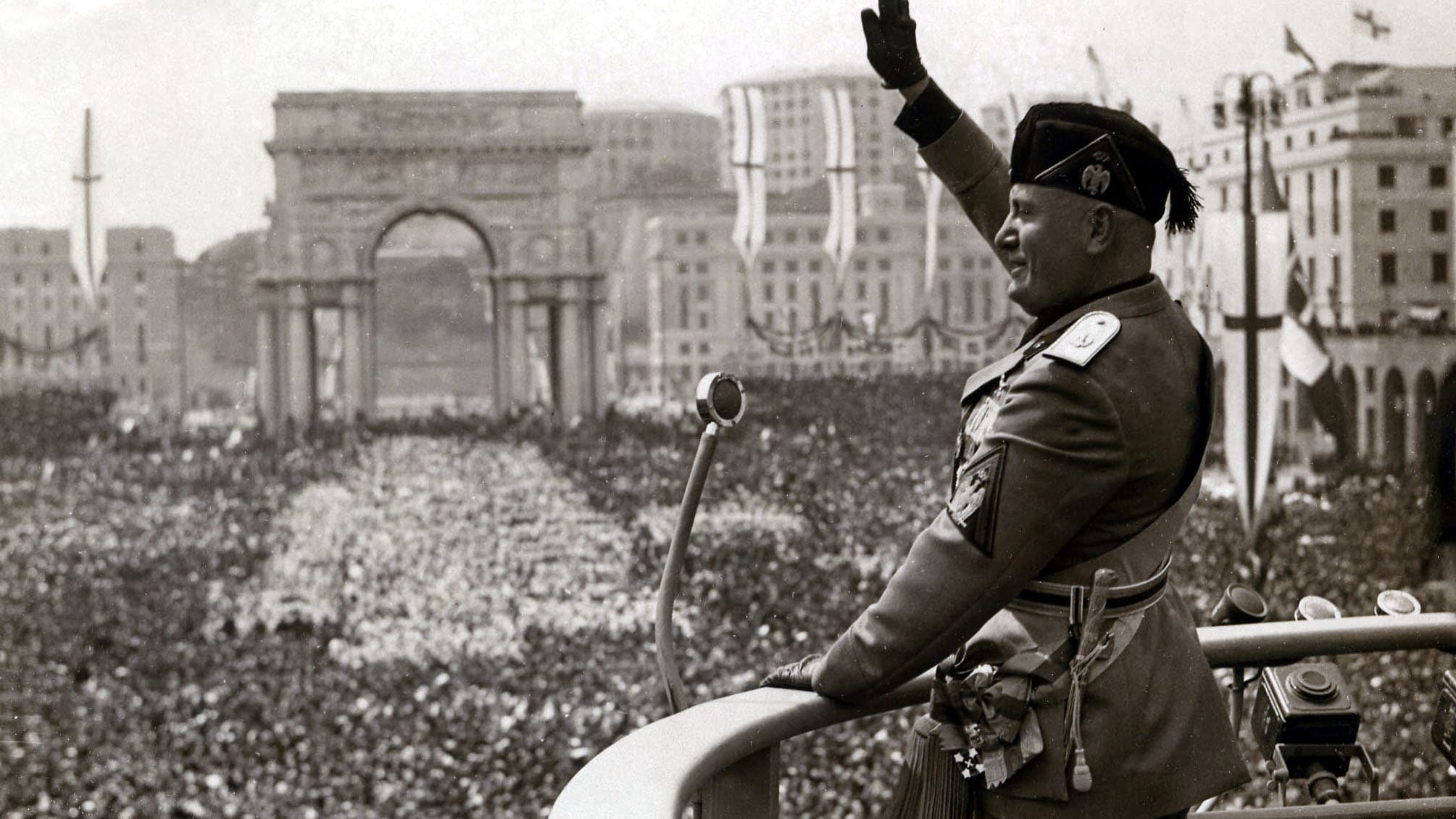
Most Americans know Mussolini as a caricature: the jutting jaw, the balcony speeches, Hitler’s junior partner. Few know how he came to power. That is the part worth knowing.
He did not seize Italy. He was given it.
In October 1922, his Blackshirts staged what history calls the March on Rome. It was more bluff than invasion. The prime minister asked King Victor Emmanuel III to declare martial law. The king refused. Instead, he invited Mussolini to form a government.
The appointment was legal. The intimidation that brought Mussolini to the door was not.
The men who opened that door were not fascists. They were conservatives, liberals, businessmen and courtiers who thought Mussolini was useful. He was a hard man who would restore order after years of strikes and street fights, and they believed they could manage him once he was inside the government.
They were right about the first part. They were fatally wrong about the second.
What followed was not a single dramatic coup. It was a series of steps, each defended as reasonable and many passed into law.
In 1923, parliament approved an election law guaranteeing two-thirds of its seats to whichever party or coalition won the most votes, as long as it received at least 25 percent. The next spring, amid beatings and intimidation by Fascist squads, Mussolini’s coalition won nearly 65 percent of the vote.
One man stood up and said what everyone knew.
On May 30, 1924, Giacomo Matteotti, a Socialist deputy, rose in the Chamber of Deputies and laid out, case by case, the violence and fraud behind the result. Other lawmakers shouted him down and threatened him as he spoke. When colleagues congratulated him afterward, he reportedly told them to start preparing his funeral.
Eleven days later, on June 10, a Fascist squad seized him along the Tiber near his home, forced him into a car and stabbed him to death.
For a moment, the country recoiled. Opposition deputies walked out of parliament in protest, certain the king would finally act. He did not. Their principled walkout left the chamber to the Fascists, and the gesture changed nothing.
On January 3, 1925, Mussolini stood before parliament and dared anyone to stop him. “I alone assume the political, moral and historical responsibility for all that has happened,” he declared. He never spoke Matteotti’s name. He did not have to.
No one took the dare.
Within two years, the government outlawed opposition parties. It brought the independent press under control, and every newspaper had to answer to an editor enrolled on a government-controlled register of journalists. Luigi Albertini, the great editor of Milan’s Corriere della Sera, was forced out of his own paper.
Mussolini understood the press better than most. He had been a newspaper editor himself. That is precisely why he could not tolerate a free one.
In 1931, the regime required Italy’s university professors to swear loyalty to fascism. More than 1,200 were asked. Twelve are remembered for refusing. Italians still call them I Dodici, the Twelve.
Many who stayed told themselves they could do more good inside than out. It is an argument people can make long after the chance to say no has passed.
This is what Italians learned too late: Democracy is rarely lost in a single blow. It is surrendered in installments, by decent people who believe each concession will be the last and who mistake their own comfort for the country’s safety.
Institutions do not defend themselves. People defend them, or they do not.
But that is not the end of the Italian story.
In July 1943, with the war lost, Mussolini’s own Fascist Grand Council voted against him, and the same king who had handed him power had him arrested. Within days, authorities took him to Ponza, one of the islands where he had sent so many others.
History does not always deliver justice, but it has a sense of irony.
Then Italians did what I have seen people do again and again while walking through the ruins of Rome, Greece and the old Ottoman lands. They picked up the stones and began to build.
This week marks the anniversary of the Quattro Giornate di Napoli, the four days in September 1943 when the people of Naples rose up and drove out the German occupiers before the Allies arrived. They could not undo two decades. But they refused to surrender a single day more.
In June 1946, Italians voted to abolish the monarchy that had opened the door to Mussolini. Italian women cast ballots in a national election for the first time. Then the new republic sat down to write what it had learned into law.
You can read the scars in its Constitution, which took effect in 1948. It declares that the press cannot be subjected to authorization or censorship. It forbids reorganizing the Fascist Party in any form. It creates a constitutional court to review the laws parliament passes. And it declares that the republican form of government may never be amended away.
Italians had watched a free country dismantled piece by piece using its own laws. They made sure the next generation would not have to learn that lesson the way they did.
Americans know something about this. After the Civil War, we wrote our hardest lessons into the 13th, 14th and 15th Amendments, ending slavery, promising equal protection and due process, and forbidding the denial of the vote because of race. I have long thought of it as our second Constitution, written by a people who had seen what it cost when the first one failed to protect everyone.
The lesson of Italy is not that tyranny is inevitable. It is that tyranny is a choice, and that choice belongs to ordinary people long before it belongs to kings and generals.
The Italians of the 1920s did not lack warnings. They had Matteotti. They had the evidence in front of their own eyes. What they lacked were enough people, in enough places, willing to say no while saying no still mattered.
We do not have to learn that lesson again. It has already been learned, at a terrible price, and written down in Italy’s Constitution and in our own.
Our Constitution divides power and places limits on every office. But its framers never believed words on paper would be enough. James Madison warned that “parchment barriers” could not by themselves hold back the encroaching spirit of power. The system works only when those who hold power are willing to check one another, when, as Madison wrote, “ambition must be made to counteract ambition.”
Every member of Congress, every state legislator, every judge and every executive officer swears an oath to support that Constitution. The oath is not to a party. It is not to a person.
Yet when those limits have been tested, too many have willfully stepped aside for political convenience, for party or to save their own careers. Each time, the country pays—in its standing in the world and in the trust of its own people. And every power surrendered to one leader today becomes a precedent for whoever holds it next.
That is precisely how Italy’s establishment behaved a century ago. Few believed they were surrendering a country. Each believed he was making a reasonable accommodation.
America does not need another lesson. It needs women and men who will enforce what is already written rather than turn aside.
That duty does not belong to officeholders alone. It belongs to every citizen who votes, speaks and refuses to excuse in allies what we would condemn in opponents. And it means defending the Constitution for everyone, not only for those who agree with us.
Freedom belongs to all of us, or it will not long belong to any of us.
The Italians learned that too late.
We do not have that excuse.