







In a recent “View from the Top,” Erich Brukner celebrates WLRH’s fifty year history and paints an optimistic view of its future as a hyperlocal station. We congratulate the staff on their creativity and determination in surviving the year’s abrupt change of course. Before we move on to the next fifty years, though, I want to share my own thoughts about the station we lost.
When I moved to Huntsville in 1994, before the digital age, I didn’t know anyone here. Huntsville was the smallest city I had ever lived in. I missed having daily access to the national newspapers and my old public radio stations. I thought I had landed in a media desert. When I turned on WLRH to hear my old familiar NPR programs, I felt more connected to the world. But I also heard Huntsville voices. I heard public service announcements about community events. I heard interviews with volunteers in the arts and announcements about local groups that I could get involved in. And I did get involved.
Now, 32 years later, I am proud to say many of those voices on WLRH have belonged to people I know: the announcers, the Morning Blend hosts, Sundial writers, and many of the volunteers who read PSA’s. I have been lucky enough to be friends with Microwave Dave and the Watters family. I’ve joined groups and served on boards of organizations I first heard about on WLRH. I have spent days answering phones during pledge drives. Up until a year ago, I could count on hearing serious music and national and international programming that I loved. I never needed to change the station. It was the background of our family’s days, at work, home and in the car.
Then we lost NPR. No one in the listening community, or even long-term staff, was consulted about the change. It’s unclear who even made the decision. I called the director of APT who has authority over the station. He told me the decision had already been made. I called the station’s general manager. He too told me NPR was gone and wouldn’t be coming back. He suggested other ways I could get that programming. But those places have been less satisfying: I miss the old quirky mix of local, national and international.
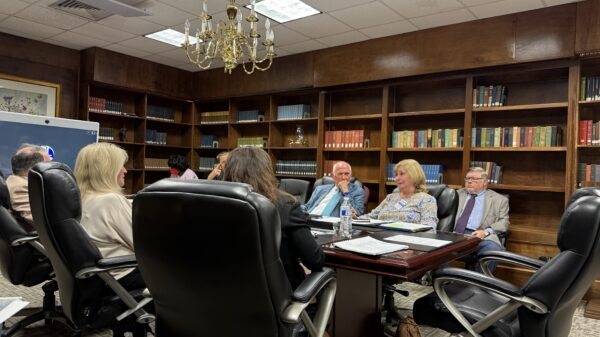
Friends and I started driving to Birmingham for the meetings of the Alabama Educational Television Commission, AETC. We’ve met the staff and board members to ask how this decision came about. Why was there no community input? Nobody on the board even listens to WLRH or seemingly cares. How can that possibly yield a good outcome for the future? What is their plan? The official explanation is that NPR cost too much money, but if that’s true, what will happen when the programming is bringing in fewer donations? As listeners and donations drop, can WLRH even survive? Now the AETC is threatening to drop APT’s affiliation with PBS. They’ve been talking about it for a year. The concerned public has followed up with comments, editorials, increased donations, a letter from Governor Ivey, professional consultants and now a planned survey. Why didn’t WLRH’s affiliation with NPR merit any of the same attention?
People moving to Huntsville from Colorado, Washington and around the world expect the amenities of a big city. Our mayor and Chamber of Commerce promised these people that we are no provincial backwater. We are one of the fastest growing cities in the U.S. and one of the most educated. We deserve to have professional, national content on a local public radio station. News is happening here, and we need professional reporting that can be broadcast locally, nationally and internationally. Since last year’s decision, my public radio friends and I have done a lot of research. We’ve discovered that other communities found a way to keep NPR after the federal funding was lost. In fact, of the more than 240 stations nationwide, WLRH was one of only 3 who chose outright disaffiliation from NPR. The others let their listeners raise more money, they sought foundation grants or negotiated with NPR. Why was our community not allowed to pursue these solutions? Why couldn’t we even have an open discussion?
Huntsville can support a public station, even more than one. I believe Huntsville will enthusiastically do that, but only if there is trusted leadership with a known plan. Decisions and finances should be transparent and in the interests of the people who have listened, donated, volunteered and contributed to WLRH for decades, not commissioners in Birmingham, Montgomery and Mobile who want to make a political statement at our expense.
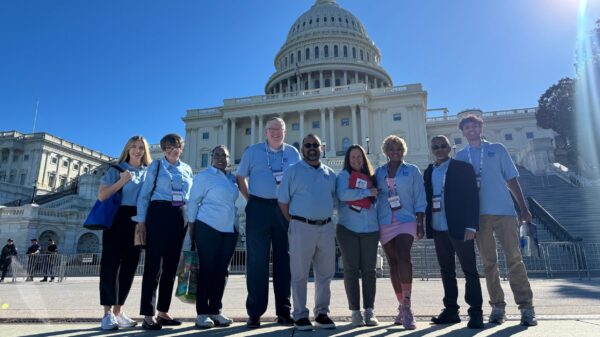
A group of long-time WLRH supporters has formed a nonprofit Friends of Radio in the hopes of being a voice in future decisions. We intend to lobby the AETC and the North Alabama legislative delegation to bring WLRH’s license home to Huntsville. Local and national content doesn’t have to be an either/or; it can be a both/and. Help us find a creative solution so that WLRH can truly serve Huntsville and the Tennessee Valley.