



Legislature
If the bill passes the Senate, the body of water would become known as the Gulf of America.
Hi, what are you looking for?


Gov. Ivey signs bill requiring English proficiency for truck drivers

Alabama reacts to governor sparing death row inmate Sonny Burton

Ivey commutes Burton death sentence over unequal punishment

Gov. Ivey’s summer internship program deadline is approaching

Gov. Ivey signs the Devinee Rooney and John Wesley Holt Safe Streets Act

Bill to close Alabama primaries takes first step toward becoming law

Bill to pause new solar developments advances to Alabama Senate for vote

Lawmakers review Education Trust Fund as reserves decline

Bill to restrict discussion of contraceptives in sex ed faces pushback in public hearing

Alabama Senate Judiciary Committee holds public hearing on prison oversight legislation
Bill to pause new solar developments advances to Alabama Senate for vote

Lockheed Martin to invest in Pike County production facility

Hadrian to partner with Navy on northwest Alabama defense project

Retail giant expands baby departments, adds products at Alabama stores

Small business optimism dips as sales improve but costs rise
Hadrian to partner with Navy on northwest Alabama defense project

Sen. Britt celebrates former BSC campus chosen as new USCG training center

Navy to open major defense industrial facility in Alabama

Senate passes bill to protect online privacy for young users

Rep. Sewell votes for Iran War Powers Resolution
Lawmakers review Education Trust Fund as reserves decline
Bill to restrict discussion of contraceptives in sex ed faces pushback in public hearing

Opinion | A decade of strengthening public schools through educational choice

House committee advances bill requiring Ten Commandments displayed in schools

Troy University hosts $10,000 pitch competition and business workshops

UAB Hospital now fifth-largest in the nation

Children’s of Alabama to host giveback night at Walk-Ons Sports Bistreux

ADPH reports downturns in healthcare-associated infection rates

Bill to eliminate out-of-pocket costs for breast cancer screenings heads to Ivey’s desk

House passes bill to allocate $43.1 million in opioid settlement funds

Opinion | The things we leave behind

Opinion | A party like it’s 1986
Opinion | A decade of strengthening public schools through educational choice

Opinion | Political parties never win when they protect power instead of listening to voters

Opinion | The cost–benefit analysis of mercy in capital punishment

Supporters believe each party should choose its own candidates while opponents argue the bill disenfranchises voters.

Bill Britt examines the erosion of shared truth, arguing that democracy cannot survive when citizens live in competing versions of reality.
The Alabama Senate Transportation and Energy Committee advanced bills including a one-year moratorium on large-scale solar projects on Wednesday.
Lawmakers warned that reserves are declining as revenue growth remains steady while debating education initiatives and rising costs.


“Bills like this don’t create jobs. They don’t raise wages. And they don’t make our state more competitive,” one speaker said.

A Venezuelan native, Douaihi has warned that Alabama's library fight echoes the rise of that authoritarian government.


SB360 expands PSC seats, preserves voter oversight, and shows how republican government works when lawmakers heed public concerns.


Alabama voters would ultimately have to approve the constitutional amendment if it clears the Senate.


Garlan Gudger proposed expanding the Alabama Public Service Commission to seven elected seats while prohibiting utility rate increases through 2029.


Democratic gubernatorial candidate Doug Jones tossed his support behind ending the straight-ticket voting option in Alabama.
A longtime Republican leader warns that party infighting mirrors the fragmentation that ended the Alabama Democratic Party’s decades of political dominance.

I believe that expanding parental choice has played a significant role in Alabama’s comeback story.

When one political party becomes too powerful, the first inclination is to protect that power. It always leads to failure.

The political calculus can be unforgiving: show mercy and risk criticism; refuse and face little political consequence.
If the bill passes the Senate, the body of water would become known as the Gulf of America.


State representatives voted Tuesday to make disrupting religious services a Class C felony after a high-profile protest interrupted a Minnesota church service.


No matter how it came to be sponsored by Republican Senator Larry Stutts, it is a good, necessary and consequential piece of legislation.


State senators passed a measure authorizing a central office to manage administrative tasks for Alabama’s occupational and professional licensing boards.


An Alabama Senate committee debated a bill Tuesday allowing the state to oversee major police departments if they fail to meet staffing requirements.


Statewide grassroots conservatives backed political newcomer Case Dixon over incumbent Rep. Gary Palmer ahead of the Alabama 6th Congressional District primary.


State representatives voted Tuesday to waive state sales taxes on firearms and ammunition during a new annual holiday scheduled for late August.


Students from a Birmingham school shared their stories in a video highlighting academic growth at a campus that recently improved its state grade.


The Alabama Republican Party does not exist to serve individual ambitions. It exists to serve Republican voters and to advance conservative principles.
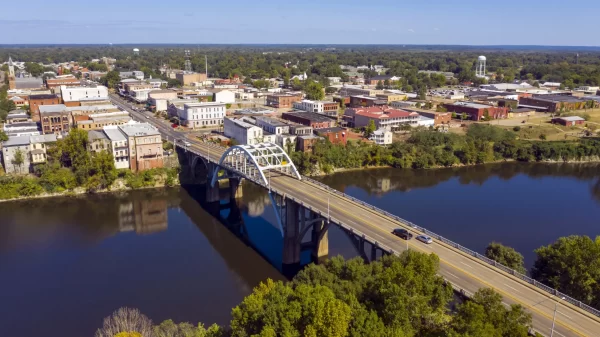
The March 6 performance will blend music, dance and spoken word to examine Selma’s voting rights legacy and the challenges facing local teens.