

































The executive director of the Alabama Medical Cannabis Commission will announce his retirement later this month but said he may not officially step down for several months.
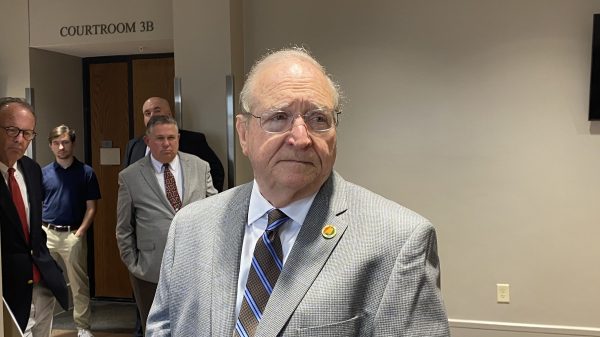
John McMillan, who has been the AMCC’s executive director since the entity was formed in 2021, told 1819 News on Tuesday that he will officially announce his retirement at the commission’s October 29 meeting but said he plans to stay through the integrated licensing process—a process that has been upended by lawsuits, mistakes and mismanagement.
“There’s a very good opportunity that (the AMCC) will be through with the integrated licensing process sometime around the first of the year,” McMillan told 1819 News. “That’s the reason I’m not coming saying I’m going to retire January 1, or January 15, or whatever it might be, because I do want to see that final step in getting this program going.”
The integrated licensing process has exposed deep and troubling issues at the AMCC, as McMillan and his staff fought lawsuits over the way it handled the process. Many of the problems stemmed from differential treatment of some applicants over others and the appearance at numerous stages that the AMCC staff was playing favorites with certain applicant companies.
The lawsuits that McMillan and others associated with the AMCC have so often complained about have uncovered blatant and obvious flaws with the licensing process. For example, during the opening steps, some companies were provided an opportunity to subvert a file limitation rule—a workaround that allowed those companies to submit much more detailed and comprehensive applications—while other companies were not provided the same opportunity. The AMCC staff also allowed some companies, but not others, the opportunity to submit applications after the deadline.
Later in the process, the AMCC implemented a complicated and bizarre scoring system, which used untrained, subjective scorers to grade applicants on a number of criteria. The system resulted in confusing and flatly unexplainable scores, which saw the same company receive wildly different scores on the same criteria from different scorers.
Three attempts by the AMCC to award licenses ended in the licenses being rescinded and the commission restarting the process.
Now, five years and millions of dollars into the process, the AMCC is on its fourth attempt and is finally utilizing the guidelines of the Alabama Administrative Procedures Act, which contains instructions for awarding a limited number of licenses to numerous applicants. Those applicants and the AMCC have recently completed a marathon, three-week contested case hearing, at which every company was afforded the opportunity to present its case for why it should have a license and to challenge the cases of other applicants.
The administrative law judge who heard the cases is expected to issue his recommendations in the coming weeks, and the commission could award licenses based on those recommendations sometime in January.
AMCC Chairman Sam Blakemore told APR on Monday that he hoped his fellow commissioners would follow the administrative law judge’s recommendations, since that had been the precedent set by the commission in the past. But the commission is not bound by those recommendations and could decide to award licenses—there are five available—to other companies.
“… I expect that there are going to be disagreements and arguments,” Blakemore told APR. “We’ve already had some just in discussing what (the ALJ recommendations) will be.”
Why the commissioners would choose to disregard the administrative law judge’s recommendations is unclear. Such a decision would likely lead to another round of lawsuits and more delays.
McMillan’s decision to retire during this crucial period was curious and made even more so by an apparent plan to push current AMCC general counsel Justin Aday into the executive director’s role, even if on an interim basis.
Blakemore acknowledged on Monday that Aday was “one option” that was being seriously considered by the commission.
At this point, however, anyone associated with the AMCC is going to be looked upon with skepticism given that the entity has failed so often and publicly at simply awarding the licenses and getting the state’s medical cannabis program off the ground. It has been almost six years since Governor Kay Ivey signed the bill forming the AMCC, and the entity is just completing hearings that should have been held within months of the bill signing.