




























An Alabama resident and organizations, including the NAACP, voiced opposition Thursday to a tax abatement granted to developers of a proposed data center in Lowndes County.
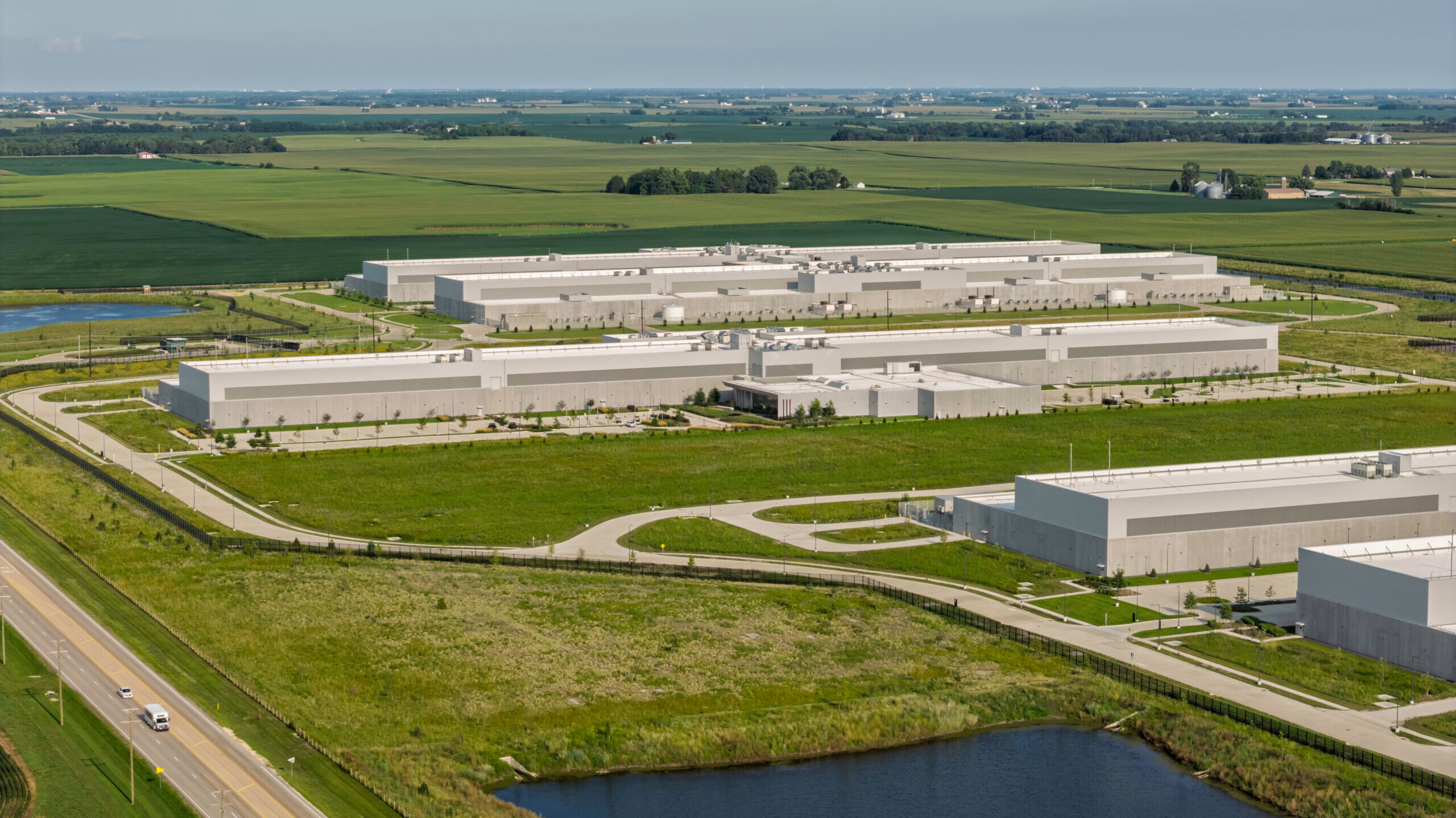
The Lowndes County Commission voted Tuesday to approve a 20-year tax abatement for Project Red Clay, a proposed 800-acre hyperscale data center. The abatement provides more than $1.1 billion in tax relief to the proposed center’s developer, Cloverleaf Infrastructure.
The proposed facility would occupy farmland in Burkville near the junction of U.S. 80 and Alabama 21.
The agenda for the commission’s 10-minute Tuesday meeting included a resolution to call a special meeting later this month to consider the tax break. Commissioner Robert Harris instead moved to vote on the abatement itself, and the commission approved it 3-2.
A Lowndes County resident and leaders of the NAACP, the Alabama Rivers Alliance, the Natural Resources Defense Council and the Southern Environmental Law Center condemned the commission’s decision to grant the tax break without prior public notice or time for public comments. They criticized what they described as a lack of transparency surrounding the proposal.
In a written statement Thursday, Abre’ Conner, the NAACP’s director of environmental and climate justice, argued that the commission disregarded residents’ concerns about the project’s environmental impacts and previous calls for greater public transparency by approving the tax break.
“The vote in Lowndes County represents a larger trend in the state and in the County to leave the people most impacted out of the decisions and force data centers into places that are already bearing the brunt of environmental and climate harms,” Conner said. “This comes for the vague possibility of economic gain. The reasonable questions that residents want to understand are regarding the environmental impacts, and the County refuses to respond despite its legal duty to do so.”
“If the community’s life span decreases because of empty promises of a better future, does the County believe that justifies rewriting clear open meeting act rules? We will fight to ensure that fossil fuel infrastructure is not forced into places without even a fair opportunity for meaningful engagement,” Conner said.
The site is roughly six miles southwest of Montgomery along the historic Montgomery Civil Rights Trail.
Because the proposed center’s site is in an unincorporated area, the county does not have planning and zoning authority over the property.
If completed, the facility would become Alabama’s largest data center and would be approximately four times the size of Meta’s existing facility 12 miles away in Montgomery County.
The developer estimated the facility would need up to 10,000 gallons of water per day from the Pintlala Water System and is requesting 1.5 gigawatts of power—equivalent to the electricity demand of roughly 900,000 Alabama homes.
“What we witnessed on Tuesday was disgraceful. Lowndes County government officials have blatantly discouraged public access and input into such a consequential decision that will impact generations to come,” Ryan Anderson, a staff attorney at the Southern Environmental Law Center, said. “Residents deserve far better than unchecked claims of economic benefit and backroom deals when a decision of this magnitude is made on their behalf.”
Charles Miller, policy director of the Alabama Rivers Alliance, similarly described the approval as part of a trend of data center developers pushing projects forward without considering Lowndes County residents’ concerns.
“For going on two years now, we’ve seen out-of-state developers force hyperscale data centers into Alabama communities where they are not wanted. We’ve seen local politicians do the bidding of big tech, while ignoring their constituents,” Miller said. “If this is ‘just how things are done,’ in Lowndes County or anywhere else in our state, something has to change in Alabama.”
The data center is projected to generate $124 million in local tax revenue and $25 million in state revenue annually. Construction is expected to begin as soon as 2027.
The NAACP said the developer has not disclosed its wastewater disposal plan, raising concerns that Lowndes County is ill-equipped to handle the proposed facility’s increased water demand and wastewater output.
If built, the project would be in a community where 80 percent of residents lack a reliable sewage system in their homes.
“This is not a county with surplus water, power, or sewer capacity waiting to be put to use,” the NAACP wrote. “Lowndes County draws national and international attention for its sanitation crisis.”
Todd Gleason, senior litigating counsel for the Natural Resources Defense Council, argued that the commission has undermined its constituents’ trust through what he described as a lack of transparency from the commission and developer about the center’s potential impacts.
“The Lowndes County Commission serves the people first. But their continued underhanded, back door deals are fueling distrust in this project and in the commission,” Gleason said.
The commission and the facility’s developer, Houston-based Cloverleaf Infrastructure, have not disclosed the data center’s end user. Cloverleaf Infrastructure was incorporated in 2024 and has collaborated with tech giants such as Nvidia, Meta, OpenAI, Oracle and Google on data center development projects.
“Cloverleaf is in the press saying they won’t ‘work in communities where this type of development is unwelcome.’ I don’t think there’s a place in this country where Cloverleaf is less welcome than Lowndes County,” Lowndes County resident Adrian Johnson said. “These developers have completely underestimated Lowndes County, thinking we would fall for their dubious claims. Cloverleaf has made it clear they do not respect our community, or way of life.”
In August, more than 350 Lowndes County residents signed a petition urging the commission to take steps they said would improve public transparency surrounding the hyperscale data center proposal.
Signatories requested that the commission:
- Comply with an Open Records Act request submitted by the Natural Resources Defense Council and the Southern Environmental Law Center by providing all records on the proposed data center.
- Make public the entities involved in developing Project Red Clay.
- Disclose all data on water and energy use projections, wastewater disposal plans, economic projections, employment estimates, infrastructure impacts and all other details.
- Develop a county-run online dashboard to house all relevant information on Project Red Clay and make it publicly accessible.
APR left a message with Cloverleaf Infrastructure seeking a response to the statements from Johnson, the NAACP, the Natural Resources Defense Council, the Southern Environmental Law Center and the Alabama Rivers Alliance. This story will be updated if the company responds.