


























Nick Saban should go ahead and become a politician.
He’s already got the hypocrisy down.
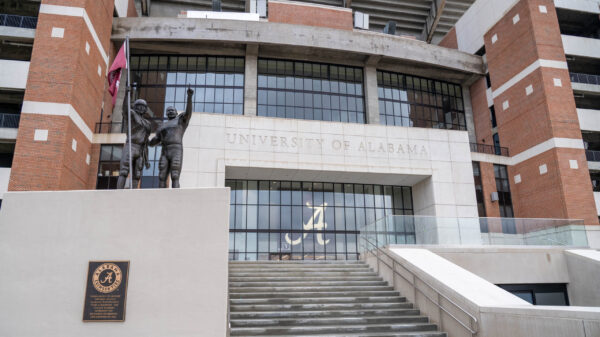
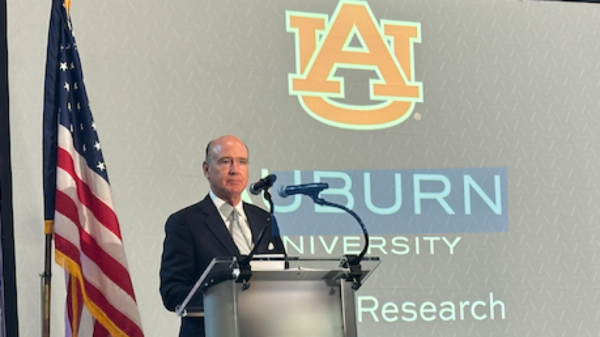
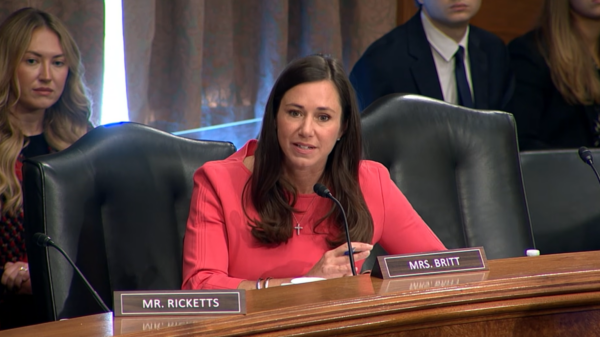
Last week, the man who had waterfalls installed in his team locker room at Alabama and who earned more than $100 million and lived in a free mansion while coaching in one of the poorest states in the nation, sat before Congress and warned of the perilous dangers facing the sport now that the free market has determined the pay scale of college athletes.
Turns out, that pay scale far exceeds books, housing and tuition.
“It’s become an arms race,” Saban told the gathered lawmakers, with a straight face and nary a hint of shame. “Who spends the most has got the best chance to win.”
Because, you know, Alabama had the same athletics budget as Akron while Saban was there.
The doom and gloom stories from coaches—both current and former—and a stream of corporate executives and administrators have been unyielding and endless ever since name, image and likeness rulings opened the door to players finally receiving the compensation we all knew they should have. Saban has allowed himself to be appointed the frontman for this hypocritical band of doomers.
It is comical to listen to a man who enjoyed the treatment we typically reserve for visiting heads of state while coaching teenagers and 20-somethings in a game now sit before our nation’s lawmakers and bemoan the fact that players are getting gobs of money.
I truly don’t want to pick on Saban solely like this, because to do so inevitably turns this into a you-hate-Bama tirade from anyone with a crimson shirt in the closet, and because Saban has, by no stretch, been the only hypocrite on this train. To give him some credit, Saban has been consistent in saying that he’s fine with players receiving “some” compensation for their NIL rights. So, he’s not a hard-liner on the payments to players, as some of his fellow coaches have been.
But that’s not much of a concession, and I’m having a hard time understanding how a free market for players is any different from the free market that coaches have enjoyed since … forever. Do you even realize how many coaches—not just head coaches—swap jobs every year, bouncing from school to school in a constant quest for a better position and better pay? Try pulling up any coach and taking a look at their bio. Prepare to be amazed by the number of stops.
Not once have any of these same people tried to make a federal case about it.
But let a college kid chase a bigger paycheck and a better opportunity at another school and the whole world starts talking about loyalty and poor attitudes.
The simple fact is that college athletics is facing its current reality—no matter how you feel about it—because it was greedy. Instead of doing anything to properly compensate the players, they resisted, fought and bad-mouthed the idea for decades. They insisted that the fair market value of a top player was the scholarship that provided a “free” education.
Turns out they were off by about $6 million per year. To absolutely no one’s surprise.
And while people like Saban can say that they were never part of that resistance to players being compensated, I also don’t recall any visits to Congress or impassioned speeches about the unfairness of it from him, or any of his colleagues.
No, they were quite happy to keep reaping the benefits of a system rigged to take advantage of the players. Because no group benefitted more from the lack of player compensation than the overpaid coaches.
Even now, the hypocrisy doesn’t end, as college sports executives run to politicians for help. They’re not asking for a fair fix. They’re again asking to give the players the shaft, albeit a shallower, better lit shaft.
Under the current proposals being pushed, players could make “some” money. Just not all of this money they’re making now, because it’s just too much. The colleges can’t afford it.
“My first year (with NIL), we had a collective at Alabama, (that was) $2.7 million,” Saban told lawmakers. “Next year, $7 million. Next year, $10 million. I retired. Next year, $17 million. Next year, $24 million. Now you have schools that have close to $40 million rosters.”
You would think that the players are going in wearing ski masks and carrying out stick-ups to get this money. Instead of, you know, simply taking the cash that’s being freely and willingly offered by billionaire boosters.
No one wants to acknowledge that reality, because that, my friends, is the dirty little secret in all of this: Not a single bit of this is mandatory.
It is possible to operate a very successful college or university without a major athletics programs. It is possible to have a very successful athletics department that fields all sorts of sports teams without spending hundreds of millions of dollars annually. It is even possible to field a football team — a good, entertaining team — without paying a dime to players. It is possible to base your entire athletic structure on the scholarship model.
What is not possible, however, is to field what we know as a major college athletics program by doing such things. Because a major college athletics program is about money. The end.
For decades, Saban and other coaches were able to dangle the potential of a huge payday in front of players, using it as motivation and potential penalty, in an effort to keep them compliant and loyal. They limited players to single-year scholarships, with the ability to cut them at any time without penalty, while the players were forced to sit out and delay their careers for making the same moves that coaches often made (sometimes because a coach made a move). At some schools, they pushed players into BS courses to keep them eligible, imposed impossible schedules on them and then punished them for taking so much as a sandwich from a coach.
All while schools, coaches, TV networks, apparel companies, agents, administrators, conference officials and even media talking heads made millions of dollars off of the entire spectacle.
The free market worked just fine for all of that.
But the moment the players entered that market and upset the massive flow of cash to all of these people, we’re supposed to believe that it’s an untenable situation that congress must fix? Pfft. Spare me.
You want a fix?
Sign the players to contracts that contain buyouts for transfers. Impose no other restrictions and don’t make the contracts uniform, which avoids antitrust issues.
Then everyone accept that this is the new way of the college athletics world and learn how to budget for it.